
Introduction
Getting a website redesign quote in 2026 feels different than it did just a few years ago. The digital landscape has shifted dramatically, and with it, the way agencies price their services has evolved.
If you're a business owner considering a website overhaul, you're probably wondering what's reasonable to pay. Maybe you've heard stories of projects that cost $5,000, while others ran into six figures. The truth is, both scenarios can be perfectly legitimate depending on your needs.
Understanding what goes into a website redesign quote helps you make smarter decisions. It prevents sticker shock and ensures you're comparing proposals fairly. More importantly, it helps you invest your budget where it matters most for your business goals.
The pricing landscape in 2026 reflects new realities. AI tools have made some tasks faster, but they've also raised expectations for personalization and user experience. Mobile-first design isn't optional anymore. Accessibility standards have become stricter. Security requirements continue to grow more complex.
These changes mean that website redesign costs have both increased and decreased in different areas. Some technical work takes less time now. But the strategic thinking, custom functionality, and user experience design require more expertise than ever.
This guide breaks down exactly what you should expect when requesting a website redesign quote this year. We'll cover standard components, realistic price ranges, and hidden costs that catch many businesses off guard. You'll learn how to evaluate proposals effectively and understand the return on your investment.
Whether you're running a small local business in Montreal or managing an enterprise-level company, this information will help you navigate the redesign process with confidence. Let's start by looking at what actually goes into a comprehensive website redesign quote.
What's Included in a Website Redesign Quote
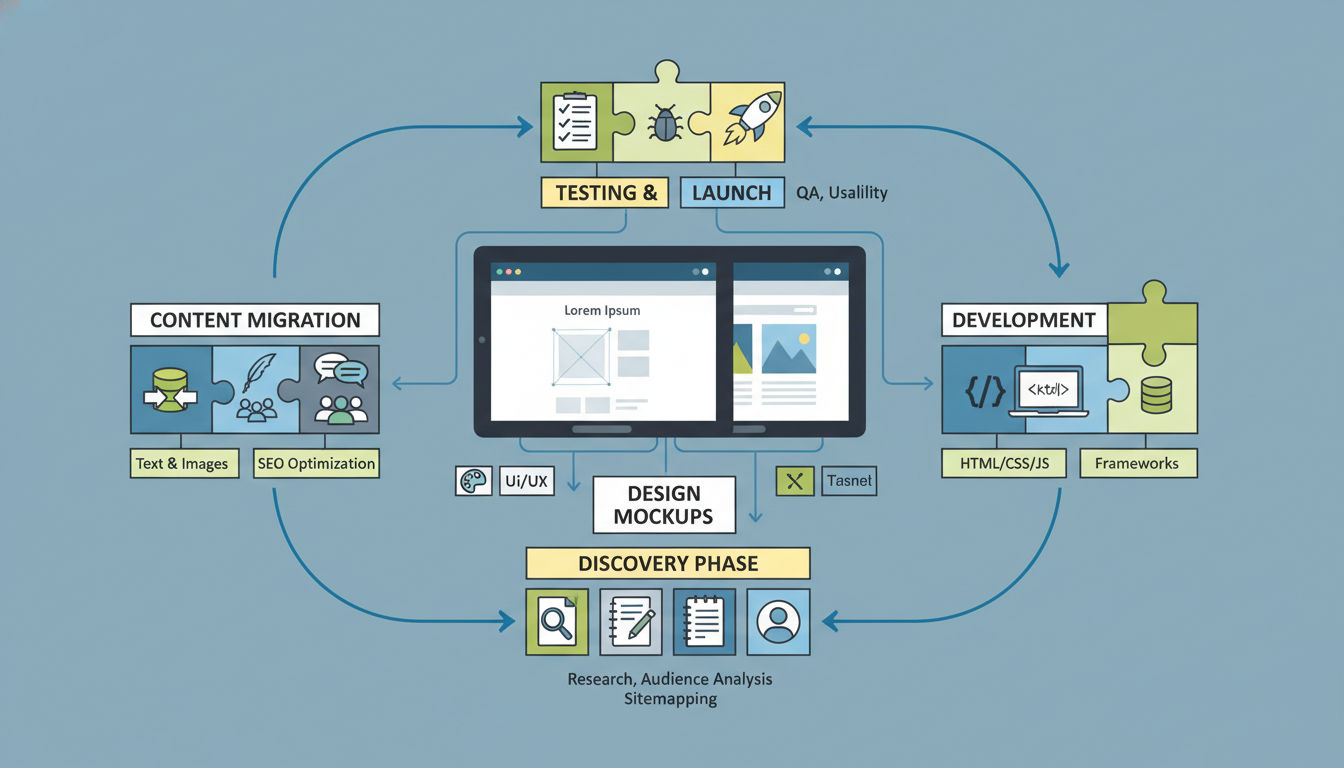
A comprehensive website redesign quote should break down every phase of your project clearly. This transparency helps you understand exactly what you're paying for and prevents confusion down the road.
Most professional quotes start with discovery and planning. This phase involves understanding your business goals, target audience, and competitive landscape. Your agency should conduct stakeholder interviews, review your current analytics, and map out user journeys. This groundwork typically takes one to three weeks depending on project complexity.
The discovery phase also includes technical audits of your existing site. What content needs migration? Which integrations must carry over? Are there SEO elements worth preserving? These questions get answered before any design work begins.
Design deliverables form the next major component. Expect to see wireframes that outline page structure and user flow. Then come mockups showing the visual design for key page templates. Most projects include designs for homepage, service pages, about page, contact page, and blog templates.
Modern quotes should specify how many design revision rounds you'll receive. Two to three rounds is standard for most projects. Additional revisions beyond this typically cost extra, so clarify this upfront.
Development work transforms approved designs into a functioning website. This includes front-end coding for what users see and back-end programming for functionality. Your quote should specify whether you're getting a custom-coded site, a customized template, or a theme-based solution.
Content migration is often underestimated in quotes. Moving hundreds of pages, blog posts, and images takes real time. Some agencies charge separately for this work. Others include basic migration but charge extra for content reorganization or optimization.
Testing and quality assurance close out the standard deliverables. This includes cross-browser testing, mobile responsiveness checks, form testing, and security reviews. Professional agencies also conduct user acceptance testing before launch.
Training and documentation help your team manage the new site. Most quotes include a training session showing you how to update content, add blog posts, and perform basic maintenance. Written documentation or video tutorials often supplement this training.
Post-launch support varies widely between agencies. Some include 30 days of bug fixes and minor adjustments. Others charge hourly for any post-launch work. Make sure your quote specifies what happens after the site goes live.
Average Website Redesign Cost Breakdown for 2026
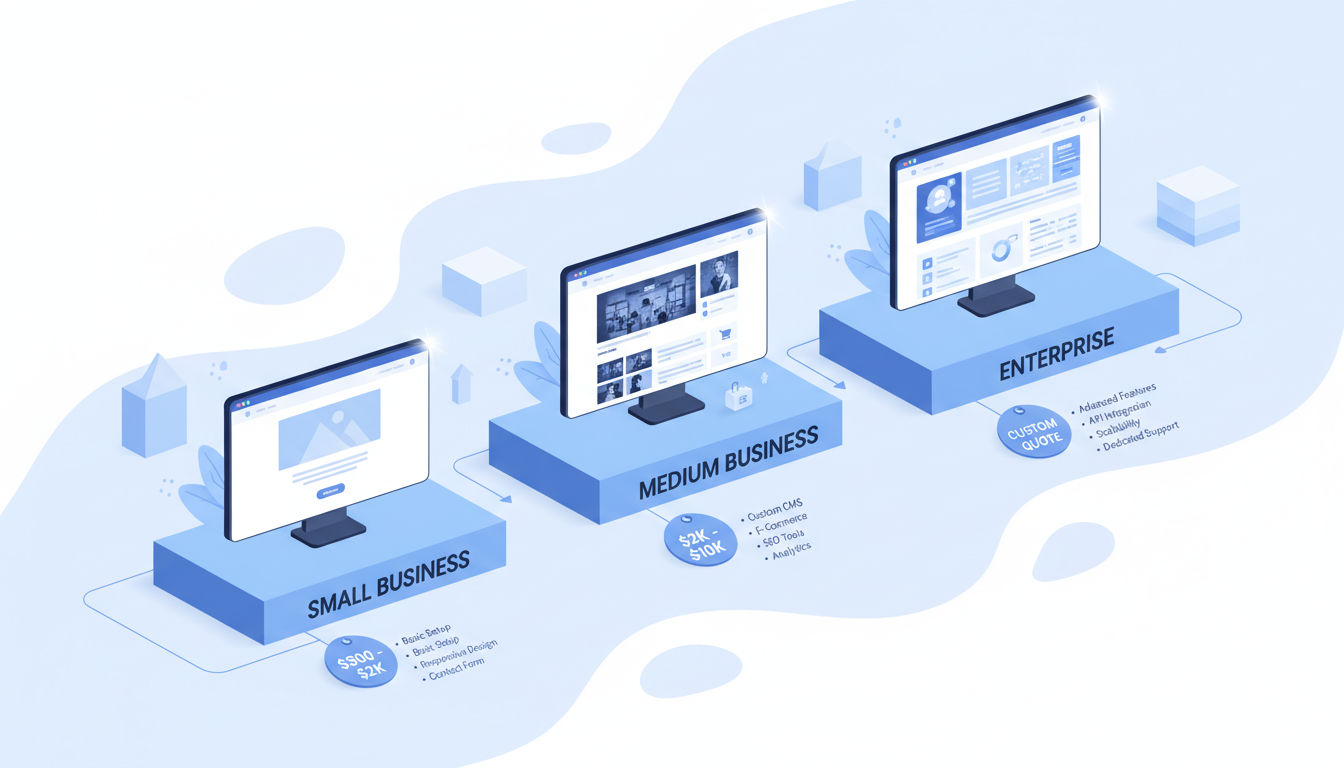
Website redesign costs in 2026 span a wide range based on your business size and needs. Understanding these tiers helps you budget appropriately and set realistic expectations.
Small Business Website Redesigns ($5,000-$15,000)
Small business redesigns typically cover 5 to 15 pages with standard functionality. These projects work well for local businesses, professional services, and small retailers who need a solid online presence without complex features.
At the lower end around $5,000 to $8,000, you're usually getting a template-based design with moderate customization. The agency selects a quality theme, adapts it to your branding, and adds your content. This approach works when you need a professional site quickly and don't require unique functionality.
Projects in the $8,000 to $15,000 range offer more customization and strategic input. You'll get custom page layouts, more design options, and better integration with tools you already use. These projects typically include basic SEO setup, contact forms, and simple content management capabilities.
Small business projects usually take four to eight weeks from kickoff to launch. The timeline depends on how quickly you provide content, feedback, and approvals. Delays often come from the client side rather than the agency.
Mid-Sized Business Projects ($15,000-$50,000)
Mid-sized business redesigns involve more complexity and strategic depth. These projects typically include 15 to 50 pages, custom functionality, and integration with business systems.
In the $15,000 to $30,000 range, expect semi-custom designs with more sophisticated features. This might include member portals, advanced search functionality, or integration with your CRM. The design process involves more research and strategic planning than smaller projects.
Projects reaching $30,000 to $50,000 typically involve fully custom designs, complex functionality, or extensive content needs. You might need e-commerce capabilities, custom calculators, booking systems, or multi-language support. These projects require more development time and specialized expertise.
Mid-sized projects generally take eight to sixteen weeks. The timeline extends when you need custom integrations, significant content creation, or coordination with third-party systems. Proper project management becomes crucial at this level to keep everything on track.
Quick question
Want to turn this into a real plan?
If you want expert help with strategy, design, development, marketing, or automation — we’ll recommend the fastest path forward for your goals.
Enterprise-Level Redesigns ($50,000+)
Enterprise redesigns address complex organizational needs with extensive functionality and scale. These projects might involve hundreds of pages, multiple user types, and sophisticated technical requirements.
Projects starting at $50,000 and extending to $100,000 or more typically include custom application development, advanced integrations, and extensive user testing. You're not just getting a website but a digital platform that serves multiple business functions.
Enterprise projects often require security audits, compliance documentation, and redundancy planning. If you're in healthcare, finance, or other regulated industries, these requirements add both time and cost. But they're essential for protecting your business and customers.
The timeline for enterprise redesigns typically spans four to nine months. This includes extensive discovery, multiple rounds of user testing, phased rollouts, and comprehensive training programs. Rushing enterprise projects usually creates more problems than it solves.
Factors That Influence Web Design Pricing
Several key factors push projects toward the higher or lower end of these ranges. Custom functionality always increases costs significantly. Building unique features from scratch requires specialized development skills and extensive testing.
Content volume matters more than many businesses expect. Migrating and optimizing 200 pages costs substantially more than handling 20 pages. If you need new content written, photography, or video production, these services add to your total investment.
Integration complexity affects pricing dramatically. Connecting your website to your CRM, inventory system, or marketing automation platform requires technical expertise. Each integration needs testing to ensure data flows correctly and securely.
Your timeline also impacts cost. Rush projects often require agencies to bring in additional resources or work extended hours. If you can be flexible with your launch date, you'll typically get better pricing.
Key Factors That Impact Your Website Redesign Quote
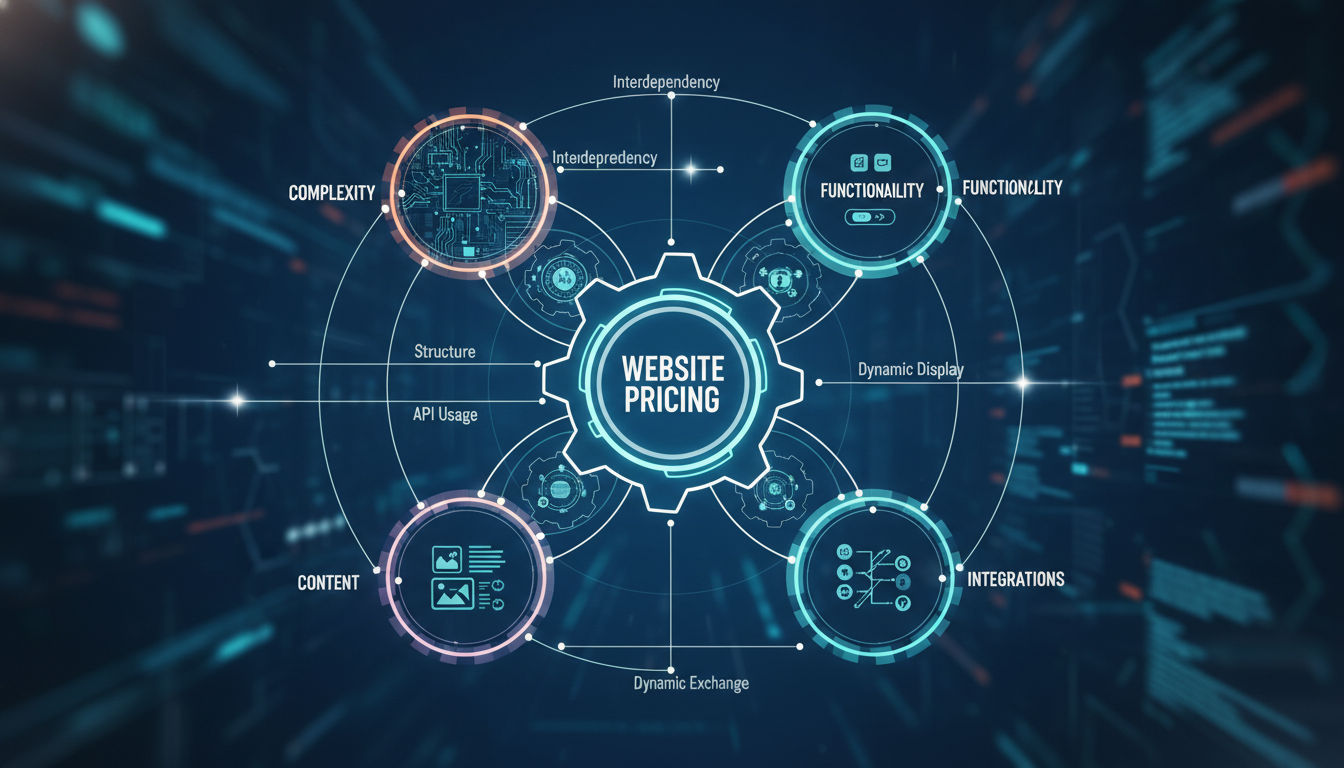
Beyond the basic project tier, specific factors can significantly shift your website redesign quote up or down. Understanding these variables helps you make strategic decisions about where to invest your budget.
Website Size and Complexity
The number of pages directly impacts your quote, but complexity matters even more than quantity. A site with 30 simple informational pages might cost less than one with 15 highly interactive pages.
Page templates reduce costs by allowing design reuse. If your site uses three main templates that repeat across many pages, development takes less time. But if every page requires unique layouts or functionality, costs increase substantially.
Navigation complexity also plays a role. Simple top-level navigation with clear hierarchies is straightforward to implement. But mega menus, multiple navigation systems, or complex filtering options require more planning and development time.
Custom Functionality Requirements
Off-the-shelf plugins and tools keep costs reasonable for standard features. Need a contact form or social media integration? These common needs have proven solutions that work well and cost little to implement.
Custom functionality changes the equation entirely. Building a custom booking system, member portal, or interactive calculator requires significant development hours. These features need careful planning, coding, testing, and documentation.
Third-party API integrations fall somewhere in between. Connecting to established services like Mailchimp, Salesforce, or Stripe is usually straightforward. But legacy systems or obscure platforms may require custom middleware, increasing both cost and complexity.
Content Migration and Creation
Moving existing content sounds simple but rarely is. Text usually transfers relatively easily, but images, documents, and embedded media require careful handling. Broken links, missing files, and formatting issues consume time during migration.
Content reorganization adds another layer of work. Maybe your current site structure doesn't serve users well. Restructuring content into new categories, combining pages, or splitting information differently requires strategic thinking and careful execution.
New content creation significantly impacts your budget. Professional copywriting typically costs $100 to $300 per page depending on complexity and research required. Photography, video production, and graphic design add their own costs based on your specific needs.
Integration with Existing Systems
Your technology stack determines integration complexity. Modern cloud-based systems with documented APIs integrate relatively smoothly. Legacy systems or custom-built platforms often require more creative solutions and extensive testing.
Single sign-on capabilities, data synchronization, and real-time updates all increase integration complexity. Each connection point needs security considerations, error handling, and monitoring. These requirements add development time but create better user experiences.
Consider whether integrations need to be one-way or two-way. Pulling data from your CRM to display on your website is simpler than syncing data bidirectionally. Two-way integrations require more robust error handling and conflict resolution logic.
Timeline and Project Urgency
Standard timelines allow agencies to allocate resources efficiently across multiple projects. This scheduling flexibility typically results in better pricing and higher quality work. Teams can give your project the attention it deserves without burning out.
Rush timelines create premium pricing for good reason. Agencies may need to pull resources from other projects, work overtime, or bring in additional contractors. These adjustments ensure you meet your deadline but come at a higher cost.
Phased approaches can sometimes reduce immediate costs while still moving your project forward. Launch with core functionality first, then add enhanced features in subsequent phases. This strategy spreads costs over time and allows you to validate decisions before investing further.
Seasonal considerations also affect availability and pricing. Many agencies experience high demand in Q4 as businesses rush to launch before year-end. Planning your project for slower periods might give you more attention and potentially better rates.
Hidden Costs to Consider in Website Cost Estimates
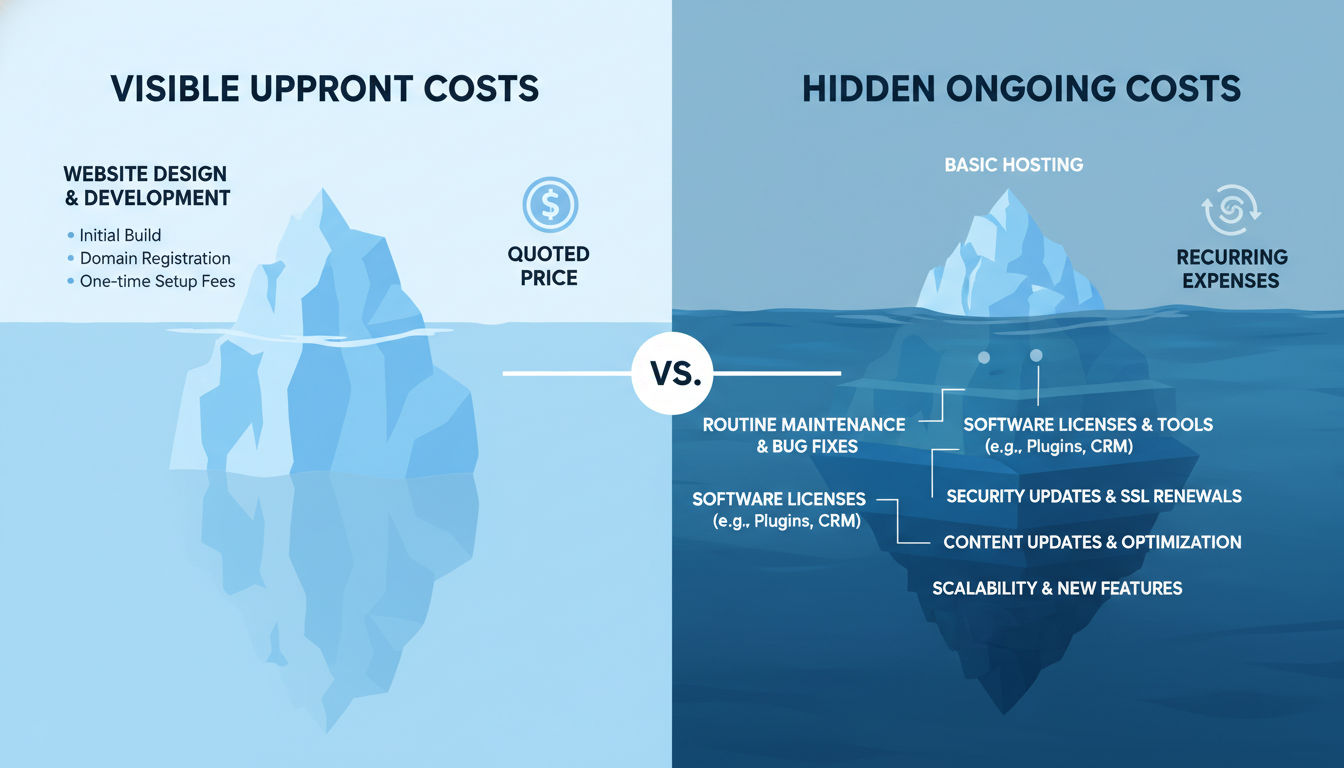
Many businesses focus solely on the initial redesign quote and get surprised by ongoing costs. Understanding these additional expenses helps you budget realistically for your website's total cost of ownership.
Ongoing Maintenance and Updates
Websites require regular maintenance to stay secure, fast, and functional. Software updates for your content management system, plugins, and security patches need consistent attention. Neglecting these updates leaves your site vulnerable to security breaches and performance issues.
Most agencies offer monthly maintenance plans ranging from $100 to $500 depending on your site's complexity. These plans typically include software updates, security monitoring, backup management, and minor content updates. Think of it like maintaining a car rather than a one-time purchase.
Bug fixes and technical issues arise even with well-built sites. Having a maintenance agreement ensures you have support when problems occur. Without one, you'll pay hourly rates for emergency fixes, which usually cost more than preventive maintenance.
Hosting and Domain Expenses
Quality hosting matters more than many businesses realize. Shared hosting might cost $10 monthly but often results in slow load times and frequent downtime. Your website's performance directly impacts user experience and search rankings.
Managed WordPress hosting or cloud hosting solutions typically run $30 to $200 monthly depending on your traffic and storage needs. These services include automatic backups, security monitoring, and performance optimization. The investment pays off through better reliability and speed.
Domain registration and SSL certificates add small but necessary annual costs. Domain names typically cost $15 to $50 yearly depending on the extension. SSL certificates ensure secure connections and are essential for modern websites. Many hosting plans now include SSL certificates, but verify this before assuming it's covered.
Third-Party Tools and Plugins
Email marketing platforms, analytics tools, and specialized plugins often require subscriptions. While some free options exist, professional tools typically cost $20 to $200 monthly per service. These costs add up quickly if your site relies on multiple services.
Premium plugins for advanced functionality might charge one-time fees or annual renewals. E-commerce platforms, booking systems, and membership plugins often use subscription models. Budget for these ongoing costs when planning your website's functionality.
Consider total cost of ownership when choosing between custom development and third-party services. A $50 monthly subscription might seem expensive, but it could cost thousands to build and maintain equivalent custom functionality.
Content Creation and Copywriting
Websites need fresh content to stay relevant and maintain search rankings. Blog posts, case studies, and updated service descriptions require ongoing investment. Many businesses underestimate the time and skill required to produce quality content consistently.
Professional content creation costs vary widely. Blog posts might run $200 to $500 each depending on length and research required. Video production, photography, and graphic design carry their own price tags based on complexity and usage rights.
Some businesses handle content creation in-house to control costs. This approach works if you have skilled writers and realistic time allocations. But many companies find outsourcing more cost-effective than pulling key staff away from their primary responsibilities.
SEO and Digital Marketing Integration
Basic on-page SEO should be included in your redesign, but ongoing SEO requires continuous effort. Keyword research, content optimization, and technical SEO improvements need regular attention. Monthly SEO services typically range from $500 to $5,000 depending on competitiveness and scope.
Digital marketing integration extends beyond the website itself. Email campaigns, social media coordination, and paid advertising require tools, expertise, and ongoing management. These services multiply your website's effectiveness but add to your monthly marketing budget.
Analytics and conversion optimization help you improve results over time. Tools like Google Analytics are free, but interpreting data and implementing improvements requires expertise. Many businesses invest in quarterly optimization reviews to identify and fix conversion bottlenecks.
How to Evaluate and Compare Website Redesign Quotes

Receiving multiple quotes for your website redesign is smart business. But comparing them effectively requires looking beyond the bottom-line price to understand what you're actually getting.
Red Flags in Pricing Proposals
Extremely low quotes often indicate inexperience, offshore work, or template-based approaches disguised as custom solutions. If a quote seems too good to be true, it probably is. Ask detailed questions about what's included and who will actually do the work.
Vague deliverables make it impossible to know what you're paying for. Quality proposals specify exactly how many page designs, revision rounds, and features you'll receive. Phrases like "full website redesign" without details leave room for misunderstandings and disappointment.
Missing information about timeline, payment terms, or post-launch support suggests poor project management. Professional agencies provide clear timelines with milestones, transparent payment schedules, and explicit post-launch policies. These details protect both parties and set clear expectations.
Pressure tactics or artificial urgency often signal agencies more interested in closing deals than serving clients well. Legitimate businesses give you time to make informed decisions. Be wary of "special pricing that expires tomorrow" or similar high-pressure sales techniques.
Questions to Ask Potential Agencies
Start by asking about their process and timeline. How do they handle discovery and planning? What happens if you need changes during development? Understanding their workflow helps you gauge whether they're a good fit for your working style.
Request examples of similar projects they've completed. Look for work that matches your industry, size, and complexity level. Generic portfolio pieces don't tell you much about their ability to handle your specific needs.
Ask who will actually work on your project. Will you work with senior team members or junior staff? How many projects does your lead designer or developer handle simultaneously? These questions reveal how much attention your project will receive.
Clarify what happens if you're unhappy with the results. What's their revision policy? How do they handle disputes? Understanding these policies upfront prevents conflict later. Professional agencies have clear, fair policies they're happy to explain.
Discuss their approach to mobile responsiveness, accessibility, and SEO. These elements should be standard in 2026, not optional add-ons. An agency that treats these as afterthoughts probably isn't keeping up with industry standards.
Understanding Value Versus Cost
The cheapest quote rarely delivers the best value. Consider the expertise, strategic input, and long-term support each agency offers. A higher initial investment often costs less over time if it means fewer problems and better results.
Look at what's included beyond basic design and development. Does the agency provide strategic consulting, user research, or conversion optimization? These services add value that extends far beyond the website itself.
Consider the relationship and communication style. You'll work closely with your chosen agency for weeks or months. An agency that communicates clearly, responds promptly, and makes you feel heard is worth more than one that's slightly cheaper but difficult to work with.
Think about long-term partnership potential. Your website will need updates, improvements, and eventual enhancements. Working with an agency that understands your business and can grow with you provides ongoing value beyond the initial project.
Next step
Ready for a quote and timeline?
Send a quick note with what you’re building, your deadline, and what success looks like — we’ll reply with clear next steps.
Comparing Apples to Apples
Create a spreadsheet listing all deliverables from each quote. This comparison reveals where quotes differ in scope, not just price. One agency might include features another charges extra for, making direct price comparisons misleading.
Normalize for timeline differences. A faster timeline might cost more but could be worth it if you need to launch by a specific date. Conversely, a longer timeline might indicate more thorough work rather than slower service.
Factor in geographic and time zone considerations. Local agencies like those serving Montreal businesses offer in-person meetings and same-timezone communication. Remote agencies might offer lower prices but could create communication challenges.
Request references from past clients with similar projects. Speaking with other businesses who've worked with the agency provides insights you can't get from proposals alone. Ask about communication, problem-solving, and results achieved.
If you're ready to discuss your specific needs and get a detailed quote, reaching out to experienced agencies helps you understand realistic costs for your unique situation.
The ROI of Investing in a Professional Website Redesign
Understanding the return on your website investment helps justify the cost and set appropriate expectations. A professional redesign should pay for itself through improved business results.
Improved Conversion Rates
Small improvements in conversion rates create significant revenue increases. If your site gets 10,000 visitors monthly and converts at 2%, that's 200 conversions. Improving conversion to 3% adds 100 additional conversions monthly without increasing traffic.
Professional design removes friction from the user journey. Clear calls-to-action, intuitive navigation, and fast load times all contribute to higher conversion rates. These improvements often deliver 20% to 50% conversion increases, sometimes more.
Better conversion rates mean your marketing dollars work harder. If you spend $5,000 monthly on advertising, improving conversions by 30% is like getting $1,500 in free advertising every month. This ongoing benefit quickly justifies your redesign investment.
Enhanced User Experience
User experience directly impacts how visitors perceive your brand. A modern, professional website builds trust and credibility. Visitors assume a company with a quality website delivers quality products or services.
Mobile users now represent the majority of web traffic. If your current site doesn't work well on phones and tablets, you're frustrating most of your visitors. A mobile-optimized redesign immediately improves experience for your largest user segment.
Faster load times reduce bounce rates and improve engagement. Studies show that 53% of mobile users abandon sites that take longer than three seconds to load. Professional optimization can dramatically improve these metrics.
Better Search Engine Rankings
Search engines prioritize websites that provide good user experiences. Page speed, mobile responsiveness, and site structure all factor into rankings. A professional redesign addresses these technical SEO elements systematically.
Modern sites built with clean code and proper structure make it easier for search engines to understand your content. This clarity helps you rank for relevant keywords and appear in featured snippets.
Improved rankings drive more organic traffic without increasing advertising spend. If you currently appear on page two for important keywords, moving to page one can double or triple your organic traffic. This ongoing benefit compounds over time.
Long-Term Business Growth
Your website often serves as your primary sales and marketing tool. Investing in a professional redesign positions your business for growth. It supports sales teams, reduces support burden, and enables new business models.
A scalable website grows with your business. Professional development ensures you can add features, expand content, and handle increased traffic without starting over. This flexibility protects your investment long-term.
Competitive advantage comes from superior digital presence. In many industries, your website quality directly influences whether prospects choose you over competitors. A professional redesign can be the difference between winning and losing business.
The typical website redesign pays for itself within 6 to 18 months through some combination of increased conversions, reduced costs, and new opportunities. Tracking these metrics helps you measure your actual return and optimize further.
Conclusion
Getting a website redesign quote in 2026 involves understanding multiple factors that influence pricing. From basic template customizations starting around $5,000 to complex enterprise projects exceeding $50,000, the range reflects genuine differences in scope, complexity, and value delivered.
The most important takeaway is that price alone doesn't tell the whole story. A comprehensive quote should clearly outline deliverables, timeline, and ongoing costs. It should reflect strategic thinking about your business goals, not just technical specifications.
Hidden costs like hosting, maintenance, and content creation add up over time. Budgeting for these ongoing expenses ensures your website remains secure, fast, and effective. The total cost of ownership matters more than the initial investment alone.
Evaluating quotes requires comparing scope, not just price. Understanding what's included, who's doing the work, and how the agency approaches problems helps you make informed decisions. The cheapest option rarely delivers the best long-term value.
Your website redesign should generate measurable returns through improved conversions, better user experience, and enhanced search visibility. These benefits compound over time, making professional design and development a genuine business investment rather than just an expense.
As you move forward with your website redesign, focus on finding an agency that understands your business and communicates clearly. The right partner makes the process smoother and delivers results that exceed your initial expectations.
Take time to review past projects from agencies you're considering. Look for work that demonstrates strategic thinking, technical excellence, and attention to detail. These qualities indicate an agency that will deliver value throughout your project.
Whether you're a small business in Montreal or an enterprise-level organization, investing in a professional website redesign positions you for digital success. The landscape continues evolving, but the fundamentals remain constant. Quality design, solid development, and strategic thinking create websites that drive real business results.
Ready to discuss your specific needs and get a detailed quote? Connect with experienced professionals who can assess your requirements and provide transparent pricing. Your next step is understanding exactly what your business needs and finding the right partner to deliver it.