
Introduction
Modern web development has transformed dramatically over the past decade. Gone are the days when every website had to choose between completely static HTML files or fully dynamic server-rendered pages. Today's developers have access to sophisticated rendering methods that blend the best of both worlds.
For business owners and decision-makers, understanding these rendering methods isn't just a technical exercise. It directly impacts your website's performance, search engine rankings, and ultimately your bottom line. A slow website can cost you customers, while an outdated one can damage your credibility.
Two rendering approaches have emerged as leaders in the Jamstack ecosystem: Static Site Generation (SSG) and Incremental Static Regeneration (ISR). Both offer compelling advantages, but they serve different needs and solve different problems. SSG pre-builds every page at build time, delivering lightning-fast performance. ISR takes this a step further by allowing you to update static content without rebuilding your entire site.
Choosing between SSG and ISR isn't about finding the "better" technology. It's about matching the right tool to your specific business needs. A marketing website with occasional updates has different requirements than an e-commerce platform with thousands of products. Understanding these differences helps you make informed decisions that support your business goals.
This guide breaks down the SSG vs ISR debate in practical terms. We'll explore how each method works, when to use them, and how to decide which one fits your business best. Whether you're building a new website or optimizing an existing one, you'll walk away with clarity on these essential rendering strategies.
Understanding Static Site Generation (SSG)
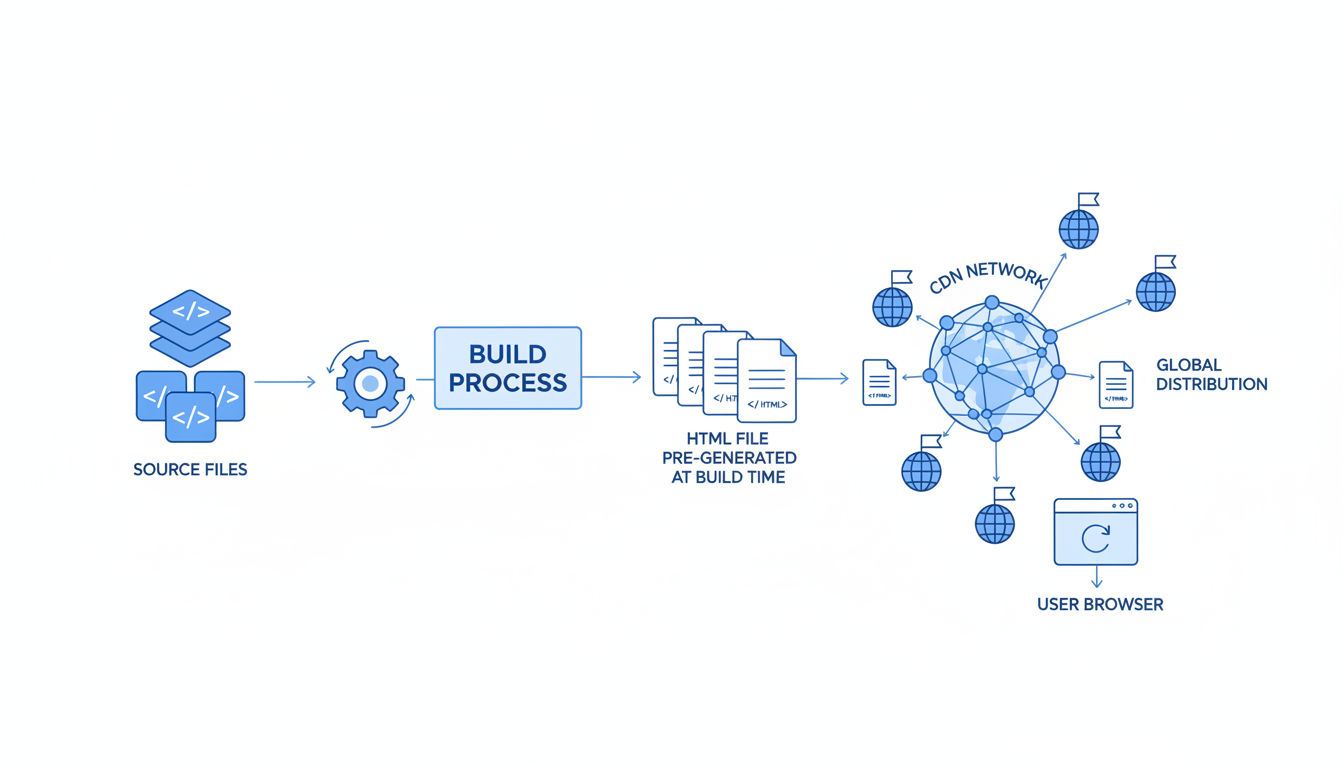
Static Site Generation represents the modern evolution of traditional static websites. At its core, SSG pre-renders all your website pages into HTML files during the build process. Think of it like preparing all your meals for the week on Sunday. Everything is ready to serve instantly when needed.
When you build a static site, your development framework processes all your content, templates, and data sources. It generates complete HTML files for every page on your website. These files sit on a content delivery network (CDN), waiting to be served to visitors. When someone requests a page, the server simply delivers the pre-built HTML file. No database queries, no server-side processing, just instant delivery.
The build-time rendering process follows a straightforward workflow. First, your development environment pulls content from various sources like markdown files, content management systems, or APIs. Next, it applies your templates and styling to this content. Finally, it outputs production-ready HTML, CSS, and JavaScript files that can be deployed anywhere.
Static generation offers compelling benefits for business websites. Performance stands out as the primary advantage. Since pages are pre-built, they load almost instantly. There's no wait time for server processing or database queries. This speed directly improves user experience and search engine rankings.
Security becomes simpler with SSG. Without a database or server-side code running on each request, you eliminate entire categories of vulnerabilities. There's no SQL injection risk because there's no database to inject into. No server-side code means no server-side exploits.
Hosting costs drop significantly with static sites. You're serving simple files, not running complex server operations. Many businesses host their static sites for just a few dollars per month, or even free on platforms designed for static hosting. The infrastructure requirements are minimal.
Common use cases for SSG include marketing websites, blogs, documentation sites, and portfolios. These sites share a common characteristic: their content doesn't change constantly. A company's about page might update quarterly, not hourly. A blog post, once published, rarely changes.
However, SSG has limitations worth understanding. The biggest challenge emerges with large sites. If you have 10,000 product pages, building all of them takes time. Build times can stretch from minutes to hours for massive sites. Every content update requires a complete rebuild and redeployment.
Content freshness presents another consideration. Static sites show the same content to everyone until you rebuild. If you need real-time updates or personalized content, pure SSG becomes problematic. You can't display different content based on user preferences without client-side JavaScript, which introduces its own complexity.
Dynamic features require creative solutions with SSG. User comments, shopping carts, and personalized recommendations need client-side JavaScript or third-party services. This isn't necessarily a dealbreaker, but it adds complexity to your architecture.
What is Incremental Static Regeneration (ISR)?
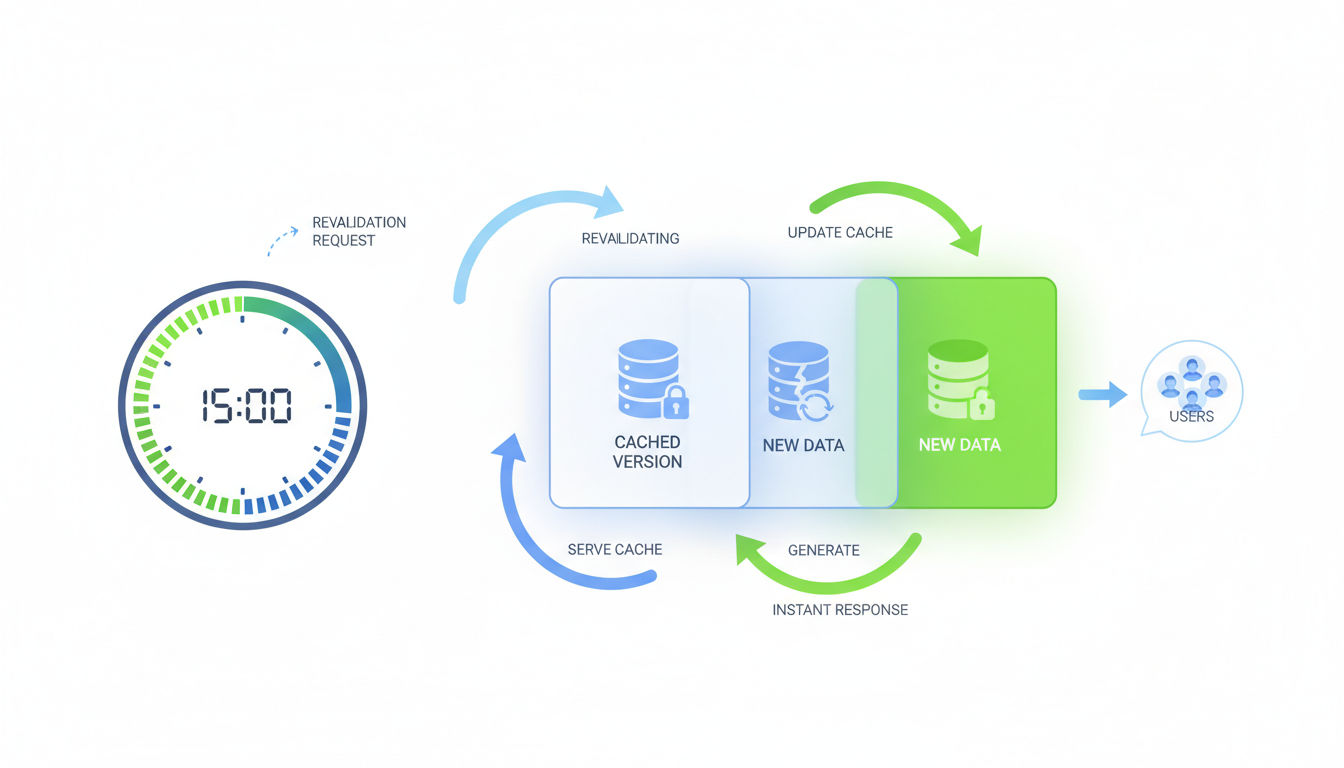
Incremental Static Regeneration emerged as a solution to SSG's limitations. ISR keeps the performance benefits of static generation while adding the ability to update content without full rebuilds. It's like having those pre-made meals, but with the ability to quickly prepare fresh ones as needed.
ISR works by setting a revalidation period for each page. You might configure a product page to revalidate every 60 seconds. When someone visits that page after the revalidation period expires, they see the existing static version immediately. Behind the scenes, the system regenerates the page with fresh data. The next visitor sees the updated version.
This approach bridges the gap between static and dynamic content elegantly. You get the speed of static pages because visitors always receive a pre-rendered version. You also get content freshness because pages regenerate automatically based on your schedule. It's the best of both worlds for many use cases.
The revalidation process operates on a per-page basis. Each page can have its own revalidation interval. Your homepage might revalidate every 60 seconds to show the latest promotions. Your about page might revalidate once per day since it changes rarely. This granular control lets you optimize each section of your site appropriately.
When a page needs regeneration, the system follows a specific workflow. First, it serves the existing static version to the current visitor. No one waits for regeneration. Second, it triggers a background rebuild of that specific page with fresh data. Third, it replaces the old static version with the new one. Future visitors see the updated content.
ISR becomes necessary when you face specific challenges with pure SSG. Large sites with thousands of pages benefit enormously. Instead of rebuilding 10,000 product pages every time you update one, ISR rebuilds only what changed. This dramatically reduces build times and enables faster deployments.
Content that updates frequently but doesn't need real-time accuracy works perfectly with ISR. Consider a blog with new articles published daily, or a product catalog with occasional price changes. These scenarios don't require instant updates, but they need fresher content than pure SSG provides.
Quick question
Want to turn this into a real plan?
If you want expert help with strategy, design, development, marketing, or automation — we’ll recommend the fastest path forward for your goals.
E-commerce platforms represent an ideal ISR use case. Product availability, prices, and descriptions change regularly. Building thousands of product pages on every update becomes impractical. ISR lets you regenerate product pages as needed, keeping information current without sacrificing performance.
News and media websites also benefit from ISR. Articles get published throughout the day. Related content recommendations change as new articles appear. ISR allows these sites to maintain static-like performance while keeping content reasonably fresh.
The technology handles traffic spikes gracefully. During high traffic periods, ISR serves cached static pages to everyone. No database gets overwhelmed. No server struggles under load. The site remains fast and responsive regardless of visitor numbers.
SSG vs ISR: Key Differences Breakdown
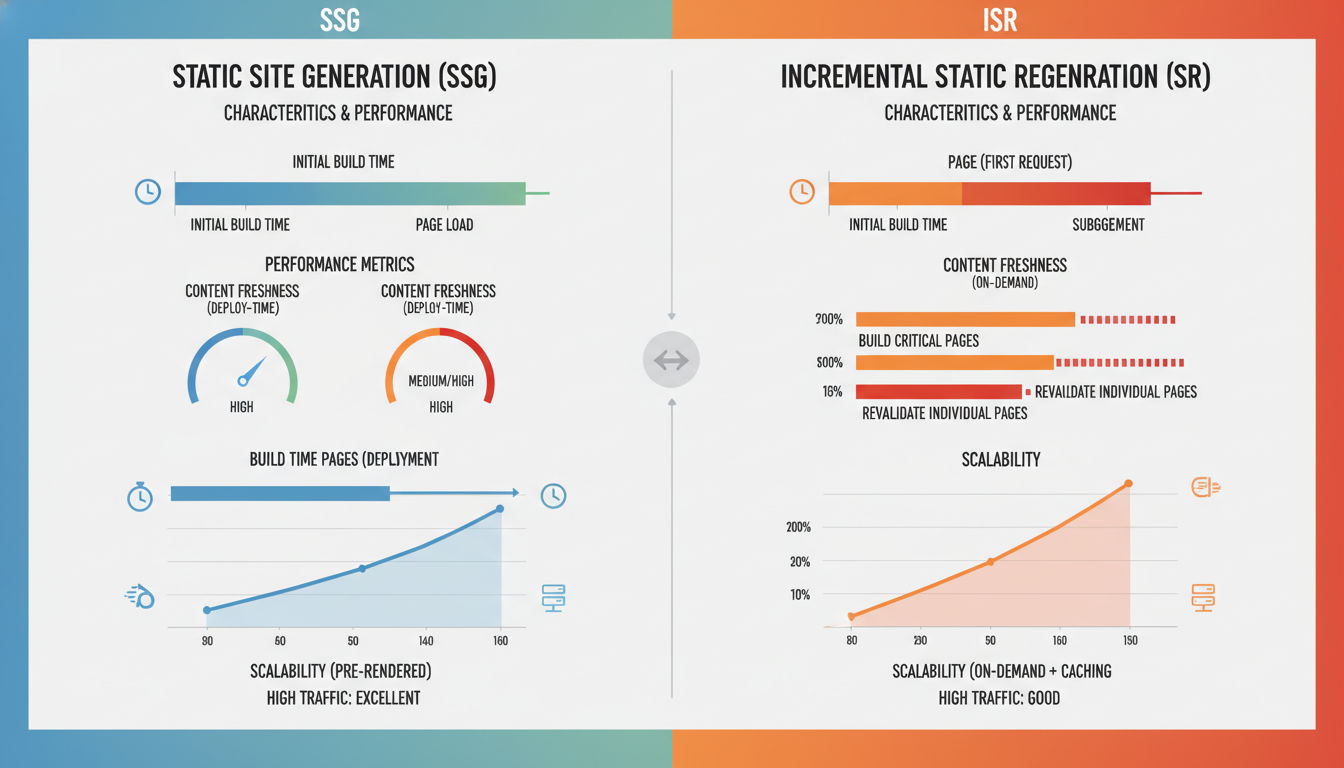
Understanding the practical differences between SSG and ISR helps you make informed decisions. Let's examine how these approaches compare across critical dimensions that affect your business.
Performance-wise, both SSG and ISR deliver excellent results. Pure SSG offers the absolute fastest initial page loads since every page is pre-built and optimized. There's zero server processing time. ISR matches this performance for most visitors, but occasionally someone triggers a regeneration. Even then, they receive the existing static version instantly while regeneration happens in the background.
The performance difference between SSG and ISR is negligible for end users. Both serve static files from CDNs. Both load in milliseconds. The main distinction appears in your development workflow, not in user experience.
Content freshness represents the most significant difference between these approaches. SSG delivers the same content until you rebuild and redeploy. If you publish a new blog post, it won't appear until you trigger a build. ISR updates content automatically based on your revalidation settings. A page set to revalidate every minute shows changes within 60 seconds without manual intervention.
For businesses, this freshness difference matters tremendously. A marketing site that updates monthly works perfectly with SSG. An e-commerce site with daily inventory changes needs ISR's automatic updates. Match your rendering method to your content update frequency.
Build times scale differently between SSG and ISR. Pure SSG build time increases linearly with your page count. Ten pages build quickly. Ten thousand pages take significantly longer. Large sites can face build times of 30 minutes or more, making frequent updates impractical.
ISR solves the build time problem elegantly. Your initial build might take longer, but subsequent updates only regenerate changed pages. Adding a single blog post doesn't trigger a full site rebuild. This makes ISR essential for large-scale websites where full rebuilds become bottlenecks.
Scalability considerations extend beyond just build times. SSG scales beautifully for traffic since you're serving static files. A million visitors cost roughly the same as a thousand. ISR maintains this traffic scalability while adding content scalability. You can grow from 100 pages to 100,000 without your build process collapsing.
Infrastructure requirements differ slightly between approaches. SSG works with any static hosting platform. You can deploy to simple file servers, CDNs, or specialized static hosting services. The requirements are minimal and costs stay low.
ISR requires more sophisticated infrastructure. Your hosting platform needs to support the regeneration process. Not all static hosts offer ISR capabilities. This typically means using platforms specifically designed for modern Jamstack applications. The infrastructure is still simpler than traditional server-rendered sites, but more complex than pure SSG.
Cost implications vary based on your scale and hosting choices. Small SSG sites often run free or for a few dollars monthly. ISR sites typically cost more due to their infrastructure requirements, but prices remain reasonable. For large sites, ISR often costs less than SSG because you avoid constant full rebuilds that consume build minutes on many platforms.
The decision between SSG and ISR often comes down to your specific situation. Small sites with infrequent updates favor SSG for its simplicity. Large sites with regular updates favor ISR for its scalability. Many successful websites use both, applying SSG to stable pages and ISR to dynamic ones.
Next JS Rendering: The Framework Advantage
Next.js has established itself as the leading framework for implementing both SSG and ISR. Its popularity stems from making these rendering methods accessible and practical for real-world projects. Understanding how Next.js handles rendering helps you appreciate why it dominates the Jamstack ecosystem.
The framework's approach to rendering is refreshingly straightforward. You don't need to configure complex build pipelines or write extensive boilerplate code. Next.js provides simple functions that tell the framework how to render each page. This simplicity accelerates development while maintaining flexibility.
For static generation, Next.js uses a function called getStaticProps. This function runs at build time, fetches your data, and passes it to your page component. The framework generates a static HTML file with all your content baked in. It's remarkably simple to implement, even for developers new to static generation.
ISR implementation in Next.js requires just one additional property. You add a revalidate value to your getStaticProps return object, specifying how many seconds before the page should regenerate. That's it. One line of code transforms your static page into an incrementally regenerated one.
The flexibility Next.js provides is game-changing. You're not locked into one rendering method for your entire site. Each page can use the most appropriate approach. Your homepage might use ISR with 60-second revalidation. Your about page might use pure SSG. Your user dashboard might use server-side rendering. This per-page flexibility matches rendering methods to actual needs.
Real-world Next.js rendering examples illustrate this flexibility beautifully. Consider an e-commerce site built with Next.js. The product listing pages use ISR with hourly revalidation to show current inventory. Individual product pages use ISR with 5-minute revalidation for price accuracy. The checkout process uses server-side rendering for real-time cart calculations. Static pages like shipping policies use pure SSG since they rarely change.
A news website might implement a similar mixed approach. The homepage uses ISR with 2-minute revalidation to display the latest headlines. Article pages use SSG initially, then ISR with daily revalidation to update view counts and related content. The about and contact pages use pure SSG.
Next.js also handles dynamic routes elegantly. You can pre-generate thousands of product pages at build time using getStaticPaths. For pages that don't exist yet, Next.js can generate them on-demand and cache them as static pages. This "on-demand ISR" means you don't need to pre-build every possible page.
The framework's built-in optimizations enhance performance further. Automatic code splitting ensures visitors only download JavaScript needed for the current page. Image optimization reduces file sizes without quality loss. Prefetching loads linked pages in the background for instant navigation.
These optimizations work seamlessly with both SSG and ISR. You get them automatically without additional configuration. This combination of rendering flexibility and performance optimization explains why Next.js has become the go-to choice for modern web development.
At Vohrtech, we leverage Next.js extensively for client projects. The framework's flexibility allows us to tailor rendering strategies to each business's unique needs. A local Montreal restaurant needs a different approach than an international e-commerce platform. Next.js makes both scenarios manageable within a single framework.
When to Choose SSG for Your Business
Static Site Generation shines in specific scenarios where its strengths align perfectly with business needs. Understanding when SSG is the right choice helps you avoid overcomplicating your web architecture while maximizing performance and reliability.
Marketing websites represent the ideal SSG use case. These sites typically include pages like home, about, services, and contact. Content updates happen occasionally rather than constantly. When you do update content, you're usually making deliberate changes that warrant a review process anyway. SSG's requirement for rebuilding becomes a feature, not a bug, since it encourages intentional updates.
Portfolio and showcase websites work beautifully with SSG. Whether you're displaying creative work, case studies, or completed projects, this content remains stable once published. The lightning-fast load times SSG provides make excellent first impressions on potential clients viewing your work.
Documentation sites and knowledge bases benefit enormously from SSG. Technical documentation, user guides, and help centers rarely need real-time updates. When updates occur, they're typically substantial enough to warrant a full review and rebuild. The search engine optimization benefits of SSG help users find answers to their questions.
Blogs and content marketing sites fit SSG perfectly, especially for small to medium-sized publications. Once you publish an article, it typically doesn't change. Comments can be handled through third-party services. The exceptional performance helps with both user experience and search rankings, driving more traffic to your content.
Landing pages for marketing campaigns excel with SSG. These pages need to load instantly to maximize conversion rates. They're created deliberately for specific campaigns and don't require frequent updates. The ability to deploy them quickly and confidently makes SSG ideal for marketing teams.
Content types best suited for SSG share common characteristics. They're primarily informational rather than transactional. They update on a schedule you control rather than in response to external events. They don't require personalization or user-specific content. They benefit significantly from maximum performance and SEO optimization.
Business websites that benefit most from SSG typically serve 10-1000 pages. They update their content weekly, monthly, or quarterly rather than hourly or daily. They prioritize performance, security, and cost-effectiveness over real-time content updates. They want simple, reliable infrastructure without complex server requirements.
The performance advantages of SSG directly impact business metrics. Page load speed affects bounce rates, with faster sites keeping visitors engaged longer. Search engines reward fast-loading sites with better rankings, driving more organic traffic. Users trust and prefer sites that respond instantly to their clicks.
SEO advantages extend beyond just speed. SSG sites have clean, semantic HTML that search engines parse easily. There's no JavaScript rendering delays that might hide content from crawlers. The consistent performance across all devices ensures mobile users get the same fast experience.
Small businesses in Montreal and beyond find SSG particularly attractive. The low hosting costs make professional websites accessible without ongoing server expenses. The security benefits mean less worry about vulnerabilities and hacks. The reliability of serving static files means fewer technical emergencies.
At Vohrtech, we often recommend SSG for clients launching their first professional website or redesigning an existing one. The combination of performance, security, and cost-effectiveness provides excellent value. For many businesses, SSG delivers everything they need without unnecessary complexity.
When ISR is the Better Option
Incremental Static Regeneration becomes essential when your content and business model demand more flexibility than pure SSG provides. Recognizing these scenarios helps you avoid the frustration of fighting against your rendering method's limitations.
E-commerce platforms represent the clearest ISR use case. Product catalogs change frequently with new items, price adjustments, and inventory updates. Rebuilding thousands of product pages for every change becomes impractical quickly. ISR lets you update product information within minutes while maintaining static-like performance.
Consider an online store with 5,000 products. With pure SSG, adding a new product or changing a price triggers a complete rebuild. This might take 20-30 minutes, during which your site shows outdated information. ISR regenerates only the affected pages within your revalidation window, typically seconds or minutes.
Content platforms with high publishing frequency need ISR. News sites, magazines, and media outlets publish multiple articles daily. Waiting for full site rebuilds between articles creates bottlenecks. ISR allows new content to appear automatically based on your revalidation settings.
Real estate websites benefit from ISR's balance of performance and freshness. Property listings change as homes sell and new ones list. Buyers expect reasonably current information, but second-by-second accuracy isn't critical. ISR with 5-10 minute revalidation provides the right balance.
Event platforms and booking systems work well with ISR. Available dates, ticket quantities, and event details need regular updates. ISR keeps this information current without the overhead of full server-side rendering or the staleness of pure SSG.
Job boards and classified listings sites face similar challenges. Postings appear and expire constantly. ISR allows these sites to show current listings while maintaining excellent performance. A 15-minute revalidation window keeps information fresh enough for most use cases.
Any site with user-generated content that needs moderation benefits from ISR. Comments, reviews, and forum posts can appear after approval without triggering full rebuilds. The content stays reasonably fresh while you maintain control over what appears.
Balancing performance with freshness is ISR's core strength. You define acceptable staleness for each type of content. Homepage might revalidate every minute. Product pages every 5 minutes. Blog posts daily. This granular control optimizes both performance and accuracy.
Scaling considerations make ISR essential for growing businesses. As your site expands from hundreds to thousands of pages, pure SSG build times become prohibitive. ISR lets you scale content without proportionally scaling build times. This supports business growth without technical bottlenecks.
Next step
Ready for a quote and timeline?
Send a quick note with what you’re building, your deadline, and what success looks like — we’ll reply with clear next steps.
Large content sites with diverse update patterns particularly benefit. Some sections update hourly, others weekly. ISR handles this heterogeneity elegantly. You apply appropriate revalidation periods to each section based on actual needs.
Sites expecting traffic spikes favor ISR. During viral moments or marketing campaigns, ISR serves cached static pages to everyone. There's no database to overwhelm or server to crash. The site remains fast regardless of traffic volume.
Businesses transitioning from traditional CMS platforms often choose ISR. It provides a familiar content management experience where updates appear relatively quickly. The transition feels natural to content teams while delivering modern performance benefits.
International businesses with content in multiple languages and regions use ISR effectively. Each region's content can have appropriate revalidation periods. Time-sensitive promotions in one region don't force rebuilds of stable content in others.
Making the Right Choice for Your Website
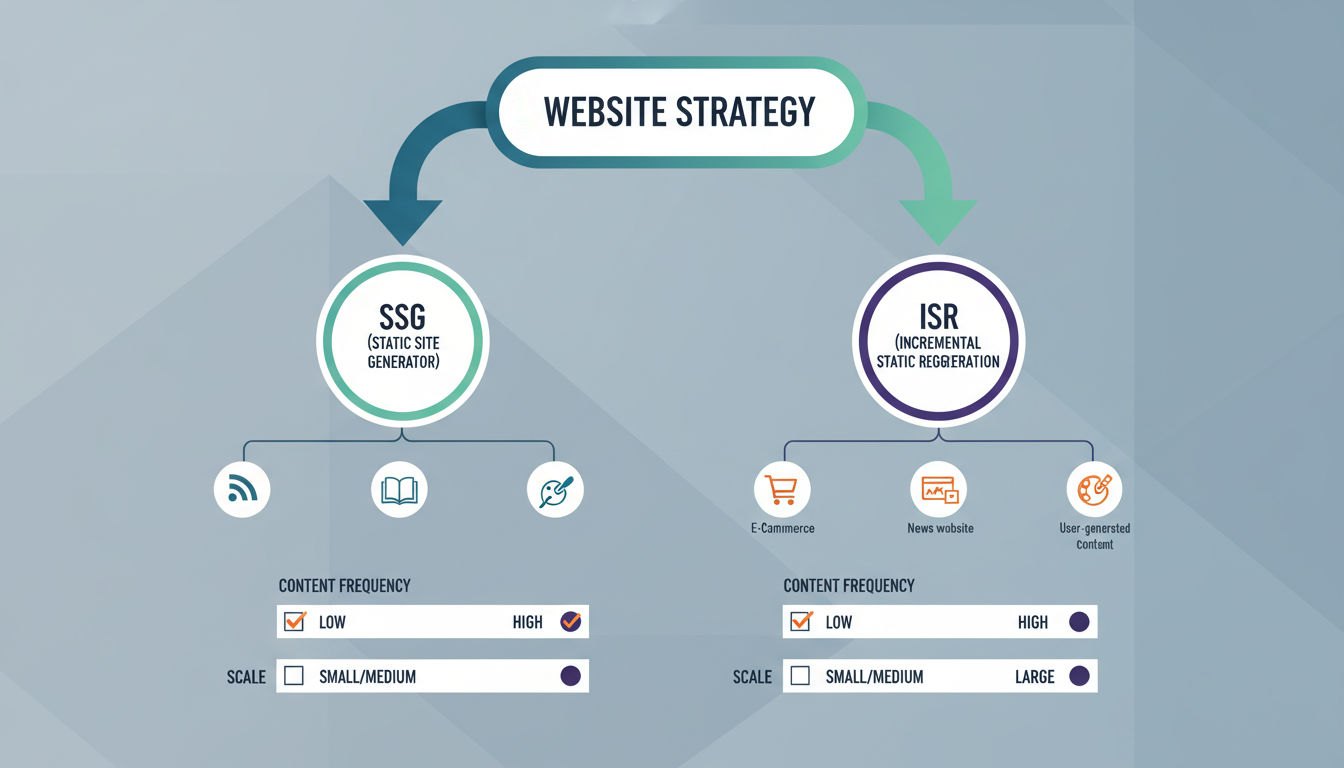
Choosing between SSG and ISR requires honest assessment of your business needs and content patterns. A systematic decision framework helps you evaluate your situation objectively rather than following trends or assumptions.
Start by analyzing your content update frequency. Track how often each section of your site actually changes. Marketing pages might update monthly. Product pages weekly. Blog posts daily. This data reveals whether SSG's rebuild requirement creates real problems or just theoretical ones.
Consider your site's scale and growth trajectory. A 50-page site can rebuild in seconds, making SSG perfectly viable. A 5,000-page site faces longer build times where ISR becomes attractive. Think about where you'll be in six months or a year, not just today.
Evaluate your team's workflow and capabilities. SSG requires triggering builds, which might mean involving developers for content updates. ISR can feel more immediate to content teams, similar to traditional CMS platforms. Consider who manages your content and their technical comfort level.
Budget considerations extend beyond hosting costs. Factor in development time, maintenance requirements, and potential scaling costs. Sometimes the simpler solution costs less overall, even if hosting costs slightly more. Calculate total cost of ownership, not just monthly hosting fees.
Hybrid approaches and mixed rendering strategies often provide the best solution. You don't have to choose SSG or ISR for your entire site. Apply each method where it makes sense. Use SSG for stable marketing pages and ISR for dynamic product pages. This pragmatic approach optimizes each section appropriately.
Many successful websites use three or more rendering methods simultaneously. Marketing pages use SSG. Product pages use ISR. User dashboards use server-side rendering. API routes handle dynamic functionality. This architectural flexibility is a strength, not a complexity to avoid.
Questions to ask before choosing help clarify your requirements. How quickly must content updates appear on your site? Can you wait 5 minutes? 1 hour? 1 day? What's your largest section in terms of page count? How often does it update? What's your technical team's experience with modern frameworks? Do you have existing infrastructure constraints?
Consider your content's nature carefully. Transactional content like shopping carts needs different treatment than informational content like blog posts. User-specific content requires different approaches than public content. Match your rendering strategy to your content's actual characteristics.
Think about your users' expectations. B2B service sites can show slightly stale content without issues. E-commerce sites need more current inventory information. News sites need fresh headlines. Align your technical choices with user expectations and business requirements.
At Vohrtech, we guide clients through this decision process systematically. We analyze their content patterns, assess their technical requirements, and recommend approaches that support their business goals. Often, the right answer involves multiple rendering methods working together.
Our experience with Montreal businesses and beyond shows that the "best" rendering method varies dramatically by industry and business model. A restaurant's website has completely different needs than a software company's site. We tailor our recommendations to each client's specific situation.
If you're uncertain which approach fits your needs, we offer consultations to assess your requirements. We examine your content, discuss your business goals, and recommend rendering strategies that support your success. You can reach out through our contact page to start the conversation.
The decision between SSG and ISR isn't permanent. Modern frameworks like Next.js allow you to change rendering methods relatively easily. You might start with SSG and migrate specific sections to ISR as your needs evolve. This flexibility removes the pressure to make a perfect choice immediately.
Conclusion
The SSG vs ISR decision ultimately comes down to matching technical capabilities with business requirements. Both rendering methods offer compelling advantages for modern websites. Static Site Generation provides unmatched performance, security, and simplicity for content that updates infrequently. Incremental Static Regeneration adds flexibility for larger sites and frequently updated content while maintaining static-like performance.
Understanding these rendering methods empowers you to make informed decisions about your web architecture. Rather than following trends or assumptions, you can evaluate your specific situation objectively. Consider your content update patterns, site scale, team capabilities, and user expectations. These factors guide you toward the right choice.
The importance of choosing the right rendering method extends beyond technical considerations. Your rendering strategy affects user experience, search engine rankings, development velocity, and operational costs. A well-matched approach supports your business goals seamlessly. A mismatched one creates friction and frustration.
The future of Jamstack rendering technologies looks promising. Frameworks continue evolving, making these powerful techniques more accessible. New rendering methods emerge to address specific use cases. The ecosystem matures, providing better tools, documentation, and community support.
For businesses ready to implement modern rendering strategies, the path forward is clear. Assess your needs honestly, choose appropriate methods for each section of your site, and work with experienced developers who understand these technologies deeply. The investment in getting your rendering strategy right pays dividends in performance, user satisfaction, and business results.
Whether you choose SSG, ISR, or a hybrid approach, you're embracing modern web development practices that deliver real business value. Your users get faster, more reliable experiences. Your team gets more efficient workflows. Your business gets better results from your web presence. Check out our projects page to see how we've implemented these strategies for clients across various industries.