
Introduction
If you've ever wondered why some search results show star ratings, business hours, or recipe cooking times while others just display plain blue links, you're looking at the power of schema markup in action. This invisible code helps search engines understand your content better, leading to those eye-catching rich results that attract more clicks.
Schema markup is structured data that you add to your website's HTML. It acts like a translator between your content and search engines, explaining exactly what your information means. When Google's crawlers visit your site, they don't just see text—they understand whether that text is a product price, a business address, or an article author's name.
The impact on search visibility can be significant. Websites with properly implemented schema markup often see improved click-through rates, better search rankings, and more qualified traffic. You're essentially giving search engines the context they need to display your content in the most compelling way possible.
For businesses in competitive markets like Montreal or anywhere online, this advantage matters. While your competitors struggle with plain search listings, your results can stand out with additional information that builds trust and drives action.
This tutorial will walk you through everything you need to know about implementing schema markup on your website. Whether you're a small business owner managing your own site or working with a development team, you'll learn practical steps to enhance your search presence through structured data.
Understanding Schema Markup Fundamentals
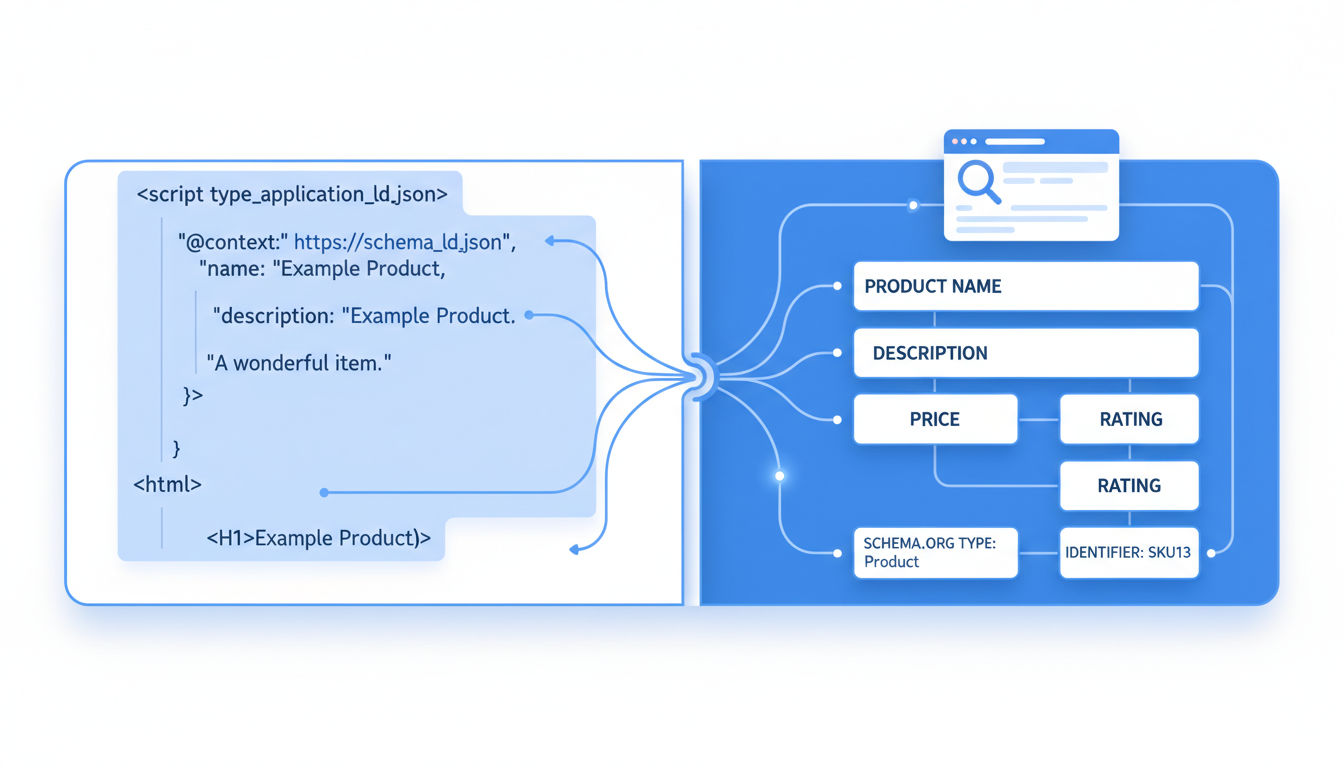
Schema markup is a vocabulary of tags that you add to your HTML to improve how search engines read and represent your page in search results. Think of it as adding labels to everything on your website so search engines can categorize and display your content more effectively.
The concept emerged from a collaboration between Google, Bing, Yahoo, and Yandex in 2011. These search engines created Schema.org, a shared vocabulary that standardizes how websites communicate with search algorithms. This collaboration means implementing schema markup benefits your visibility across multiple search engines, not just Google.
The Relationship Between Structured Data and Search Engines
Search engines face a challenging task: understanding billions of web pages written in countless formats and styles. Structured data solves this problem by providing explicit clues about your content's meaning.
Without schema markup, a search engine might see "4.5" on your page but not know if it's a product rating, a price, or just a random number. With proper markup, you're telling the search engine exactly what that number represents.
This clarity helps search engines in several ways. They can better match your content to relevant searches. They can pull specific information to create rich results. They can also understand relationships between different pieces of content on your site.
How Schema Markup Creates Rich Snippets
Rich snippets are the enhanced search results you see that include extra information beyond the standard title, URL, and meta description. These might show star ratings, event dates, recipe ingredients, product availability, or business hours.
Schema markup is what makes rich snippets possible. When you mark up your content with the appropriate schema types, you're giving search engines permission and instructions to display that information in enhanced formats.
The process works like this: you add schema markup to your page, search engines crawl and process that markup, and if your implementation is correct and relevant, they may choose to display your content as a rich result. While implementing schema doesn't guarantee rich snippets, it's absolutely required for eligibility.
Benefits of SEO Markup for Business Websites
The advantages of implementing schema markup extend beyond just looking good in search results. Businesses typically see improved click-through rates because rich results naturally attract more attention and provide users with helpful information before they even click.
Schema markup also enhances your local SEO efforts. Local business schema helps your company appear in map results and local packs with complete information about your location, hours, and services. For businesses serving specific areas like Montreal, this local visibility is invaluable.
Another benefit is improved voice search optimization. As more people use voice assistants, search engines rely heavily on structured data to provide spoken answers. Your schema markup helps position your content as the source for these voice responses.
Perhaps most importantly, schema markup future-proofs your SEO strategy. As search engines become more sophisticated and AI-driven, structured data becomes increasingly important for helping algorithms understand and categorize content accurately.
Types of Schema Markup for Business Websites
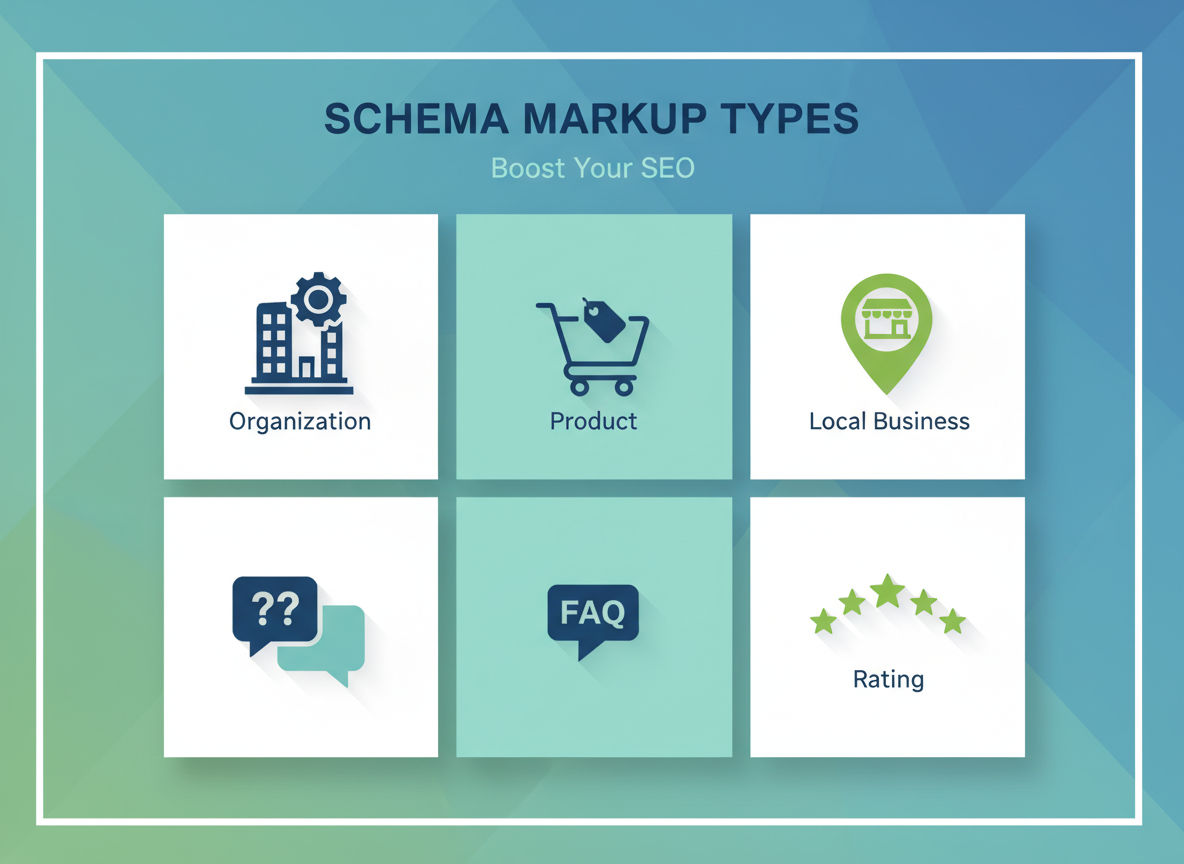
Different types of content require different schema markup types. Understanding which schemas apply to your business helps you prioritize your implementation efforts for maximum impact.
Organization Schema
Organization schema provides search engines with comprehensive information about your business entity. This includes your company name, logo, contact information, social media profiles, and founding date.
This schema type is fundamental because it establishes your business's identity across the web. When implemented correctly, it can help your brand appear in knowledge panels and ensures consistent information across search results.
Organization schema is particularly valuable for building brand recognition. It connects all your online properties under one unified entity that search engines recognize and trust.
Local Business Schema
Local business schema is essential for any company with a physical location or serving specific geographic areas. It includes details like your business address, phone number, opening hours, accepted payment methods, and service areas.
This markup directly influences your appearance in local search results and Google Maps. When someone searches for services "near me" or in a specific city, properly implemented local business schema increases your chances of appearing in those results.
The schema also supports multiple locations, making it perfect for businesses with several branches or franchises. Each location can have its own schema markup with specific details.
Quick question
Want to turn this into a real plan?
If you want expert help with strategy, design, development, marketing, or automation — we’ll recommend the fastest path forward for your goals.
Product and Service Schema
Product schema is critical for e-commerce websites and any business selling physical or digital products. It allows you to mark up product names, descriptions, prices, availability, ratings, and reviews.
Service schema works similarly but focuses on services rather than physical products. It's ideal for agencies, consultancies, and service-based businesses that want to highlight their offerings in search results.
Both types can significantly improve your visibility in shopping results and product searches. They also enable price comparison features and availability indicators that help users make informed decisions.
Article and Blog Post Schema
Article schema helps search engines understand your blog content, news articles, and editorial pieces. It identifies the headline, author, publication date, featured image, and article body.
This markup is particularly important for content marketing strategies. It can help your articles appear in Google News, Top Stories carousels, and other specialized search features.
Blog post schema also supports author attribution, which builds credibility and can lead to author-specific rich results over time.
FAQ and How-To Schema
FAQ schema allows you to mark up frequently asked questions and their answers on your pages. When implemented correctly, these can appear as expandable rich results directly in search listings.
This schema type is incredibly powerful because it can make your search result take up significantly more space, pushing competitors further down the page. It also directly answers user questions, which can drive qualified traffic.
How-to schema works similarly but focuses on instructional content. It can display steps, required tools, time estimates, and images directly in search results.
Review and Rating Schema
Review schema enables you to display star ratings and review counts in search results. This social proof can dramatically increase click-through rates by building trust before users even visit your site.
The schema supports both aggregate ratings (overall average) and individual reviews. You can mark up customer reviews, editorial reviews, and critic reviews depending on your content type.
It's important to note that review schema has strict guidelines. You can only mark up genuine reviews, and attempting to manipulate ratings can result in penalties.
Preparing for Schema Markup Implementation

Before diving into code, proper preparation ensures your schema markup implementation is strategic and effective. Taking time to plan prevents wasted effort and helps you prioritize the changes that will deliver the biggest impact.
Auditing Your Current Website Structure
Start by examining your website's existing structure and content. Document the types of pages you have, the information they contain, and how that content is currently organized.
Look for any existing schema markup that might already be on your site. Many WordPress themes and plugins add basic schema automatically, and you'll want to avoid duplicating or conflicting with existing implementations.
Use tools like Google Search Console to understand how search engines currently view your site. Check which pages are indexed, what queries drive traffic, and whether any rich results are already appearing.
Identifying Priority Pages for Structured Data
Not every page needs schema markup immediately. Focus first on your most important pages: your homepage, key service pages, popular blog posts, and any pages that drive significant traffic or conversions.
Consider which pages would benefit most from rich results. Your contact page might benefit from local business schema. Product or service pages could use offer or service schema. Blog posts would benefit from article schema.
Create a prioritized list based on business impact. Pages that drive revenue or leads should typically receive schema markup before informational pages with lower conversion potential.
Choosing the Right Schema Types for Your Business
Match schema types to your specific business model and content. A web development and digital marketing agency like VohrTech would prioritize organization schema, local business schema, and service schema, while an e-commerce store would focus more heavily on product schema.
Don't try to implement every schema type at once. Starting with two or three relevant types allows you to learn the process and measure results before expanding your implementation.
Research which schema types your competitors are using. Tools like schema markup validators can show you what structured data appears on any public webpage, giving you competitive intelligence.
Tools and Resources You'll Need
Google's Rich Results Test is your primary validation tool. It shows you exactly how Google interprets your schema markup and whether you're eligible for rich results.
Schema.org is the official documentation source. While it can be technical, it provides complete specifications for every schema type and property.
JSON-LD generators can help you create schema markup without writing code from scratch. Many free tools allow you to input your business information and generate proper JSON-LD code.
A text editor or your website's content management system will be necessary for adding the markup to your pages. If you're using WordPress, several plugins can help manage schema markup, though manual implementation often provides more control.
Step-by-Step Schema Markup Implementation
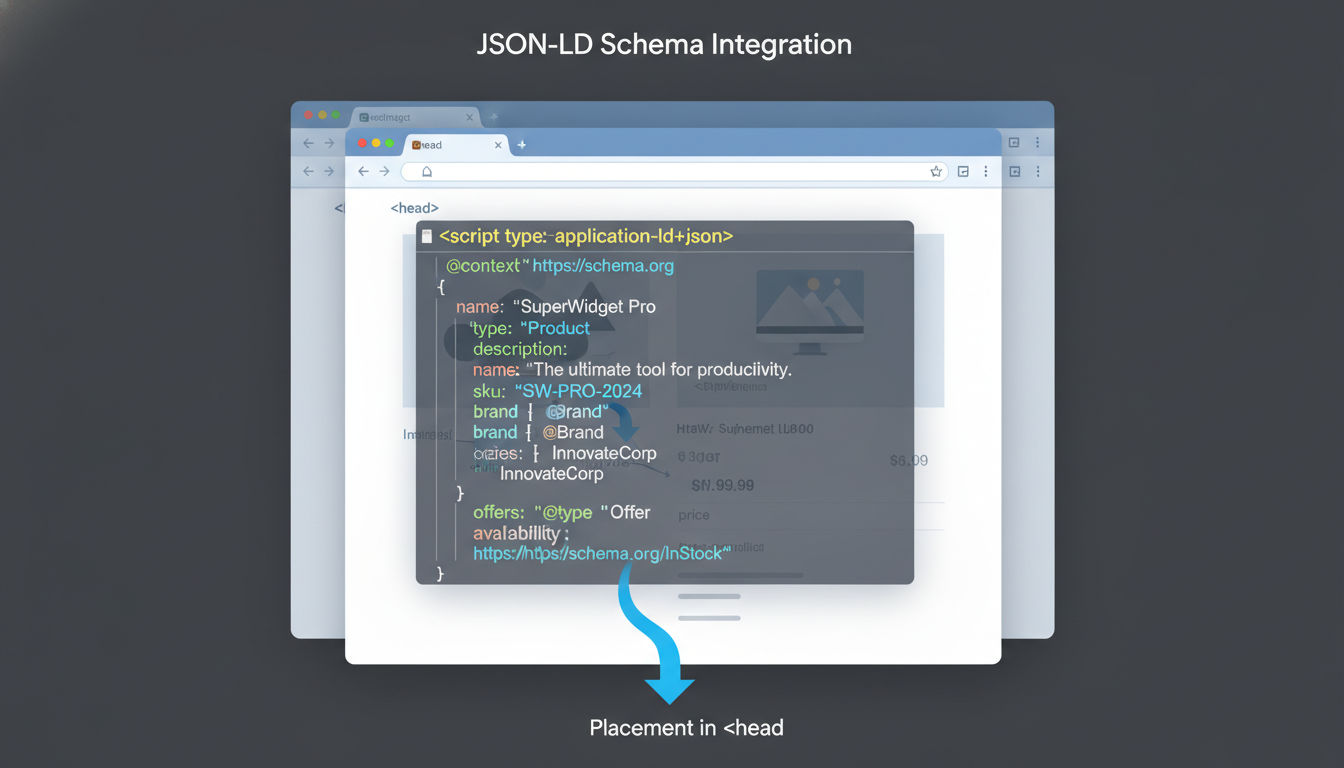
Now comes the practical work of adding schema markup to your website. This section walks through the technical implementation process for the most common schema types that businesses need.
JSON-LD vs. Microdata vs. RDFa: Which Format to Use
Three formats exist for implementing schema markup, but JSON-LD is the clear winner for most situations. Google explicitly recommends JSON-LD because it's easier to implement and maintain.
JSON-LD (JavaScript Object Notation for Linked Data) is added as a script tag in your HTML, typically in the head or footer section. It doesn't interfere with your visible content, making it cleaner and less prone to breaking during design changes.
Microdata embeds schema markup directly into your HTML tags. While this was popular earlier, it's harder to maintain because the markup is intertwined with your content structure.
RDFa is similar to microdata but uses different syntax. It's rarely necessary for business websites and adds unnecessary complexity.
For nearly all business websites, JSON-LD is the right choice. It's what we recommend and implement for our clients at VohrTech.
Implementing Organization Schema
Organization schema establishes your business's core identity. Here's how to implement it properly.
Start by gathering your business information: legal name, logo URL, contact details, social media profiles, and founding date. Having this information ready streamlines the implementation process.
The JSON-LD code for organization schema looks like this structure: you define the context as Schema.org, set the type as Organization, then add properties like name, url, logo, contactPoint, and sameAs for social profiles.
Place this code in your website's header or footer so it appears on every page. This consistency helps search engines understand your organization across your entire site.
Make sure your logo URL points to a high-quality image that represents your brand. Google may use this logo in knowledge panels and search results.
Adding Local Business Structured Data
Local business schema builds on organization schema by adding location-specific information. This is essential for businesses serving specific geographic areas.
You'll need your complete business address formatted according to local conventions, your phone number, business hours for each day of the week, and geographic coordinates if possible.
The schema type should be as specific as possible. Instead of just "LocalBusiness," use more specific types like "ProfessionalService," "Attorney," "Restaurant," or whatever best describes your business category.
Business hours require careful formatting. Each day needs opening and closing times in 24-hour format. If you're closed on certain days, you can omit those days or explicitly mark them as closed.
For businesses serving specific areas without a physical storefront, you can use service area schema instead of a physical address. This is particularly useful for contractors, consultants, and mobile service providers.
Creating Product Schema Markup
Product schema is essential for e-commerce and any business showcasing products online. Each product page should have its own schema markup.
Required properties include the product name, image, description, SKU or product ID, and offers information including price and currency. Optional but valuable properties include brand, ratings, reviews, and availability status.
Price information must be accurate and match what's displayed on your page. Mismatched prices can lead to penalties or removal from rich results.
If you have customer reviews, include aggregate rating schema within your product schema. This displays star ratings in search results, which significantly improves click-through rates.
For products with variants (different sizes, colors, etc.), you can implement product group schema that links related variants together.
Implementing Article and Blog Schema
Article schema helps search engines understand your blog posts and editorial content. It should be added to every blog post and article on your site.
Essential properties include headline, author, datePublished, dateModified, and image. The headline should match your article title, and images should be high-quality and relevant.
Author information can be simple text or link to a Person schema for the author. If you regularly publish content, creating Person schemas for your authors builds authority over time.
The image property is particularly important because it influences which image appears in rich results. Provide multiple image URLs in different aspect ratios when possible to support different display formats.
Article schema also supports publisher information, which should reference your organization schema. This connection helps search engines understand the relationship between your content and your business.
Adding FAQ and Review Schema
FAQ schema is one of the most visually impactful schema types because it can make your search result significantly larger and more prominent.
Each FAQ item consists of a question and an accepted answer. The questions should be actual questions your customers ask, and answers should be concise but complete.
Avoid using FAQ schema for promotional content or questions that aren't genuine FAQs. Google's guidelines are strict about this, and violations can result in manual actions against your site.
Review schema should only be used for genuine customer reviews. You cannot create fake reviews or mark up promotional content as reviews.
When implementing review schema, include the reviewer's name, review date, rating value, and review text. If you're showing aggregate ratings, include the total number of reviews and average rating.
Testing and Validating Your Schema Markup
Implementation is only half the battle. Testing and validation ensure your schema markup works correctly and qualifies for rich results.
Using Google's Rich Results Test
Google's Rich Results Test is your primary validation tool. Simply enter your page URL or paste your HTML code, and it shows you exactly how Google interprets your structured data.
The tool highlights any errors or warnings in your implementation. Errors must be fixed because they prevent rich results eligibility. Warnings are suggestions for improvement but don't necessarily disqualify you.
Test each page individually, especially if you're implementing different schema types across your site. What works on your homepage might have issues on product or blog pages.
The tool also shows you a preview of how your rich result might appear in search. This preview helps you understand whether your implementation will achieve the visual impact you want.
Schema Markup Validator Tools
Schema.org's validator provides more technical validation than Google's tool. It checks whether your markup follows the official schema specifications exactly.
This validator is particularly useful when implementing complex or nested schema types. It catches technical errors that might not affect Google's interpretation but could cause issues with other search engines.
Bing also offers its own markup validator. While Google dominates search, validating for Bing ensures your schema works across multiple platforms.
Next step
Ready for a quote and timeline?
Send a quick note with what you’re building, your deadline, and what success looks like — we’ll reply with clear next steps.
Regular validation should become part of your workflow. Check your schema whenever you update your website design, change content management systems, or modify your templates.
Common Errors and How to Fix Them
Missing required properties is the most common error. Each schema type has required fields that must be included for the markup to be valid.
Incorrect data types cause frequent issues. For example, using text where a URL is required, or formatting dates incorrectly. Always follow the exact specifications for each property.
Duplicate schema markup happens when multiple systems add schema to the same page. This often occurs with WordPress sites using both theme-based and plugin-based schema. Remove the duplicate implementation to resolve the conflict.
Mismatched information between your visible content and schema markup will get flagged. Your schema must accurately represent what users see on the page. Never mark up content that doesn't exist.
If you encounter persistent errors you can't resolve, consider reaching out to professional implementation support to ensure your schema markup is correct and effective.
Monitoring Schema Performance and Results
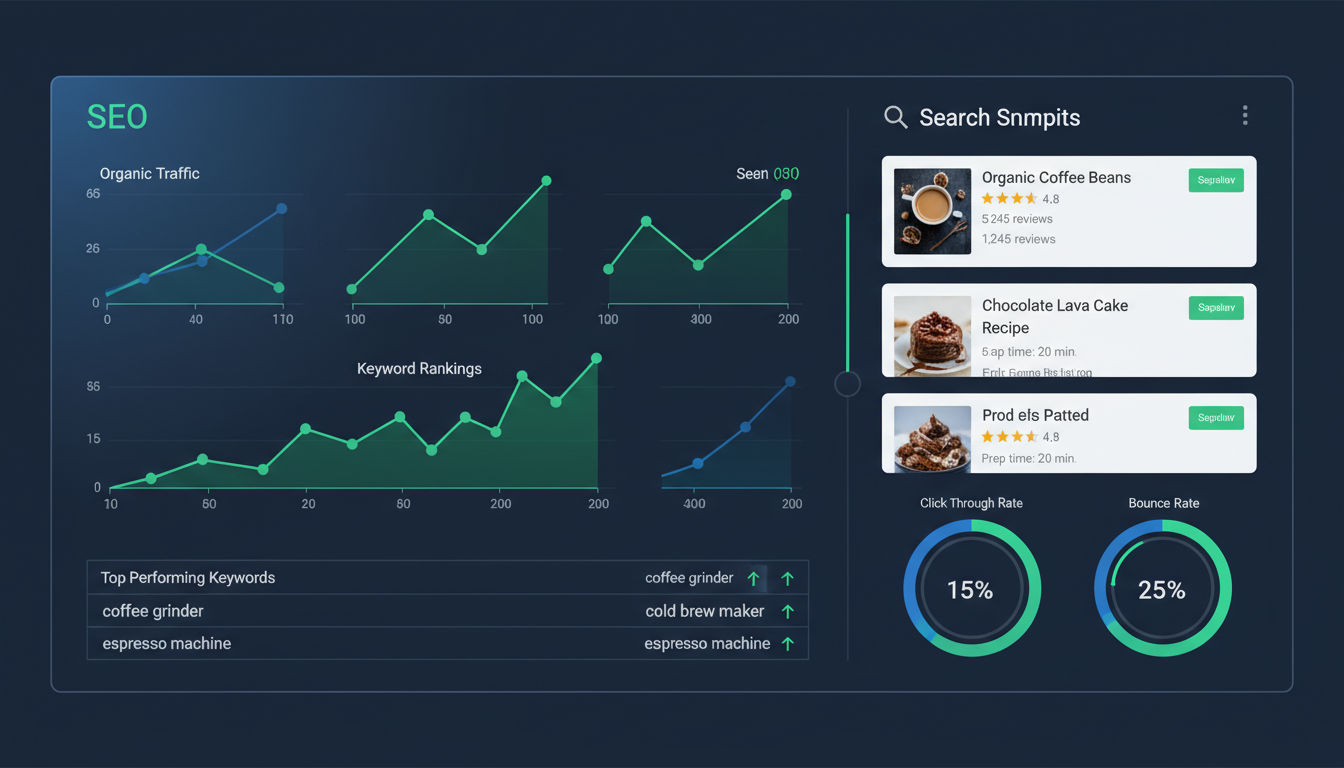
After implementation, ongoing monitoring helps you understand the impact of your schema markup and identify opportunities for improvement.
Tracking Rich Snippets in Search Results
Manually search for your target keywords and monitor whether rich results appear for your pages. Rich snippet appearance can vary based on query, location, and device, so test comprehensively.
Take screenshots of your rich results when they appear. This documentation helps you track changes over time and demonstrates the value of your SEO efforts.
Rich results don't appear immediately after implementation. Google needs time to recrawl your pages, process the new markup, and determine eligibility. This process typically takes days to weeks.
Not every page with schema markup will generate rich results. Google chooses to display rich results based on relevance and quality signals, not just the presence of structured data.
Measuring SEO Markup Impact in Google Search Console
Google Search Console's Performance report shows you which pages appear in rich results. Filter by "Search Appearance" to see traffic specifically from enhanced search features.
Compare click-through rates for pages with and without rich results. You should typically see higher CTR on pages that display enhanced results.
The Enhancement reports section specifically tracks your structured data. It shows which schema types Google has detected on your site and highlights any errors or warnings.
Monitor the Coverage report to ensure pages with schema markup are being indexed properly. Sometimes schema errors can indicate broader indexing issues.
Key Performance Indicators to Monitor
Click-through rate is your primary success metric. Schema markup should improve CTR by making your search listings more attractive and informative.
Impression share can increase as your rich results appear for more queries. Schema markup helps search engines understand your content relevance for a broader range of searches.
Average position might improve over time as schema markup helps search engines better understand and categorize your content. However, schema markup alone won't dramatically change rankings—it primarily affects CTR.
Conversion rates from organic search can improve because rich results attract more qualified traffic. Users who see detailed information before clicking are more likely to be genuinely interested in your offerings.
Track these metrics over time to build a complete picture of your schema markup's impact. The benefits often compound as search engines develop more confidence in your structured data implementation.
Conclusion
Schema markup represents one of the most valuable yet underutilized SEO strategies available to businesses today. By implementing structured data on your website, you're not just optimizing for search engines—you're creating a better experience for potential customers who can find exactly what they need in search results.
The implementation process might seem technical at first, but breaking it down into manageable steps makes it achievable for businesses of all sizes. Start with the schema types most relevant to your business, test thoroughly, and expand your implementation over time.
Next Steps for Schema Markup Success
Begin by auditing your website and identifying which pages would benefit most from structured data. Focus on your highest-traffic and highest-converting pages first to maximize impact.
Implement organization and local business schema as your foundation. These schema types establish your business identity and are relatively straightforward to implement correctly.
Add content-specific schema to your key pages—product schema for offerings, article schema for blog posts, and FAQ schema where appropriate. Each implementation builds on your structured data foundation.
Monitor your results consistently through Google Search Console and adjust your strategy based on performance data. Schema markup isn't a set-it-and-forget-it solution but an ongoing optimization opportunity.
When to Consider Professional Implementation Support
While many businesses can successfully implement basic schema markup themselves, complex implementations benefit from professional expertise. If you're managing a large website with multiple schema types, dealing with technical errors you can't resolve, or simply want to ensure optimal implementation from the start, professional support can save time and deliver better results.
At VohrTech, we implement schema markup as part of our comprehensive web development and digital marketing services. Our evidence-based approach ensures your structured data is implemented correctly, validated thoroughly, and optimized for maximum search visibility.
Whether you choose to implement schema markup yourself or work with professionals, the important thing is to start. Every day without structured data is a missed opportunity to improve your search presence and attract more qualified traffic to your business.
Ready to enhance your website's search visibility? Explore our portfolio of successful implementations or contact us to discuss how schema markup can benefit your specific business goals.