
Introduction
The SaaS industry is evolving faster than ever. Marketing strategies that worked just two years ago are already becoming obsolete. Traditional approaches like cold calling and generic email blasts simply don't resonate with today's informed buyers.
Software companies face unique challenges in 2026. The market is saturated with solutions, buyers are more skeptical, and the decision-making process involves multiple stakeholders. Your potential customers research extensively before even reaching out to sales. They compare features, read reviews, and test products independently.
This shift demands a completely different marketing approach. Success now requires a blend of data-driven decision making, product-led growth, and genuine value creation. You need to meet buyers where they are, provide real solutions to their problems, and build trust before asking for anything in return.
This guide covers seven essential SaaS marketing strategies designed specifically for growth in 2026. We'll explore how to build a solid analytical foundation, leverage content marketing effectively, and implement product-led growth tactics. You'll learn about account-based marketing for targeting high-value clients, marketing automation powered by AI, and proven customer retention strategies.
Whether you're launching a new SaaS product or scaling an existing one, these strategies will help you attract qualified leads, convert them into paying customers, and keep them engaged long-term. The tactics we'll discuss are practical, evidence-based, and designed for companies of all sizes. Let's dive into what makes SaaS marketing fundamentally different and how you can adapt to thrive in this competitive landscape.
Understanding the SaaS Marketing Landscape in 2026
SaaS marketing operates differently from traditional product marketing in fundamental ways. When you sell software as a service, you're not just making a one-time sale. You're starting a relationship that needs to deliver value month after month, year after year.
Traditional products focus on a single purchase decision. SaaS companies must think about the entire customer lifecycle. This includes initial awareness, trial or demo experiences, onboarding, ongoing engagement, renewals, and potential upgrades. Each stage requires different marketing approaches and messaging.
The subscription model creates unique challenges. Your customers can cancel anytime, which means you're constantly proving your value. This reality shapes every marketing decision you make. You can't just focus on acquisition. Retention and expansion become equally important to sustainable growth.
The Unique Challenges of B2B SaaS Marketing
B2B SaaS marketing presents additional complexity. You're typically selling to multiple decision-makers within an organization. The CFO cares about ROI and cost efficiency. The IT director worries about security and integration. End users want something intuitive and helpful.
Your marketing needs to address all these concerns simultaneously. A single piece of content might need to speak to technical requirements, business value, and user experience. This multi-layered approach requires careful planning and diverse content types.
Longer sales cycles also characterize B2B SaaS. Enterprise deals can take months or even years to close. Your marketing must nurture prospects over extended periods, maintaining engagement without being pushy. This demands sophisticated automation and personalization capabilities.
Current Market Trends Shaping Software Marketing
Several key trends are reshaping SaaS marketing strategies in 2026. Product-led growth has moved from trendy buzzword to standard practice. Companies now expect to try before they buy, making free trials and freemium models essential.
AI and automation have become table stakes rather than competitive advantages. Buyers expect personalized experiences, intelligent recommendations, and instant support. Marketing teams that don't leverage these technologies fall behind quickly.
Community-driven growth is gaining momentum. SaaS companies are building engaged user communities that provide peer support, share best practices, and advocate for the product. These communities reduce support costs while increasing customer loyalty and generating authentic word-of-mouth marketing.
Privacy regulations and data protection concerns continue to evolve. Marketing strategies must balance personalization with privacy, using first-party data responsibly while respecting user preferences. Transparency about data usage is no longer optional—it's a requirement for building trust.
Building a Data-Driven SaaS Marketing Foundation

Data transforms guesswork into strategy. Without proper metrics and analytics, you're essentially flying blind. Every successful SaaS marketing strategy starts with understanding what to measure and how to interpret those measurements.
The foundation of data-driven marketing rests on tracking the right metrics. Not all data points matter equally. Some vanity metrics look impressive but don't actually predict business success. Focus on metrics that directly correlate with revenue growth and customer satisfaction.
Essential Metrics Every SaaS Company Should Track
Start with your conversion rates at each funnel stage. Track how many website visitors become leads, how many leads request demos, and how many demos convert to paying customers. These percentages reveal where your funnel leaks and where to focus optimization efforts.
Monthly recurring revenue (MRR) and annual recurring revenue (ARR) form your financial foundation. Monitor how these numbers grow month over month. Break them down by customer segment, acquisition channel, and product tier to identify your most profitable sources.
Churn rate tells you what percentage of customers cancel each month. This metric directly impacts your ability to grow. Even small improvements in churn create massive long-term value. Track both customer churn and revenue churn, as losing high-value customers hurts more than losing small accounts.
Customer acquisition cost (CAC) measures how much you spend to acquire each new customer. Include all marketing and sales expenses divided by the number of new customers acquired. This metric helps you evaluate which channels deliver the best return on investment.
Creating a Customer Acquisition Cost Framework
A proper CAC framework goes beyond simple division. Break down your acquisition costs by channel, campaign, and customer segment. Your CAC from paid search might differ dramatically from content marketing or referrals.
Calculate CAC payback period—how long it takes for a customer to generate enough revenue to cover their acquisition cost. Shorter payback periods mean healthier cash flow and faster growth potential. Most successful SaaS companies aim for payback periods under 12 months.
Compare CAC across different customer segments. Enterprise customers typically cost more to acquire but deliver higher lifetime value. Small business customers might be cheaper to acquire but churn faster. Understanding these dynamics helps you allocate marketing budget effectively.
Set target CAC ratios for different acquisition channels. Not every channel needs the same efficiency. Brand awareness campaigns might have higher CAC but create long-term value. Direct response campaigns should deliver immediate ROI with lower CAC.
Lifetime Value Optimization Strategies
Customer lifetime value (LTV) represents the total revenue a customer generates throughout their relationship with your company. Increasing LTV is often easier and more profitable than reducing CAC. Focus on strategies that extend customer lifespan and increase average revenue per user.
The LTV to CAC ratio is crucial for sustainable growth. Aim for a ratio of at least 3:1, meaning each customer generates three times what you spent to acquire them. Ratios below 3:1 suggest you're spending too much on acquisition or not generating enough value from customers.
Improve LTV through strategic upselling and cross-selling. Identify natural upgrade paths and additional features that complement your core offering. Use data to predict which customers are most likely to expand their usage and target them with relevant offers.
Reduce involuntary churn from failed payments and expired cards. Implement dunning management systems that automatically retry failed payments and notify customers about billing issues. These simple technical improvements can reduce churn by 10-20%.
Using Analytics to Inform Your SaaS Marketing Strategies
Connect your analytics tools to create a complete picture of customer behavior. Integrate your website analytics with your CRM, marketing automation platform, and product usage data. This unified view reveals patterns invisible when looking at isolated data sources.
Use cohort analysis to understand how customer behavior changes over time. Compare customers acquired in different months or from different channels. This analysis reveals whether your product improvements are working and which acquisition sources deliver the best long-term customers.
Implement attribution modeling to understand which touchpoints contribute to conversions. Most B2B SaaS sales involve multiple interactions across various channels. Multi-touch attribution helps you value each interaction appropriately rather than giving all credit to the last click.
Create dashboards that make key metrics visible to your entire team. When everyone understands the numbers, they make better decisions. Update these dashboards regularly and review them in team meetings to maintain focus on what matters most.
At Vohrtech, we help SaaS companies implement comprehensive analytics frameworks that turn data into actionable insights. Our approach focuses on tracking metrics that actually drive business growth rather than vanity numbers that look good but don't move the needle.
Content Marketing for SaaS Growth
Content marketing remains one of the most effective saas marketing strategies for building authority and attracting qualified leads. Unlike paid advertising, quality content continues generating value long after publication. It educates prospects, answers their questions, and builds trust before they're ready to buy.
The key is creating content that genuinely helps your audience solve problems. Too many SaaS companies create self-promotional content that nobody wants to read. Focus instead on addressing real pain points and providing actionable solutions. The sales pitch comes later, after you've established credibility.
Quick question
Want to turn this into a real plan?
If you want expert help with strategy, design, development, marketing, or automation — we’ll recommend the fastest path forward for your goals.
Developing a Content Strategy That Converts
Start by mapping content to your customer journey. Awareness-stage content introduces problems and solutions broadly. Consideration-stage content compares approaches and evaluates options. Decision-stage content addresses specific objections and demonstrates your unique value.
Research what questions your prospects actually ask. Talk to your sales team about common objections. Review support tickets to find recurring confusion points. Mine online communities and forums where your target audience gathers. These real questions should drive your content calendar.
Create content clusters around core topics relevant to your audience. Choose a broad pillar topic, then develop multiple supporting pieces that dive deeper into specific aspects. This structure helps with SEO while thoroughly covering topics your audience cares about.
Establish a consistent publishing schedule you can maintain. Publishing three high-quality articles monthly beats publishing daily mediocre content. Consistency builds audience expectations and helps search engines recognize your site as an active, authoritative resource.
SEO Best Practices for Software Marketing
Keyword research forms the foundation of effective SaaS SEO. Focus on terms your potential customers actually search for, not just industry jargon. Use tools to identify search volume and competition levels. Prioritize long-tail keywords that signal buying intent over high-volume generic terms.
Optimize your content for featured snippets. Structure information to answer common questions directly and concisely. Use lists, tables, and clear definitions that search engines can easily extract and display. Featured snippets dramatically increase click-through rates.
Build topic authority through comprehensive coverage. Search engines favor sites that thoroughly address subjects over those with shallow, scattered content. When you publish about a topic, go deep. Cover it from multiple angles with interconnected pieces that link to each other.
Technical SEO matters as much as content quality. Ensure your site loads quickly, works perfectly on mobile devices, and has clean URL structures. Fix broken links, optimize images, and implement proper schema markup. These technical factors significantly impact rankings.
Create compelling meta descriptions and title tags. These elements don't directly affect rankings but dramatically influence click-through rates. Write titles that promise clear value and descriptions that make people want to learn more.
Creating Educational Content That Builds Authority
Educational content positions your company as a trusted advisor rather than just another vendor. Focus on teaching concepts, explaining industry trends, and helping readers make better decisions. This approach builds authority that translates into trust when purchase decisions arrive.
Develop comprehensive guides that become go-to resources in your industry. These pillar pieces should thoroughly cover important topics, providing more value than scattered blog posts. Update them regularly to maintain accuracy and relevance.
Create comparison content that helps buyers evaluate options objectively. Don't just promote your solution—honestly discuss different approaches, including when your product isn't the best fit. This transparency builds enormous trust with prospects.
Produce original research and data when possible. Surveys, industry reports, and benchmark studies generate backlinks, media coverage, and social shares. Original data establishes your company as a thought leader and creates content that competitors can't easily replicate.
Leveraging Case Studies and Customer Success Stories
Case studies transform abstract benefits into concrete results. They show prospects exactly how your solution solves real problems for companies like theirs. Structure case studies around the challenge, solution, and measurable results framework.
Choose case study subjects that represent your ideal customers. Prospects need to see themselves in your success stories. If you're targeting mid-market companies, case studies featuring enterprise giants might impress but won't convince.
Quantify results whenever possible. Specific numbers like "reduced processing time by 47%" carry more weight than vague claims about "significant improvements." Work with customers to identify measurable outcomes they're willing to share publicly.
Create multiple formats from each case study. Turn written case studies into videos, infographics, and social media snippets. Different prospects prefer consuming information in different formats. Repurposing maximizes the value of each success story.
Feature customer quotes prominently throughout your content. Brief testimonials add credibility to blog posts, landing pages, and social media content. Video testimonials are particularly powerful, as they're harder to fake and more emotionally engaging.
Our team at Vohrtech specializes in creating content strategies that drive real business results. We've helped numerous clients develop content that ranks well, attracts qualified traffic, and converts visitors into customers through strategic storytelling and SEO optimization.
Product-Led Growth Strategies
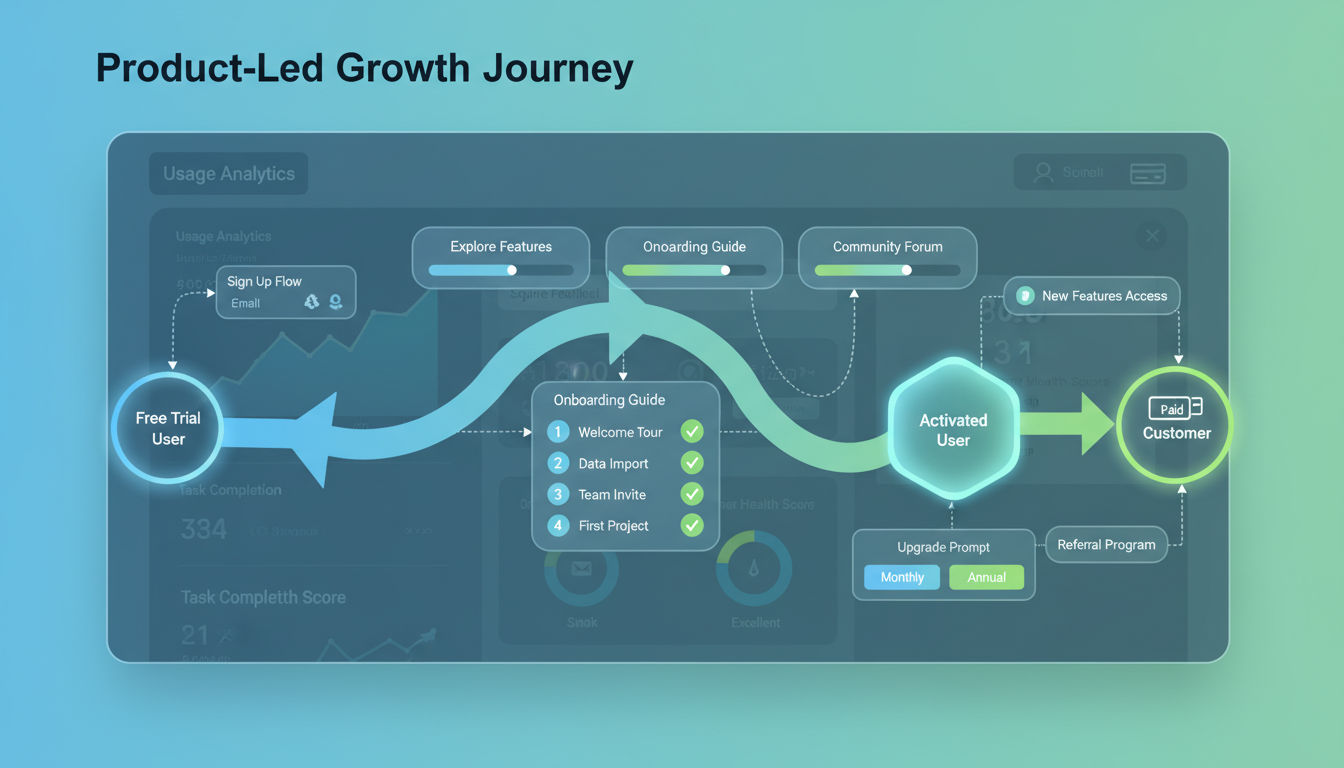
Product-led growth (PLG) has revolutionized how SaaS companies acquire and convert customers. Instead of relying solely on sales teams, PLG strategies let the product itself drive acquisition, conversion, and expansion. Users experience value directly before making purchase decisions.
This approach works because modern buyers prefer to evaluate software independently. They want to test features, explore interfaces, and confirm value before talking to sales. Companies that embrace PLG align with these buyer preferences rather than fighting against them.
Implementing Freemium Models Effectively
Freemium models offer basic functionality free forever while charging for advanced features or usage limits. The free tier must provide genuine value—enough that users would pay for it if necessary. Stingy free tiers that barely function don't convert users; they just frustrate them.
Identify your value metric—the core dimension that scales with customer success. This might be users, projects, storage, or transactions. Structure your free tier to let users experience real value while naturally hitting limits as their needs grow.
Make the upgrade path obvious and compelling. Users should clearly understand what they gain by upgrading. Display premium features contextually when free users encounter limitations. Show exactly how upgrading solves the problem they're currently facing.
Monitor free-to-paid conversion rates closely. Track which features drive upgrades and which limitations prompt conversions. Use this data to refine your tier structure. Most successful freemium products convert 2-5% of free users to paid accounts.
Balance free tier generosity with business sustainability. Your free users consume resources—support, infrastructure, and development time. The free tier should generate enough conversions and word-of-mouth growth to justify these costs.
Optimizing Free Trial Experiences
Free trials create urgency that freemium models lack. Users know they have limited time to evaluate your product, which often drives faster decision-making. Trial lengths should balance giving users enough time to experience value while maintaining momentum.
Reduce friction in trial signup. Require only essential information upfront. Every additional form field reduces conversion rates. You can collect more details later, after users experience your product's value.
Create structured onboarding that guides users to their "aha moment" quickly. This moment is when users first experience your product's core value. The faster users reach this point, the more likely they'll convert to paid plans.
Use email sequences to support trial users. Send tips for getting started, highlight key features, and share success stories. Time these messages based on user behavior rather than arbitrary schedules. If someone hasn't logged in for three days, send a re-engagement email.
Offer human assistance proactively. Chat support, onboarding calls, or concierge services can dramatically improve trial conversion rates. Personal attention helps users overcome obstacles and experience value faster.
In-App Marketing Tactics for Conversion
In-app messages reach users at the perfect moment—when they're actively using your product. These contextual prompts are far more effective than external marketing because they're relevant to what users are currently doing.
Use tooltips and product tours to educate users about features they haven't discovered. Many users never explore beyond basic functionality. Gentle guidance helps them unlock more value, increasing satisfaction and reducing churn.
Implement upgrade prompts at natural moments. When free users hit limits or try to access premium features, show clear explanations of what they'd gain by upgrading. Make the upgrade process seamless—ideally just a few clicks.
Celebrate user milestones and achievements. Acknowledge when users complete important actions or reach usage thresholds. These positive moments create emotional connections to your product while subtly demonstrating the value users are receiving.
Test different messaging, timing, and formats for in-app prompts. Small changes in wording or placement can significantly impact conversion rates. Use A/B testing to continuously improve your in-app marketing effectiveness.
Reducing Friction in the User Journey
Every unnecessary step in your user journey creates opportunities for prospects to abandon. Map out your complete user experience from first website visit through becoming a power user. Identify and eliminate friction points throughout.
Simplify signup and onboarding ruthlessly. Remove optional steps, reduce required information, and make the path to value as short as possible. Users should experience your product's core benefit within minutes, not hours or days.
Offer social login options to reduce signup friction. Many users prefer authenticating with Google, Microsoft, or other accounts rather than creating new credentials. This convenience can significantly improve signup conversion rates.
Optimize for mobile experiences even if your product is primarily desktop-focused. Many users discover and evaluate SaaS products on mobile devices. A poor mobile experience creates negative first impressions that are hard to overcome.
Provide clear next steps at every stage. Users should never wonder what to do next. Use clear calls-to-action, progress indicators, and guidance to move users smoothly through your product experience.
Account-Based Marketing for B2B SaaS
Account-based marketing (ABM) flips traditional marketing on its head. Instead of casting wide nets to attract many leads, ABM focuses resources on specific high-value accounts. This targeted approach works exceptionally well for B2B SaaS companies selling to enterprises or mid-market organizations.
ABM aligns marketing and sales around shared targets. Both teams work together to research, engage, and convert specific accounts. This alignment eliminates the common problem of marketing generating leads that sales considers unqualified.
Identifying and Targeting High-Value Accounts
Start by defining your ideal customer profile (ICP) with precision. Go beyond basic demographics to include firmographics, technographics, and behavioral characteristics. What industries do your best customers operate in? What technologies do they use? What challenges do they face?
Analyze your existing customer base to identify patterns. Which customers generate the most revenue? Which have the lowest churn rates? Which expand their usage most aggressively? These patterns reveal characteristics to seek in new prospects.
Build a target account list collaboratively with sales. Marketing might identify accounts that fit your ICP, but sales teams often have insights about relationships, timing, and organizational dynamics. Combined intelligence creates stronger target lists.
Prioritize accounts based on fit, opportunity size, and likelihood of success. You can't pursue every potential account with equal intensity. Tier your targets so you invest the most resources in accounts with the highest potential value.
Use intent data to identify accounts actively researching solutions. Third-party intent data reveals which companies are visiting relevant websites, downloading content, and searching for related terms. This information helps you time your outreach perfectly.
Personalization Strategies That Scale
True ABM requires personalization that goes far beyond inserting company names into email templates. Research each target account to understand their specific challenges, initiatives, and priorities. Reference these insights in your messaging.
Create custom content for high-priority accounts. This might include personalized landing pages, custom demos, or tailored proposals that address their unique situation. This level of personalization is only feasible for your most valuable targets.
Develop account-specific value propositions. Generic benefits don't resonate with sophisticated buyers. Show exactly how your solution addresses their particular challenges and supports their specific goals.
Use technology to scale personalization for lower-tier accounts. Marketing automation platforms can dynamically adjust content based on industry, company size, or other attributes. This automated personalization isn't as powerful as manual customization but allows you to personalize at scale.
Personalize across channels consistently. Your messaging should feel cohesive whether prospects encounter you via email, LinkedIn, your website, or display ads. Inconsistent messaging across channels undermines your credibility.
Multi-Channel ABM Campaigns
Effective ABM campaigns reach target accounts through multiple touchpoints. B2B buyers interact with numerous channels during their research process. Your presence across these channels reinforces your message and increases the likelihood of engagement.
Combine digital and traditional channels strategically. LinkedIn ads, personalized emails, and retargeting campaigns form your digital foundation. Add direct mail, events, or phone outreach for high-priority accounts. Physical touchpoints stand out in an increasingly digital world.
Coordinate timing across channels for maximum impact. A decision-maker might see your LinkedIn ad, receive a personalized email the next day, then encounter your content on an industry website. This coordinated exposure builds familiarity and credibility.
Engage multiple stakeholders within each target account. Enterprise purchases involve numerous decision-makers and influencers. Your ABM campaigns should reach executives, department heads, end users, and technical evaluators with messaging tailored to each role.
Measuring ABM Success
ABM metrics differ from traditional marketing metrics. Lead volume matters less than account engagement and progression. Track how many target accounts engage with your campaigns and how deeply they engage.
Monitor account engagement scores that aggregate interactions across channels. These scores reveal which accounts are warming up and which need different approaches. Rising engagement scores indicate your messaging resonates.
Measure account penetration—how many stakeholders within each target account you've reached. Deeper penetration increases your chances of winning deals and shortens sales cycles by building consensus early.
Track pipeline velocity for ABM-sourced opportunities. Do deals from targeted accounts close faster than other opportunities? Higher velocity indicates your ABM research and personalization are effectively addressing buyer concerns.
Calculate ROI at the account level rather than the campaign level. ABM requires significant investment in research, content creation, and multi-channel execution. Justify this investment by demonstrating the high value of closed deals from targeted accounts.
Leveraging Marketing Automation and AI

Marketing automation and artificial intelligence have transformed from nice-to-have tools into essential components of effective SaaS marketing strategies. These technologies enable personalization at scale, free up time for strategic work, and uncover insights hidden in vast amounts of data.
The key is implementing automation thoughtfully. Technology should enhance human creativity and judgment, not replace it. The most successful SaaS companies use automation to handle repetitive tasks while their teams focus on strategy, creativity, and relationship building.
Essential Automation Tools for SaaS Marketing
Email marketing automation forms the foundation of most SaaS marketing stacks. These platforms trigger messages based on user behavior, segment audiences dynamically, and track engagement metrics. Choose platforms that integrate seamlessly with your CRM and product analytics.
Marketing automation platforms extend beyond email to coordinate multi-channel campaigns. They track prospect behavior across your website, score leads based on engagement, and route qualified leads to sales automatically. This coordination ensures no prospects fall through cracks.
Social media scheduling tools maintain consistent presence without requiring constant manual posting. Schedule content in advance, monitor mentions and engagement, and analyze which posts resonate most with your audience. Automation handles distribution while you focus on creating quality content.
Analytics and reporting tools automatically compile data from multiple sources into comprehensive dashboards. Instead of manually pulling reports from various platforms, automation delivers insights to your inbox or displays them in real-time dashboards.
CRM automation keeps customer data current and triggers appropriate follow-ups. When prospects take specific actions, automation can create tasks for sales reps, update deal stages, or trigger personalized outreach. This ensures timely, relevant communication.
AI-Powered Personalization Techniques
AI analyzes patterns in user behavior to predict preferences and needs. These predictions enable personalization that would be impossible manually. AI can determine which content to show each visitor, when to send emails, and which offers are most likely to convert.
Dynamic content adapts website experiences to individual visitors. AI considers factors like industry, company size, previous interactions, and browsing behavior to display the most relevant messaging, case studies, and calls-to-action for each visitor.
Predictive lead scoring uses AI to identify which prospects are most likely to convert. Instead of simple rule-based scoring, AI considers hundreds of signals and patterns learned from historical data. This helps sales teams prioritize their efforts effectively.
AI-powered content recommendations suggest relevant articles, guides, or resources based on what users are currently viewing and their past behavior. These recommendations keep visitors engaged longer and guide them toward conversion.
Email optimization algorithms determine the best time to send messages to each recipient. AI analyzes when individuals typically open emails and schedules delivery for maximum engagement. This simple optimization can significantly improve open and click rates.
Chatbots and Conversational Marketing
AI chatbots provide instant responses to common questions, qualifying leads and booking meetings without human intervention. Modern chatbots understand natural language and maintain context throughout conversations, creating experiences that feel genuinely helpful rather than robotic.
Implement chatbots strategically on high-traffic pages. Homepage chatbots can guide visitors to relevant resources. Pricing page chatbots can answer questions that might prevent conversions. Product page chatbots can collect requirements and suggest appropriate solutions.
Use chatbots for lead qualification before routing to sales. Bots can ask qualifying questions, understand visitor needs, and determine whether prospects match your ideal customer profile. Qualified leads get routed to sales immediately while others receive helpful resources.
Create conversation flows that feel natural and helpful. Avoid making chatbots feel like interrogations. Ask questions conversationally, explain why you're asking, and provide value throughout the interaction. Good chatbot experiences build relationships rather than just collecting data.
Combine chatbots with human handoffs for complex questions. Bots should recognize when they can't adequately help and smoothly transfer conversations to human agents. This hybrid approach provides instant responses for simple questions while ensuring complex issues receive proper attention.
Predictive Analytics for Customer Behavior
Predictive analytics identifies which customers are likely to churn, upgrade, or become advocates. These predictions enable proactive interventions that prevent churn and capitalize on expansion opportunities before competitors can intervene.
Next step
Ready for a quote and timeline?
Send a quick note with what you’re building, your deadline, and what success looks like — we’ll reply with clear next steps.
Churn prediction models analyze usage patterns, support interactions, and engagement metrics to flag at-risk customers. Early warnings give customer success teams time to reach out, address concerns, and demonstrate value before customers decide to cancel.
Expansion prediction identifies customers likely to upgrade or purchase additional products. Target these customers with relevant offers and case studies showing how others have benefited from expansion. Timing outreach based on predictions dramatically improves conversion rates.
Content performance prediction helps prioritize content creation efforts. AI can analyze which topics, formats, and approaches are most likely to drive engagement and conversions. This insight helps you invest resources in content that delivers the best returns.
Campaign optimization uses AI to continuously test and refine marketing campaigns. Instead of manual A/B testing, AI can simultaneously test multiple variables and automatically shift budget toward best-performing combinations. This optimization happens faster and more thoroughly than manual approaches.
At Vohrtech, we help SaaS companies implement marketing automation and AI tools that drive measurable results. Our approach focuses on strategic implementation that enhances your team's capabilities rather than replacing human judgment with blind automation.
Customer Retention and Expansion Strategies
Acquiring new customers costs five to seven times more than retaining existing ones. Yet many SaaS companies obsess over acquisition while neglecting retention. This imbalance creates a leaky bucket scenario where you're constantly replacing churned customers rather than growing your base.
Retention and expansion should be central pillars of your saas marketing strategies. Happy customers who stick around and expand their usage drive predictable, profitable growth. They also become advocates who refer new customers, reducing your acquisition costs.
Reducing Churn Through Proactive Engagement
Churn prevention starts long before customers consider canceling. Monitor engagement metrics to identify disengagement early. Customers who stop logging in, reduce usage, or stop utilizing key features are at risk.
Implement early warning systems that alert your team when customers show churn signals. These might include declining login frequency, reduced feature adoption, or increased support tickets. Early intervention often prevents churn that would otherwise be inevitable.
Create proactive outreach campaigns for at-risk customers. Don't wait for them to complain or cancel. Reach out to understand their challenges, offer assistance, and demonstrate value. Sometimes customers disengage simply because they're busy or forgot about your product's capabilities.
Develop educational campaigns that help customers extract more value. Many customers only use a fraction of your product's capabilities. Regular tips, webinars, and tutorials help customers discover features that make your product indispensable.
Conduct exit interviews with churned customers. Understanding why customers leave provides invaluable insights for preventing future churn. Look for patterns in cancellation reasons and address the most common issues systematically.
Upselling and Cross-Selling Best Practices
Expansion revenue from existing customers is the most profitable growth lever available. These customers already trust you, understand your product, and have experienced value. Convincing them to expand is easier than acquiring new customers.
Identify natural upgrade triggers based on usage patterns. When customers approach plan limits, they're primed for upgrade conversations. Proactively reach out before they hit hard limits, positioning upgrades as enabling their success rather than removing restrictions.
Use data to personalize expansion offers. Customers who heavily use specific features might benefit from related add-ons. Companies growing rapidly might need higher-tier plans. Relevant, timely offers convert far better than generic upgrade pushes.
Create clear value propositions for each tier and add-on. Customers need to understand exactly what they gain by spending more. Quantify benefits when possible—"Process 10x more transactions" resonates more than "Increased capacity."
Implement gradual upgrade paths rather than forcing big jumps. If your plans go from $49 to $199 monthly, the leap feels risky. Intermediate options make expansion feel more manageable and reduce decision anxiety.
Train customer success teams to identify expansion opportunities. They interact with customers regularly and understand their evolving needs. Equip them with tools and incentives to surface expansion opportunities to sales teams.
Building a Customer Advocacy Program
Customer advocates are your most valuable marketing asset. Their authentic enthusiasm carries more weight than any marketing message you could create. Advocates generate referrals, create content, and defend your brand in online discussions.
Identify potential advocates systematically. Look for customers with high engagement, strong results, and positive sentiment. NPS surveys, product reviews, and support interactions reveal who loves your product most.
Make advocacy easy and rewarding. Provide templates, talking points, and resources that help advocates share their experiences. Recognize their contributions publicly and offer exclusive benefits like early access to features or special events.
Create a formal referral program with clear incentives. Offer discounts, credits, or other rewards for successful referrals. Make the referral process simple—ideally just sharing a unique link. Track referrals automatically and deliver rewards promptly.
Showcase customer success stories prominently. Feature advocates in case studies, testimonials, and speaking opportunities. This recognition often matters more than financial incentives while providing valuable social proof to prospects.
Creating a Community Around Your Product
Product communities transform customers from isolated users into connected members of something larger. Communities provide peer support, share best practices, and create emotional connections that dramatically reduce churn.
Choose the right platform for your community. Options include dedicated community platforms, Slack channels, LinkedIn groups, or forums on your website. Consider where your customers already spend time and what level of moderation you can provide.
Seed your community with valuable content and active participation. Communities need momentum to thrive. Initially, your team might need to ask questions, share tips, and facilitate discussions. As the community grows, members increasingly drive activity.
Recognize and empower community leaders. Some customers naturally emerge as helpful, active members. Give these superusers special recognition, exclusive access, or opportunities to influence your product roadmap. Their leadership amplifies your community's value.
Use your community for product feedback and beta testing. Engaged community members often provide the most thoughtful feedback and make excellent beta testers. This involvement deepens their investment in your product's success.
Integrate community into your customer journey. Invite new customers to join during onboarding. Reference community resources in support responses. Highlight community discussions in your newsletter. Make community participation a natural part of using your product.
If you're looking to improve retention and build stronger customer relationships, Vohrtech can help you develop comprehensive customer success strategies. We work with SaaS companies to create systems that keep customers engaged, satisfied, and growing their investment in your product.
Conclusion
SaaS marketing in 2026 requires a fundamentally different approach than traditional product marketing. The strategies we've covered—from data-driven foundations to product-led growth, from account-based marketing to AI-powered automation—work together to create sustainable, scalable growth.
Success starts with understanding your metrics and building decisions on data rather than assumptions. Content marketing establishes authority and attracts qualified prospects. Product-led growth lets your software sell itself while ABM targets your most valuable potential customers with precision.
Marketing automation and AI enable personalization at scale, freeing your team to focus on strategy and creativity. Customer retention and expansion strategies ensure you're not just filling a leaky bucket but building a growing base of satisfied advocates.
The most important takeaway is this: effective SaaS marketing focuses on creating genuine value at every customer touchpoint. From your first blog post to your onboarding experience to your customer community, every interaction should leave people better off than they were before.
Start by auditing your current marketing efforts against the strategies outlined here. Identify gaps and opportunities. Prioritize initiatives based on potential impact and available resources. Remember that implementing these strategies is a journey, not a destination.
Don't try to implement everything simultaneously. Choose one or two areas where you can make the biggest impact and focus there first. Build momentum with early wins, then expand to additional strategies as your capabilities grow.
The SaaS landscape will continue evolving, but the fundamental principles remain constant. Understand your customers deeply, provide genuine value, use data to inform decisions, and continuously optimize based on results. Companies that embrace these principles will thrive regardless of how specific tactics evolve.
Ready to take your SaaS marketing to the next level? Vohrtech specializes in helping software companies implement growth strategies that drive real results. Whether you need help with content marketing, marketing automation, or comprehensive digital strategy, our team brings the expertise and experience to accelerate your growth. Visit our services page to learn how we can support your success, or check out our portfolio to see how we've helped other companies achieve their growth goals.