
Introduction
Choosing the right web framework isn't just a technical decision. It's a business decision that affects your website's performance, your marketing results, and ultimately your revenue.
Many business owners find themselves caught between exciting new technologies and tried-and-true solutions. On one side, you have Next.js, the modern framework that's generating buzz in the development community. On the other, traditional frameworks like Angular, Vue.js, and Express have powered successful business websites for years.
The framework you choose impacts everything from how quickly customers can access your site to how easily Google can find you. It affects your development costs, your ability to scale, and how fast you can launch new features. These aren't just technical concerns. They're factors that directly influence your bottom line.
In Montreal's competitive business landscape and beyond, having a website that loads quickly, ranks well in search results, and converts visitors into customers isn't optional anymore. It's essential. The framework powering your site plays a crucial role in achieving these goals.
This comparison will help you understand the real differences between Next.js and traditional frameworks from a business perspective. We'll look at performance metrics that matter, SEO capabilities that drive traffic, development costs that affect your budget, and scalability needs for growth. You don't need to be a developer to make an informed decision. You just need to understand how these technologies impact your business goals.
By the end of this article, you'll have a clear picture of which approach makes sense for your specific situation. Whether you're building a new website or considering a redesign, this information will help you invest your resources wisely.
Understanding Next.js: The Modern Web Framework
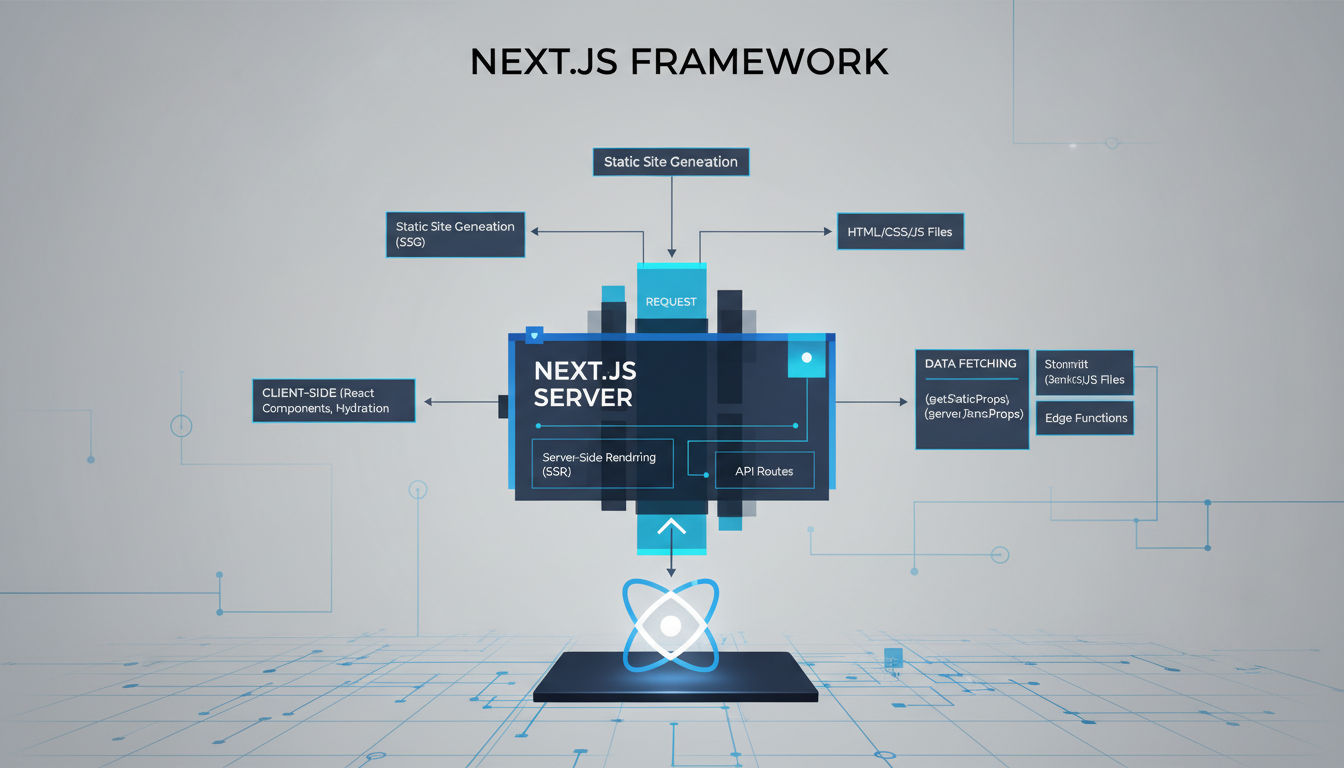
Next.js has become one of the fastest-growing web frameworks in recent years. But what exactly is it, and why are businesses paying attention?
At its core, Next.js is a React-based framework created by Vercel. Think of it as React with superpowers specifically designed for building business websites. While React itself is a library for building user interfaces, Next.js adds structure, features, and optimizations that make it easier to build complete web applications.
The framework launched in 2016 and has since been adopted by major companies including Netflix, Uber, and TikTok. This isn't just a experimental technology. It's a mature platform that's proven itself in high-traffic, business-critical applications.
Key Features That Set Next.js Apart
What makes Next.js different from other web frameworks? Several features stand out for business applications.
First, Next.js offers hybrid rendering. This means you can choose how each page is generated. Some pages can be pre-built at deployment time, others can be rendered on the server for each request, and some can be rendered in the browser. This flexibility lets you optimize each page for its specific purpose.
Second, the framework includes automatic code splitting. Your visitors only download the JavaScript they need for the page they're viewing. This makes your site faster without any extra work from your development team.
Third, Next.js has built-in image optimization. Images are automatically resized, optimized, and served in modern formats. Since images often account for most of a page's weight, this feature alone can dramatically improve loading times.
The framework also includes API routes, allowing developers to build backend functionality directly within the Next.js application. This simplifies architecture and reduces the number of moving parts in your technology stack.
The React Foundation and Its Business Implications
Next.js builds on React, which is maintained by Meta (formerly Facebook) and has the largest developer community of any frontend framework. This foundation matters for businesses in several ways.
The large React ecosystem means more available developers, more third-party tools, and more solutions to common problems. When you need to hire developers or find contractors, React and Next.js skills are widely available. This affects both your hiring timeline and your costs.
React's component-based architecture also promotes code reusability. Developers can build interface elements once and use them throughout your site. This speeds up development and creates consistency in your user experience.
The React foundation also means Next.js benefits from years of refinement and optimization. You're not betting on unproven technology. You're building on a foundation that powers some of the world's most-visited websites.
For businesses, this translates to reduced risk. The technology has been tested at scale, common problems have known solutions, and the framework will likely be supported and improved for years to come.
Traditional Frameworks: The Established Players
When we talk about traditional web frameworks, we're referring to established technologies that have powered business websites for years. The main players include Angular, Vue.js, and Express, each serving different needs in the web development ecosystem.
Angular, developed and maintained by Google, is a comprehensive framework that provides everything you need to build complex web applications. It's been around since 2010 (with a major rewrite in 2016), making it one of the most mature options available.
Vue.js takes a different approach. Created by Evan You in 2014, it's designed to be incrementally adoptable. You can use as much or as little of Vue as you need, making it flexible for various project sizes. Despite being independently maintained rather than backed by a large corporation, Vue has gained significant traction in the business world.
Express, on the other hand, is a backend framework for Node.js. It's often used in combination with frontend frameworks to create full-stack applications. Its minimalist approach gives developers maximum flexibility in how they structure their applications.
Their Proven Track Record in Business Applications
These traditional frameworks have powered countless successful business websites and applications. Their longevity isn't just about being old. It's about being tested, refined, and proven in real-world conditions.
Angular is particularly popular in enterprise environments. Large organizations like Microsoft, IBM, and Forbes use Angular for their web applications. Its opinionated structure and comprehensive tooling make it attractive for big teams working on complex projects.
Vue.js has found success with companies ranging from small startups to major corporations. Alibaba, one of the world's largest e-commerce platforms, uses Vue extensively. The framework's gentle learning curve and excellent documentation have made it a favorite for businesses that need to onboard new developers quickly.
Express has become the de facto standard for Node.js backend development. Its simplicity and flexibility have made it the foundation for countless APIs and server-side applications. When businesses need a proven backend solution, Express is often the first choice.
Why Companies Have Relied on These JavaScript Frameworks
The continued popularity of these frameworks among businesses isn't accidental. Several factors contribute to their staying power.
First, they offer stability. These frameworks have mature ecosystems with established best practices. When your development team encounters a problem, chances are someone else has solved it before. This reduces development time and risk.
Second, they have large talent pools. Developers have had years to learn these technologies, and many universities and bootcamps include them in their curricula. This makes hiring easier and potentially more cost-effective.
Third, they provide comprehensive documentation and community support. When your team needs help, they can find tutorials, forums, and experts familiar with the technology. This support network is invaluable when troubleshooting issues or implementing new features.
Fourth, these frameworks have proven their ability to scale. They've been used in applications serving millions of users, handling complex business logic, and integrating with various backend systems. This track record provides confidence for businesses making long-term technology investments.
Quick question
Want to turn this into a real plan?
If you want expert help with strategy, design, development, marketing, or automation — we’ll recommend the fastest path forward for your goals.
Finally, many businesses already have existing applications built with these frameworks. The cost and risk of switching to something new often outweighs the potential benefits, especially when the current solution is working well.
Performance Comparison: Speed and User Experience

Website performance directly impacts your business results. Studies consistently show that faster websites generate more conversions, higher engagement, and better user satisfaction. The framework you choose plays a significant role in your site's performance.
Server-Side Rendering vs Client-Side Rendering
Understanding how different frameworks render pages helps explain their performance characteristics. This is where Next.js and traditional frameworks often diverge significantly.
Traditional frameworks like Angular and Vue typically use client-side rendering by default. When someone visits your site, their browser downloads JavaScript files, executes them, and then builds the page. This means visitors see a blank screen or loading indicator until the JavaScript finishes processing.
Next.js, by contrast, offers server-side rendering out of the box. The server generates the full HTML for each page before sending it to the browser. Visitors see content immediately, even before JavaScript loads. This creates a perception of speed that affects user experience significantly.
The difference becomes more pronounced on slower devices or connections. A customer browsing your site on a phone with a spotty connection will have a much better experience with server-side rendering. They can start reading content and clicking links immediately, rather than waiting for JavaScript to execute.
However, client-side rendering isn't inherently bad. It can provide very smooth interactions once the initial load completes. Single-page applications built with traditional frameworks can feel incredibly responsive because they don't need to reload the entire page for navigation.
Next.js bridges this gap with its hybrid approach. You get the immediate content visibility of server-side rendering combined with the smooth interactions of a single-page application. This combination often provides the best user experience.
Page Load Times and Their Impact on Conversions
Let's talk about what performance means in practical terms. According to research from Google, 53% of mobile users abandon sites that take longer than three seconds to load. Every additional second of load time can decrease conversions by up to 20%.
Next.js typically delivers faster initial page loads than traditional client-side frameworks. In real-world testing, Next.js sites often load in under two seconds, while equivalent sites built with traditional frameworks might take three to five seconds for the initial load.
This speed advantage comes from several factors working together. Server-side rendering provides immediate content. Automatic code splitting reduces the amount of JavaScript downloaded. Image optimization reduces bandwidth usage. These features combine to create noticeably faster experiences.
Traditional frameworks can achieve similar speeds, but it requires more manual optimization work. Developers need to implement code splitting, configure server-side rendering (if available), and optimize assets manually. This adds development time and complexity.
Real-World Performance Metrics for Business Websites
Performance isn't just about raw speed. It's about how the speed affects real business metrics. Let's look at some practical examples.
A typical e-commerce site built with Next.js might achieve a Lighthouse performance score of 90-100. The same site built with a traditional client-side framework might score 60-80 without significant optimization work. These scores correlate with real user experience and, ultimately, conversion rates.
In Montreal's competitive market, businesses using Next.js have reported noticeable improvements in key metrics. Bounce rates often decrease by 20-30% when migrating from traditional client-side frameworks to Next.js. Time on site increases as pages load faster and navigation feels more responsive.
Search engines also consider page speed as a ranking factor. Google's Core Web Vitals measure loading performance, interactivity, and visual stability. Next.js sites typically perform better on these metrics without requiring extensive optimization.
However, it's important to note that framework choice isn't the only factor affecting performance. Poor code quality, unoptimized images, and excessive third-party scripts can slow down any site regardless of framework. A well-optimized Angular or Vue application can outperform a poorly built Next.js site.
The key difference is that Next.js makes it easier to achieve good performance by default. Traditional frameworks can match this performance, but it requires more expertise and effort from your development team.
SEO Capabilities: Visibility in Search Results

Search engine optimization determines whether potential customers can find your business online. The framework powering your website significantly impacts your SEO capabilities and, by extension, your organic traffic.
How Next.js Handles SEO Out of the Box
Next.js was designed with SEO as a priority. This focus shows in several built-in features that make your site more search-engine friendly without extra work.
The server-side rendering we discussed earlier is crucial for SEO. When search engines crawl your site, they receive fully rendered HTML with all your content visible. Google and other search engines can easily understand what each page is about, index it properly, and rank it accordingly.
Next.js also generates proper meta tags and structured data easily. The framework's Head component lets developers set page titles, descriptions, and other SEO elements for each page individually. This granular control helps optimize every page for its target keywords.
The framework's automatic static optimization is another SEO advantage. Pages without server-side data requirements are automatically pre-rendered as static HTML at build time. These static pages load extremely fast, which search engines reward with better rankings.
Image optimization in Next.js also benefits SEO. The framework automatically generates appropriate alt text placeholders and serves images in modern formats that load quickly. Since page speed is a ranking factor, this optimization helps your search visibility.
Finally, Next.js makes it easy to create XML sitemaps and robots.txt files that help search engines crawl your site efficiently. While you can add these features to any framework, Next.js streamlines the process.
SEO Challenges with Traditional Frameworks
Traditional client-side frameworks face inherent SEO challenges. These aren't insurmountable, but they require additional work to overcome.
The main issue is that search engine crawlers receive minimal HTML when visiting client-side rendered sites. The page content only appears after JavaScript executes. While Google has improved its ability to render JavaScript, this process isn't perfect or instantaneous.
This delay can affect how quickly your pages get indexed. In competitive markets like Montreal's business landscape, being indexed faster than competitors can mean the difference between winning or losing a customer.
Angular and Vue offer server-side rendering solutions (Angular Universal and Nuxt.js respectively), but these require additional setup and configuration. You're essentially adding another layer of complexity to achieve what Next.js provides by default.
Traditional frameworks also make it easier to accidentally create SEO problems. Single-page applications often struggle with proper URL structure, making it harder for search engines to understand your site's organization. Dynamic content loading can hide important information from crawlers.
Meta tag management in client-side frameworks requires third-party libraries or custom solutions. This adds dependencies and potential points of failure to your application.
Impact on Organic Traffic and Lead Generation
The SEO differences between frameworks translate directly to business results. Better SEO means more organic traffic, which typically converts better than paid traffic because visitors are actively searching for your solutions.
Businesses that have migrated from traditional client-side frameworks to Next.js often report significant increases in organic traffic. Improvements of 30-50% within six months aren't uncommon, though results vary based on industry and competition.
These traffic increases directly impact lead generation. More visibility in search results means more potential customers discovering your business. For service-based businesses in particular, organic search traffic often represents the highest-quality leads.
The speed advantages of Next.js also contribute to better SEO performance. Google's algorithm explicitly considers page speed and Core Web Vitals when ranking sites. Faster sites tend to rank higher, all else being equal.
However, it's crucial to understand that framework choice is just one SEO factor among many. Quality content, proper keyword research, authoritative backlinks, and technical optimization all matter significantly. A Next.js site with poor content won't outrank a traditional framework site with excellent content.
The advantage of Next.js is that it removes technical SEO barriers. Your team can focus on creating great content and building authority rather than fighting framework limitations. This efficiency can make a real difference in competitive markets where every advantage matters.
Development Speed and Cost Efficiency
The framework you choose affects how quickly you can launch your website and how much it costs to build and maintain. These factors directly impact your return on investment and ability to respond to market opportunities.
Time-to-Market Considerations
Getting your website or new features to market quickly can provide significant competitive advantages. Next.js offers several features that accelerate development timelines.
The framework's file-based routing system eliminates the need for complex route configuration. Developers simply create files in the pages directory, and Next.js automatically generates the corresponding routes. This simplicity speeds up development, especially for sites with many pages.
Next.js also includes hot module replacement, which means developers see changes instantly without refreshing the browser. This might seem minor, but it adds up to significant time savings over the course of a project. Developers can iterate faster and catch issues earlier.
The framework's built-in features reduce the time spent on setup and configuration. Image optimization, API routes, and SEO tools work out of the box. With traditional frameworks, developers often spend days or weeks setting up these capabilities before writing any business logic.
Traditional frameworks can also deliver projects quickly, especially when teams have extensive experience with them. Established codebases, reusable components, and familiar patterns can accelerate development. However, they typically require more initial setup and configuration than Next.js.
For businesses launching new products or responding to market changes, Next.js's faster development cycle can mean the difference between capturing an opportunity or missing it. In Montreal's dynamic business environment, speed to market often determines success.
Developer Availability and Hiring Costs
The availability of qualified developers affects both your timeline and your budget. This is where the comparison becomes nuanced.
React developers, who can work with Next.js, are abundant. React has been the most popular frontend framework for several years, meaning large talent pools in most markets. However, Next.js-specific experience is less common than general React knowledge.
Angular developers are also readily available, particularly for enterprise projects. Many developers have Angular experience from corporate environments. Vue.js developers are somewhat less common but still relatively easy to find.
In terms of cost, React and Next.js developers typically command similar rates to Angular developers in most markets. Vue.js developers might be slightly less expensive in some regions, though this varies significantly by location.
The more relevant consideration is productivity. A developer experienced with Next.js can often accomplish in days what might take weeks with a traditional framework requiring more manual setup. This efficiency can offset higher hourly rates.
For businesses in Montreal and similar markets, finding quality developers for any modern framework is generally feasible. The question becomes whether you want to invest in training existing developers on new technology or hire people with specific framework experience.
Long-Term Maintenance and Scalability Expenses
Initial development costs are just part of the equation. Long-term maintenance and scaling costs often exceed the original development investment.
Next.js applications typically require less maintenance effort than traditional frameworks. The framework handles many concerns automatically, reducing the surface area for bugs. Automatic updates to core features like image optimization mean your site improves over time without additional development work.
The framework's TypeScript support (optional but recommended) also reduces long-term maintenance costs. Type checking catches errors before they reach production, reducing debugging time and preventing issues that affect users.
Traditional frameworks also support TypeScript and can be maintained efficiently. However, they often require more custom code to achieve the same functionality, which means more code to maintain, test, and update.
Scaling costs depend on your hosting solution and traffic patterns. Next.js works well with modern hosting platforms that can scale automatically based on demand. This can reduce infrastructure costs compared to traditional server-based hosting.
However, traditional frameworks also support modern hosting approaches. The real difference is that Next.js's architecture makes it easier to adopt these cost-efficient hosting solutions without significant refactoring.
For growing businesses, the ability to add features quickly without accumulating technical debt is valuable. Next.js's structured approach and built-in best practices help maintain code quality as your application grows, potentially reducing the need for costly rewrites down the line.
Scalability for Growing Businesses

Your website needs to grow with your business. The framework you choose today should support your needs not just now but also as your traffic increases, your content expands, and your requirements evolve.
Handling Increased Traffic and Content
As your business grows, your website will need to handle more visitors and more content. Different frameworks approach this challenge in different ways.
Next.js excels at handling growth through its flexible rendering options. You can pre-generate static pages for content that doesn't change often, reducing server load. For dynamic content, incremental static regeneration lets you update pages without rebuilding your entire site. This approach scales efficiently because static pages require minimal server resources.
The framework's automatic code splitting also helps with scale. As you add features and pages, users still only download the code they need. Your site doesn't slow down just because it's gotten larger.
Traditional frameworks can also scale effectively, but the approach differs. Client-side frameworks move more processing to users' devices, which can actually help server scalability. However, this comes at the cost of slower initial loads, especially on lower-powered devices.
Angular's dependency injection system and modular architecture make it well-suited for large applications. Many enterprise applications with thousands of pages run on Angular successfully. Vue.js can also scale well, particularly when combined with proper state management solutions.
The key difference is that Next.js makes scaling easier by default. Traditional frameworks require more architectural planning and custom optimization to achieve similar scalability.
Infrastructure Requirements and Hosting Considerations
The hosting and infrastructure costs for your website can vary significantly based on your framework choice. These costs become increasingly important as your traffic grows.
Next.js works exceptionally well with modern edge hosting platforms like Vercel, Netlify, and AWS Amplify. These platforms can serve your static pages from locations close to your users worldwide, improving speed while keeping costs reasonable. They automatically scale to handle traffic spikes without manual intervention.
This serverless architecture means you pay primarily for what you use. During slow periods, your costs are minimal. During traffic spikes, the platform scales automatically without your site going down. For businesses with variable traffic patterns, this can result in significant cost savings.
Traditional frameworks typically require more traditional hosting approaches. You might need dedicated servers or containers that run constantly, even during low-traffic periods. This can be more expensive, though it also provides more control over your infrastructure.
Next step
Ready for a quote and timeline?
Send a quick note with what you’re building, your deadline, and what success looks like — we’ll reply with clear next steps.
However, traditional frameworks can also be deployed to modern platforms. With proper configuration, Angular and Vue applications can leverage similar hosting solutions to Next.js. The difference is that Next.js is designed for these platforms from the ground up, while traditional frameworks require more configuration.
For businesses evaluating web development options, hosting costs over time can significantly impact total cost of ownership. A framework that works well with cost-efficient hosting can save thousands of dollars annually as your site grows.
Future-Proofing Your Digital Investment
Technology changes rapidly, and the framework you choose today needs to remain viable for years. Future-proofing isn't about picking the newest technology. It's about choosing technology that will continue to evolve and maintain support.
Next.js has strong momentum in the developer community. It's backed by Vercel, a well-funded company, and has adoption from major corporations. This suggests the framework will continue to be developed and supported for the foreseeable future.
The React foundation also provides stability. React isn't going anywhere, and Next.js benefits from improvements to the React ecosystem. As React evolves, Next.js incorporates these improvements, keeping your application modern without major rewrites.
Traditional frameworks also offer strong future-proofing, particularly Angular with Google's backing and Vue.js with its large community. These frameworks have proven their longevity. Angular has been around for over a decade, and Vue has a clear roadmap for future development.
The risk with any framework is becoming locked into outdated patterns. Next.js's architecture encourages modern best practices, making it easier to adopt new technologies as they emerge. The framework's flexibility means you can gradually adopt new approaches without complete rewrites.
For businesses making long-term technology investments, choosing a framework with strong community support, clear development direction, and proven ability to evolve is crucial. Both Next.js and established traditional frameworks meet these criteria, though Next.js's more recent architecture incorporates more modern web development patterns.
Which Framework is Right for Your Business?
Choosing between Next.js and traditional frameworks isn't about picking the "best" technology. It's about finding the right fit for your specific business needs, resources, and goals.
Decision Factors Based on Business Size and Goals
Your business size and objectives should guide your framework decision. Different situations call for different solutions.
For startups and small businesses launching new websites, Next.js often makes the most sense. The framework's fast development time, built-in SEO capabilities, and performance advantages help you establish a strong online presence quickly. The lower barrier to achieving good results means you can focus on your business rather than technical optimization.
Medium-sized businesses with existing websites face a different calculation. If your current site performs well and you're not experiencing technical limitations, migrating to a new framework might not be worth the investment. However, if you're planning a significant redesign or experiencing performance or SEO challenges, Next.js deserves serious consideration.
Enterprise businesses with complex requirements might benefit from either approach. Next.js can handle enterprise-scale applications, but so can traditional frameworks like Angular. The decision often comes down to your existing technology stack and team expertise.
If SEO and performance are critical to your business model, Next.js provides advantages that are difficult to match with traditional frameworks. E-commerce businesses, content publishers, and lead generation websites particularly benefit from Next.js's strengths in these areas.
If you're building a complex internal application where SEO doesn't matter and users have reliable internet connections, traditional frameworks might be perfectly adequate. The additional features of Next.js wouldn't provide proportional value.
When Next.js Makes the Most Sense
Several scenarios strongly favor Next.js over traditional alternatives. Recognizing these situations can help you make the right choice.
Choose Next.js when SEO is a primary concern. If organic search traffic is crucial to your business model, Next.js's built-in SEO advantages provide real value. The framework makes it easy to achieve excellent search visibility without extensive technical optimization.
Next.js is also ideal when performance directly impacts your revenue. For e-commerce sites where every second of load time affects conversion rates, Next.js's speed advantages translate directly to business results.
If you're building a content-heavy website like a blog, news site, or resource center, Next.js excels. The framework's static generation capabilities make it easy to publish large amounts of content that loads quickly and ranks well.
Businesses that need to move quickly should consider Next.js. The framework's rapid development cycle and built-in features let you launch faster and iterate more quickly than with traditional frameworks requiring extensive setup.
If you're starting fresh without existing code to maintain, Next.js provides a modern foundation that incorporates current best practices. You won't need to retrofit older frameworks with features that Next.js includes by default.
When Traditional Web Frameworks Are the Better Choice
Traditional frameworks remain the right choice in many situations. Understanding when they make more sense prevents unnecessary technology changes.
If you have an existing application built with a traditional framework that's working well, there's often no compelling reason to migrate. The cost and risk of rewriting a functioning application typically outweighs the benefits unless you're facing specific problems that Next.js would solve.
When your team has deep expertise in a traditional framework, leveraging that knowledge can be more valuable than adopting new technology. Experienced developers can build excellent applications with any modern framework. Forcing a switch to Next.js might reduce productivity rather than improve it.
For applications where SEO doesn't matter—internal tools, authenticated applications, or admin dashboards—the SEO advantages of Next.js provide no value. Traditional frameworks might be simpler for these use cases.
If you need specific features or integrations that work better with traditional frameworks, that practical consideration should guide your decision. Some enterprise systems integrate more smoothly with Angular, for example.
Budget-constrained projects with access to affordable developers experienced in traditional frameworks might benefit from sticking with familiar technology. The potential advantages of Next.js might not justify the learning curve and potential delays.
For businesses in Montreal or elsewhere looking to make informed technology decisions, consulting with experienced developers who understand both approaches can provide valuable perspective. The right choice depends on your unique situation, and experienced professionals can help evaluate the tradeoffs specific to your needs.
Conclusion
The choice between Next.js and traditional frameworks ultimately depends on your specific business needs. Next.js offers compelling advantages in SEO, performance, and development speed, making it an excellent choice for content-driven and e-commerce websites. Traditional frameworks provide stability, extensive ecosystems, and proven enterprise capability.
For most businesses launching new websites today, Next.js provides the best balance of features, performance, and future-proofing. However, if you have existing applications working well or specific requirements that favor traditional frameworks, there's no need to change just for the sake of using newer technology.
The most important factor isn't which framework is theoretically better. It's which framework best serves your business goals, works with your team's expertise, and fits your budget. Take time to evaluate your specific needs before making this important decision.
Ready to discuss which framework makes sense for your business? Contact our team to explore your options and see examples of our work with various technologies.