Introduction
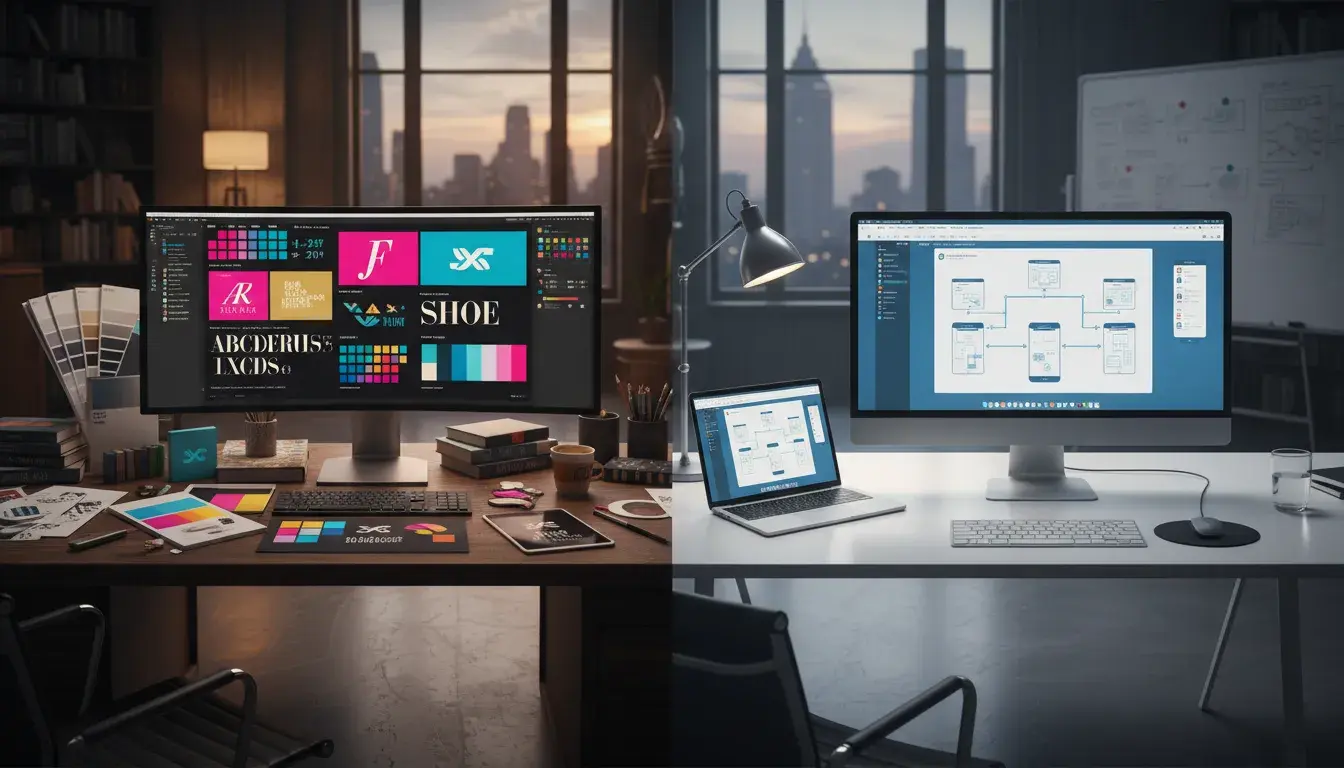
Many aspiring designers find themselves at a crossroads, wondering whether to pursue graphic design or UX design. At first glance, these careers might seem similar. Both involve creativity, problem-solving, and visual communication. However, the reality is quite different.
The confusion between graphic design and UX design is understandable. Both fields have evolved significantly over the past decade. Traditional graphic designers now work on digital projects, while UX designers must understand visual principles. The lines have blurred, making career decisions more challenging.
Choosing the right design career path matters more than you might think. Your decision will shape your daily work, the skills you develop, and your earning potential. It will determine the types of projects you tackle and the problems you solve. Making an informed choice now can save you years of frustration later.
The good news? Understanding the core differences between graphic design vs UX design doesn't have to be complicated. Each field has distinct responsibilities, methodologies, and outcomes. Once you grasp these fundamentals, the path forward becomes clearer.
This comprehensive comparison will walk you through everything you need to know. We'll explore what each career actually involves on a day-to-day basis. You'll learn about the skills required, education paths, salary expectations, and career growth opportunities. We'll also examine the tools and processes that define each discipline.
Whether you're a student choosing your major, a professional considering a career change, or a business owner trying to understand which designer to hire, this guide will help. By the end, you'll have a clear picture of both design careers and which one aligns with your goals, interests, and strengths.
What is Graphic Design?

Graphic design is the art and practice of creating visual content to communicate messages. Graphic designers use typography, imagery, color, and layout to craft designs that inform, inspire, or persuade audiences. This creative field has existed for decades, evolving from print-focused work to encompass digital media.
The core principles of graphic design include balance, contrast, emphasis, movement, proportion, and unity. These fundamentals guide designers in creating visually appealing and effective compositions. A strong graphic design communicates its intended message clearly while being aesthetically pleasing.
Primary Focus and Objectives
Graphic designers primarily focus on visual communication and brand identity. Their main objective is to make information attractive and easy to understand. They work to evoke specific emotions and create memorable visual experiences that resonate with target audiences.
The graphic design career centers on solving communication problems through visual means. Whether designing a logo, poster, or social media graphic, the goal remains consistent: convey the right message to the right people in the most visually compelling way possible.
Key Responsibilities of Graphic Designers
Graphic designers wear many hats throughout their careers. They meet with clients to understand project requirements and brand guidelines. Research plays a crucial role as designers study target audiences, competitors, and industry trends.
The creative process involves developing concepts, sketching ideas, and creating multiple design variations. Designers select appropriate colors, fonts, images, and layouts that align with project goals. They present concepts to clients or creative directors, incorporating feedback and making revisions.
Technical skills are essential. Graphic designers prepare files for print or digital distribution, ensuring proper resolution, color modes, and file formats. They collaborate with copywriters, photographers, and other creative professionals to bring projects to life.
Common Deliverables and Projects
Graphic designers produce a wide range of visual materials. Brand identity projects include logos, business cards, letterheads, and brand style guides. Marketing materials encompass brochures, flyers, posters, and advertisements for both print and digital channels.
Digital deliverables have become increasingly important. Social media graphics, email templates, web banners, and infographics are now standard projects. Packaging design, book covers, magazine layouts, and event materials also fall under the graphic design umbrella.
Many graphic designers specialize in particular areas. Some focus exclusively on logo design and branding, while others concentrate on editorial design or packaging. This specialization allows designers to develop deep expertise in their chosen niche.
What is UX Design?

UX design, or user experience design, is the process of creating products that provide meaningful and relevant experiences to users. This discipline focuses on the entire journey users take when interacting with a product or service. UX design encompasses everything from initial discovery to the final interaction.
The fundamental concepts of UX design include usability, accessibility, desirability, and value. Unlike graphic design, UX design prioritizes how something works over how it looks. The visual appearance matters, but only as part of a larger system designed to meet user needs effectively.
Primary Focus and Objectives
UX designers focus on understanding user behaviors, needs, and motivations. Their primary objective is to create intuitive, efficient, and enjoyable experiences. They aim to remove friction points and make interactions as smooth as possible.
The ultimate goal of UX design is to solve real problems for real people. This means conducting research, testing assumptions, and iterating based on data. Success in UX design means users can accomplish their goals quickly and easily, without frustration or confusion.
Key Responsibilities of UX Designers
UX designers begin projects by conducting user research. This includes interviews, surveys, and observational studies to understand user needs. They analyze data to identify patterns, pain points, and opportunities for improvement.
Creating user personas and journey maps helps designers visualize the user experience. These tools guide decision-making throughout the design process. UX designers develop information architecture, determining how content and features should be organized.
Wireframing and prototyping are core activities. UX designers create low-fidelity sketches and high-fidelity interactive prototypes to test ideas. They conduct usability testing sessions, observing how real users interact with designs and gathering feedback.
Collaboration is central to UX design. Designers work closely with product managers, developers, stakeholders, and other designers. They communicate findings, advocate for users, and ensure the final product meets both user needs and business goals.
Common Deliverables and Projects
UX designers produce documentation and design artifacts throughout the project lifecycle. User research reports synthesize findings and provide actionable insights. Personas and user journey maps visualize target users and their experiences.
Quick question
Want to turn this into a real plan?
If you want expert help with strategy, design, development, marketing, or automation — we’ll recommend the fastest path forward for your goals.
Wireframes show the basic structure and layout of screens without detailed visual design. Prototypes range from simple clickable mockups to fully interactive simulations. These tools help teams test and refine ideas before development begins.
Information architecture diagrams and site maps outline content organization. User flow diagrams illustrate the paths users take to complete tasks. UX designers also create design specifications and style guides to ensure consistent implementation.
Mobile apps, websites, software applications, and even physical products benefit from UX design. Any product that people interact with can be improved through thoughtful UX design practices.
Core Differences Between Graphic Design vs UX Design
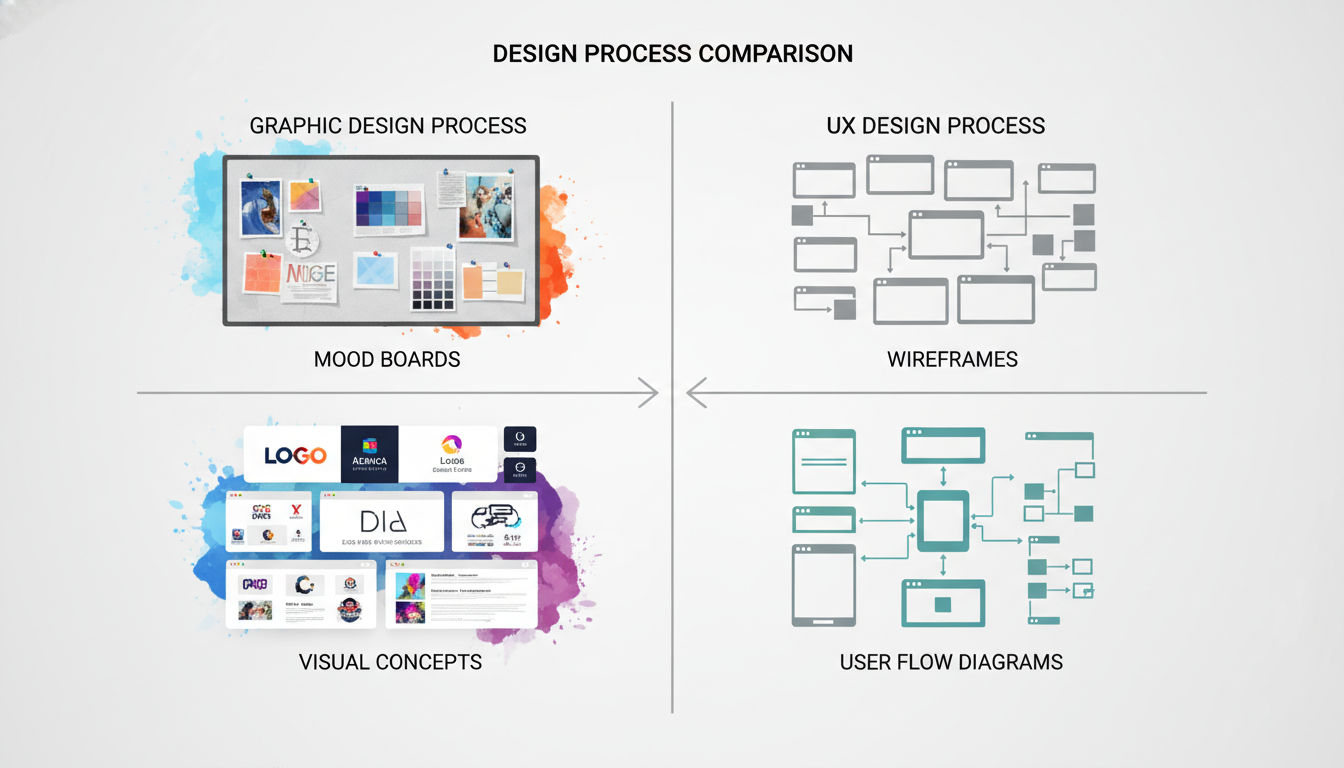
Understanding the core differences between graphic design vs UX design helps clarify which career path suits you best. While both fields involve design thinking, their approaches, processes, and outcomes differ significantly.
Visual Aesthetics vs User Experience
Graphic design emphasizes visual aesthetics and emotional impact. The primary question is: "Does this look good and communicate the intended message?" Designers focus on creating visually striking compositions that capture attention and convey brand identity.
UX design prioritizes functionality and user satisfaction. The central question becomes: "Does this work well for users?" While aesthetics matter, they serve the larger goal of creating intuitive, efficient experiences. A beautiful interface that confuses users is considered a failure in UX design.
This fundamental difference shapes every decision. Graphic designers might choose a bold, unconventional layout to stand out. UX designers would prioritize familiar patterns that users already understand, even if less visually exciting.
Design Process and Methodology
The graphic design process typically follows these stages: brief review, research, concept development, design execution, and final delivery. Iteration happens, but the process is often more linear. Once a design is approved and delivered, the project concludes.
UX design follows a cyclical, iterative process. It includes research, ideation, prototyping, testing, and refinement. This cycle repeats multiple times. UX designers continuously gather feedback and make improvements even after launch.
Research methods differ significantly. Graphic designers research visual trends, competitor designs, and brand guidelines. UX designers conduct user interviews, analyze behavioral data, and perform usability testing. The depth and type of research reflects each field's priorities.
Tools and Software Used
Graphic designers primarily use Adobe Creative Suite, including Photoshop, Illustrator, and InDesign. These tools excel at creating static visual designs for print and digital media. Sketch and Figma have also gained popularity for digital design work.
UX designers use prototyping and wireframing tools like Figma, Sketch, Adobe XD, and Axure. They also employ research tools such as UserTesting, Hotjar, and Google Analytics. Collaboration platforms like Miro and FigJam help with ideation and workshop facilitation.
The tool overlap has increased recently. Both designers now use Figma for different purposes. However, graphic designers focus on visual execution while UX designers use it for prototyping and collaboration.
End Goals and Success Metrics
Graphic design success is measured by visual impact and brand consistency. Did the design capture attention? Does it align with brand guidelines? Client satisfaction and aesthetic appeal are key indicators. Awards and portfolio recognition also matter in this field.
UX design success is measured by user behavior and satisfaction. Metrics include task completion rates, time on task, error rates, and user satisfaction scores. Business metrics like conversion rates, retention, and engagement demonstrate UX design's impact.
These different success metrics reflect each field's core purpose. Graphic design creates visual communication that looks good and conveys messages. UX design creates functional experiences that work well and solve problems.
Skills Required for Each Design Career
The skills required for graphic design and UX design overlap in some areas but diverge significantly in others. Understanding these requirements helps you assess which career aligns with your strengths and interests.
Essential Graphic Design Skills
Visual design skills form the foundation of any graphic design career. This includes mastery of typography, color theory, composition, and layout principles. Graphic designers must understand how visual elements work together to create harmonious, effective designs.
Technical proficiency with design software is non-negotiable. Adobe Creative Suite expertise, particularly in Photoshop, Illustrator, and InDesign, is standard. Many designers also learn Figma or Sketch for digital projects.
Creativity and conceptual thinking drive successful graphic design. Designers must generate original ideas and translate abstract concepts into visual forms. They need strong attention to detail, ensuring every element is perfectly aligned and polished.
Communication skills help graphic designers present ideas and receive feedback constructively. Understanding branding and marketing principles enables designers to create work that achieves business objectives. Time management is crucial for juggling multiple projects with tight deadlines.
Essential UX Design Skills
User research skills are fundamental to UX design. Designers must know how to plan and conduct interviews, surveys, and usability tests. They need to analyze qualitative and quantitative data to extract meaningful insights.
Information architecture and interaction design skills help UX designers create logical, intuitive structures. Understanding how people process information and make decisions is essential. Designers must anticipate user needs and design flows that feel natural.
Prototyping skills allow UX designers to quickly test ideas. They should be comfortable creating wireframes and interactive prototypes at various fidelity levels. Familiarity with design systems and component libraries improves efficiency.
Analytical thinking helps UX designers identify problems and evaluate solutions objectively. Empathy enables them to understand diverse user perspectives and needs. Collaboration and communication skills are vital for working with cross-functional teams.
Overlapping Competencies
Both careers require problem-solving abilities. Designers in both fields must understand project requirements and develop creative solutions. Critical thinking helps evaluate options and make informed decisions.
Visual design fundamentals benefit both disciplines. UX designers need to understand basic design principles, even if visual design isn't their primary focus. Both careers require adaptability as technology and trends evolve rapidly.
Client management and presentation skills matter in both fields. Designers must articulate their decisions, defend their choices, and incorporate feedback professionally. Portfolio development is essential for both career paths.
Technical vs Soft Skills Comparison
Graphic design leans more heavily on technical and artistic skills. Mastery of design software and visual principles is paramount. While soft skills matter, the work itself is often more independent and focused on execution.
UX design requires a stronger balance of technical and soft skills. Research, analysis, and collaboration are just as important as design execution. UX designers spend significant time communicating with stakeholders, facilitating workshops, and presenting findings.
Both careers benefit from continuous learning. Design tools, methodologies, and best practices evolve constantly. Successful designers in both fields commit to ongoing professional development.
Education and Training Paths
The paths to becoming a graphic designer or UX designer have become more diverse over the years. Traditional education, bootcamps, and self-teaching all produce successful professionals in both fields.
Graphic Design Career Educational Requirements
Many graphic designers hold bachelor's degrees in graphic design, visual communications, or fine arts. These programs typically cover design history, typography, color theory, and various design applications. Students build portfolios through coursework and internships.
Associate degrees and certificate programs offer faster entry into the field. These programs focus on practical skills and software proficiency. While less comprehensive than bachelor's programs, they can lead to entry-level positions.
The graphic design career has traditionally valued formal education. However, a strong portfolio often matters more than credentials. Employers want to see demonstrated ability to create compelling visual designs.
UX Design Educational Requirements
UX design education is less standardized. Some UX designers have degrees in human-computer interaction, psychology, or cognitive science. Others come from graphic design, computer science, or unrelated fields entirely.
Many universities now offer specialized UX design programs at both undergraduate and graduate levels. These programs cover research methods, interaction design, information architecture, and usability testing. They emphasize user-centered design thinking.
The field's relative newness means traditional education paths are still developing. Many successful UX designers entered the field through alternative routes, bringing diverse perspectives that enrich the discipline.
Certifications and Bootcamps
Design bootcamps have become popular alternatives to traditional education. Programs like General Assembly, Springboard, and CareerFoundry offer intensive training in 12-24 weeks. These bootcamps focus on practical skills and portfolio development.
UX design bootcamps are particularly common. They teach research methods, wireframing, prototyping, and usability testing. Many include mentorship and career support. Graduates often transition from other careers into UX design.
Professional certifications can enhance credibility. Nielsen Norman Group offers UX certification at different levels. Google and IBM provide UX design certificates through online platforms. These credentials complement practical experience.
Graphic design certifications are less common but available. Adobe offers certification in its software products. These demonstrate technical proficiency but don't replace portfolio quality.
Self-Taught vs Formal Education
Self-teaching is viable for both careers, though more common in graphic design. Countless online resources, tutorials, and courses enable independent learning. Platforms like Coursera, Udemy, and Skillshare offer affordable design education.
Self-taught designers must be highly motivated and disciplined. They need to structure their own learning and seek feedback actively. Building a strong portfolio becomes even more critical without formal credentials.
Formal education provides structure, mentorship, and networking opportunities. It exposes students to diverse perspectives and establishes foundational knowledge. The credential can help with initial job applications.
The best path depends on your learning style, resources, and timeline. Many successful designers combine approaches, supplementing formal education with self-directed learning. Continuous learning remains essential regardless of your starting point.
Salary Expectations and Job Market Outlook
Compensation and career prospects differ between graphic design and UX design. Understanding these differences helps set realistic expectations and inform career decisions.
Graphic Design Career Salary Ranges
Entry-level graphic designers typically earn between $35,000 and $45,000 annually in most markets. These positions often involve executing designs under senior guidance and building professional experience.
Mid-level graphic designers with 3-5 years of experience earn between $45,000 and $65,000. They handle projects more independently and may specialize in particular design areas. Senior graphic designers and art directors can earn $65,000 to $90,000 or more.
Freelance graphic designers' earnings vary widely based on client base, specialization, and business acumen. Some freelancers earn less than salaried positions, while successful independent designers can exceed six figures.
Specialization impacts earning potential. Motion graphics designers, brand strategists, and creative directors typically command higher salaries. Geographic location also plays a significant role in compensation levels.
UX Design Salary Ranges
Entry-level UX designers generally start between $55,000 and $75,000 annually. The higher starting salary reflects the field's demand and the analytical skills required. Even junior positions often involve significant responsibility.
Mid-level UX designers with 3-5 years of experience earn between $75,000 and $100,000. Senior UX designers and UX researchers can earn $100,000 to $130,000 or more. UX leadership roles like Director of UX or VP of Design can exceed $150,000.
Tech companies and startups often pay premium salaries for UX talent. Companies recognize that good UX design directly impacts user retention and revenue. This connection to business outcomes justifies higher compensation.
Industry Demand and Growth Projections
The Bureau of Labor Statistics projects steady growth for graphic designers, roughly in line with average job growth. While demand exists, the field is also quite saturated. Competition for positions can be intense, particularly for entry-level roles.
UX design demand has grown dramatically over the past decade. Companies across industries recognize UX's importance to product success. The field continues expanding as more products and services move online.
Job postings for UX designers have increased significantly. Many organizations struggle to find qualified UX talent. This supply-demand imbalance creates opportunities for those with the right skills.
Geographic Considerations
Major metropolitan areas offer more opportunities and higher salaries for both careers. Cities like New York, San Francisco, Los Angeles, and Montreal have thriving design communities. However, cost of living offsets some salary advantages.
Remote work has transformed the design job market. Many companies now hire designers anywhere, expanding opportunities beyond traditional design hubs. This shift has enabled designers in smaller markets to access competitive salaries.
Next step
Ready for a quote and timeline?
Send a quick note with what you’re building, your deadline, and what success looks like — we’ll reply with clear next steps.
At Vohrtech, we've seen how businesses across Montreal and beyond increasingly value both graphic and UX design. The digital transformation of business has made design skills more valuable than ever.
Career Progression and Opportunities

Both graphic design and UX design offer clear advancement paths, though the trajectories differ. Understanding potential career progression helps you envision your long-term future in each field.
Graphic Design Career Advancement Paths
Graphic designers typically start as junior designers, executing work under supervision. They progress to mid-level positions, taking on more complex projects and working more independently. Senior graphic designers lead projects and mentor junior team members.
Art directors oversee creative teams and guide overall visual direction. They make high-level decisions about design strategy and brand consistency. Creative directors sit at the top, setting creative vision for entire organizations or agencies.
Specialization offers another advancement path. Designers can become experts in logo design, packaging, motion graphics, or other niches. Specialist expertise often commands premium rates and attracts higher-profile projects.
Some graphic designers transition into related roles like brand strategist, marketing manager, or creative consultant. Others start their own design studios or agencies. Teaching and mentoring represent additional career options.
UX Design Career Advancement Paths
UX designers progress from junior to mid-level to senior positions based on experience and skill development. Senior UX designers handle complex projects and provide guidance to junior team members.
Lead UX designers or UX managers oversee design teams and coordinate multiple projects. They balance hands-on design work with team leadership. Directors of UX or VP of Design roles focus on strategy, team building, and organizational impact.
Specialization is common in UX design. Some designers focus on UX research, becoming experts in user testing and data analysis. Others specialize in interaction design, information architecture, or conversational design.
Product management is a common transition for UX designers. The skills overlap significantly, and many UX designers enjoy the strategic aspects of product development. UX writing and content strategy also attract former UX designers.
Transitioning Between Design Careers
Moving from graphic design to UX design is relatively common. Graphic designers already understand visual principles and design thinking. They need to develop research skills, learn UX methodologies, and shift their mindset from aesthetics to functionality.
Many graphic designers take UX bootcamps or online courses to make this transition. Building a UX portfolio through personal projects or volunteer work demonstrates new capabilities. The transition typically takes 6-12 months of focused learning.
Moving from UX design to graphic design is less common but possible. UX designers need to strengthen their visual design skills and build a portfolio showcasing aesthetic work. This transition often appeals to UX designers who miss hands-on creative work.
Some designers blend both disciplines, becoming "product designers" or "UI/UX designers." These hybrid roles combine visual design execution with user experience thinking. They're particularly common at startups and smaller companies.
Which Career Path is Right for You?
Choosing between graphic design and UX design requires honest self-assessment. Neither career is inherently better—they suit different personalities, interests, and working styles.
Consider what energizes you. If creating beautiful visuals and expressing creativity through aesthetics excites you, graphic design might be your path. If solving problems, understanding people, and improving how things work appeals to you, explore UX design.
Your natural strengths provide clues. Strong visual artists with keen aesthetic sense often thrive in graphic design. Analytical thinkers who enjoy research and data analysis may prefer UX design. Both careers require creativity, just expressed differently.
Think about your ideal work environment. Graphic designers often work more independently, focusing on execution. UX designers collaborate constantly with diverse teams. If you prefer heads-down creative work, graphic design might suit you better. If you enjoy facilitation and stakeholder management, consider UX design.
Long-term career goals matter too. If you dream of art directing campaigns or building a recognizable visual style, pursue graphic design. If you want to shape how millions of people interact with products, UX design offers that opportunity.
The good news? You don't have to choose forever. Many designers explore both fields before specializing. Some build careers that incorporate both disciplines. Start with what interests you most, knowing you can always expand your skills later.
Conclusion
The difference between graphic design vs UX design extends far beyond surface-level distinctions. Graphic design focuses on visual communication and aesthetic impact, creating compelling designs that catch eyes and convey messages. UX design prioritizes user experience and functionality, ensuring products work intuitively and meet real user needs.
These careers require different skills, follow different processes, and measure success differently. Graphic designers master visual principles and design software to create beautiful, effective communications. UX designers develop research skills and user empathy to build products that solve problems and delight users.
Both careers offer rewarding opportunities for creative problem-solvers. The graphic design career provides artistic expression and visual impact. UX design offers the satisfaction of improving people's daily interactions with technology. Salary expectations, job markets, and growth trajectories differ, with UX design currently showing stronger demand and higher compensation.
Your choice should align with your interests, strengths, and career aspirations. Consider what type of work energizes you and what problems you want to solve. Both paths offer advancement opportunities and the chance to make meaningful contributions.
Whether you need compelling visual designs or intuitive user experiences for your business, Vohrtech brings expertise in both disciplines. Our team understands how graphic design and UX design work together to create effective digital solutions. We've helped businesses across Montreal and beyond build stronger brands and better digital experiences.
Ready to discuss how design can transform your business? Contact us to explore how our design and development services can help you achieve your goals. Check out our portfolio to see examples of our work across both graphic and UX design projects.