Introduction
The design industry has transformed dramatically over the past decade. What once fell under the broad umbrella of "graphic design" has now branched into specialized disciplines, each with distinct career trajectories and opportunities.
If you're considering a career in design, you've likely encountered the graphic design vs UI/UX debate. Both paths offer creative fulfillment and strong career prospects, but they require different skill sets and lead to different outcomes. Understanding these differences is crucial before investing time and resources into training.
This comparison isn't about declaring one path superior to the other. Instead, it's about helping you make an informed decision based on your interests, strengths, and career goals. Whether you're a student exploring options, a professional considering a career change, or a business owner trying to understand which design expertise you need, this guide will clarify the distinctions.
We'll explore what professionals in each field actually do on a daily basis, the industries that hire them, and the skills you'll need to succeed. You'll discover the educational paths available, salary expectations, and growth opportunities in both disciplines.
The lines between graphic design and UI/UX design can sometimes blur, especially as digital products become more sophisticated. Some designers work across both areas, while others specialize deeply in one. By the end of this article, you'll have a clear framework for evaluating which path aligns with your aspirations and how these roles contribute to successful digital products and marketing strategies.
Understanding Graphic Design as a Career
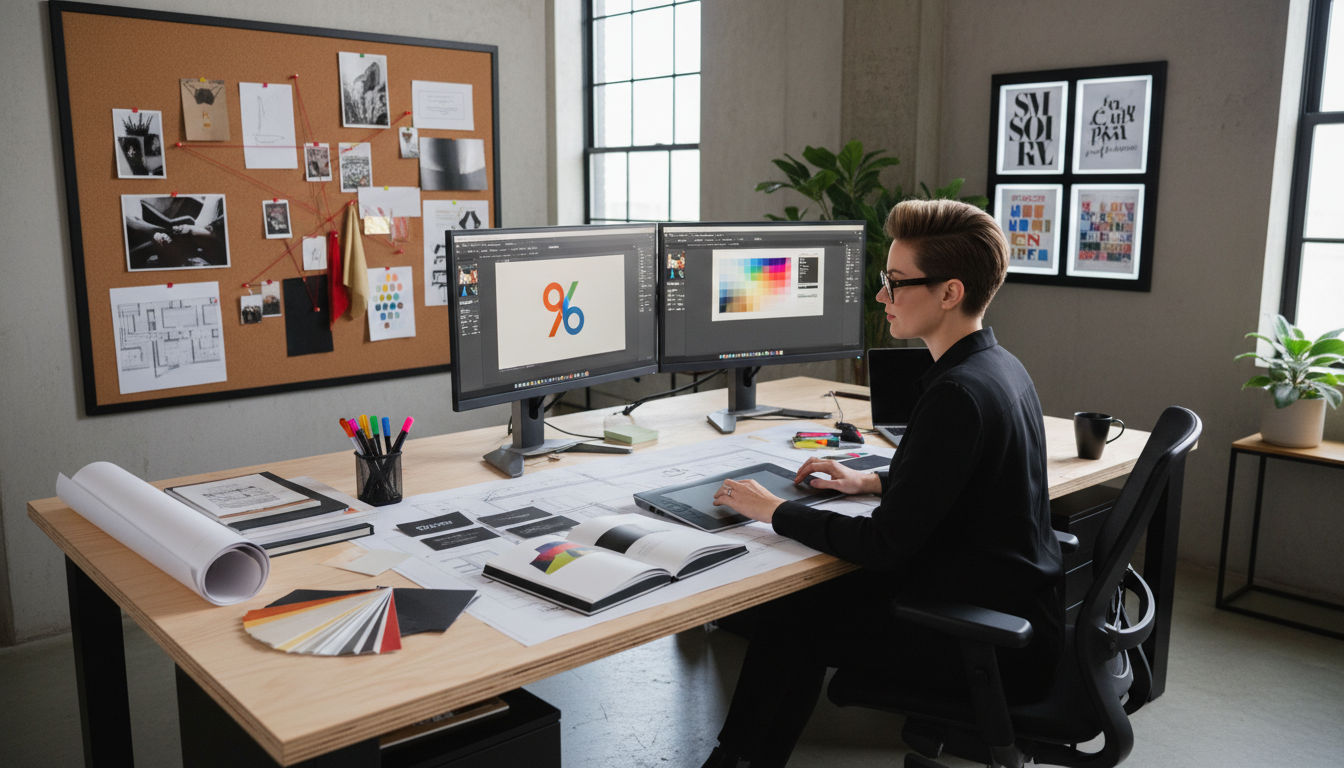
Graphic designers are visual communicators who create concepts and artwork to inspire, inform, or captivate audiences. They develop the overall layout and production design for advertisements, brochures, magazines, corporate reports, and more.
What Graphic Designers Do
At its core, graphic design focuses on visual communication through typography, imagery, color, and composition. Graphic designers translate ideas and messages into visual formats that resonate with specific audiences. They work on both print and digital materials, though the balance has shifted increasingly toward digital in recent years.
The work involves understanding client needs, developing creative concepts, and executing designs that align with brand guidelines. Graphic designers often create logos, marketing materials, packaging, social media graphics, and website visuals. Their work shapes how brands present themselves to the world.
Core Responsibilities and Daily Tasks
A typical day for a graphic designer varies based on their work environment and specialization. Most designers start by reviewing project briefs and client feedback. They spend significant time in design software, creating mockups and refining concepts based on stakeholder input.
Client communication forms a substantial part of the role. Designers present concepts, explain design decisions, and incorporate feedback into revisions. They also research design trends, gather inspiration, and maintain organized file systems for design assets.
Project management skills come into play when juggling multiple assignments with different deadlines. Graphic designers often work on brand identity projects one day, social media campaigns the next, and print advertisements after that. This variety keeps the work engaging but requires strong organizational abilities.
Collaboration is essential. Graphic designers work closely with marketing teams, copywriters, photographers, and printers. They need to understand technical specifications for different output formats, from digital displays to physical print materials.
Industries and Sectors That Hire Graphic Designers
Graphic designers find opportunities across virtually every industry. Advertising agencies and marketing firms employ large numbers of designers to serve diverse client needs. These environments offer exposure to different brands and industries but can be fast-paced and deadline-intensive.
In-house positions exist in corporations, nonprofits, educational institutions, and government agencies. These roles typically focus on a single brand, allowing designers to develop deep expertise in that organization's visual identity. The work pace may be more predictable than agency life.
Publishing houses, media companies, and entertainment firms need graphic designers for magazines, books, album covers, and promotional materials. The tech industry also employs graphic designers to create marketing materials, though these roles increasingly overlap with digital design.
Small businesses and startups often hire graphic designers on a freelance or contract basis. Montreal's vibrant business community, for example, includes countless enterprises seeking design support for everything from restaurant menus to retail packaging.
Key Skills Required for Graphic Design Career Success
Technical proficiency in industry-standard software is non-negotiable. Adobe Creative Suite—particularly Photoshop, Illustrator, and InDesign—forms the foundation of most graphic design work. Many designers also learn Figma, Sketch, or other tools as projects demand.
Beyond software skills, successful graphic designers possess strong visual literacy. They understand color theory, typography principles, composition rules, and how to break them effectively. This knowledge allows them to create designs that are both aesthetically pleasing and functionally effective.
Communication skills matter as much as creative talent. Graphic designers must articulate their design choices, accept criticism constructively, and translate vague client requests into concrete visual solutions. The ability to present work confidently and defend design decisions separates good designers from great ones.
Time management and attention to detail round out the essential skill set. Missing deadlines damages professional relationships, while small errors in final files can prove costly. Successful graphic designers develop systems to stay organized and quality-check their work before delivery.
Understanding UI/UX Design as a Career

UI/UX design represents a more specialized branch of digital design focused on how users interact with digital products. While graphic design emphasizes visual communication, UI/UX design prioritizes user experience and interface functionality.
What UI/UX Designers Do
UI (User Interface) and UX (User Experience) are related but distinct disciplines often practiced by the same person. UX designers research user needs, create user flows, and design the overall experience of using a digital product. They focus on making products intuitive, accessible, and enjoyable to use.
UI designers handle the visual and interactive elements of digital interfaces. They design buttons, menus, micro-interactions, and visual hierarchies that guide users through applications and websites. UI design bridges the gap between UX strategy and final implementation.
Together, UI/UX designers ensure digital products not only look good but also work well. They consider how users navigate websites, complete tasks in apps, and interact with digital services. Their work directly impacts customer satisfaction, conversion rates, and business success.
Core Responsibilities and Daily Tasks
UI/UX designers typically begin projects with research. They conduct user interviews, analyze competitor products, and review analytics data to understand user behavior and pain points. This research phase informs all subsequent design decisions.
Creating wireframes and prototypes occupies much of a UI/UX designer's time. Wireframes are low-fidelity sketches showing page layouts and element placement. Prototypes are interactive mockups that simulate how the final product will function, allowing teams to test concepts before development begins.
User testing represents a crucial responsibility. UI/UX designers observe real users interacting with prototypes, gathering feedback about confusing elements or friction points. They iterate designs based on these insights, continuously refining the user experience.
Collaboration with developers is constant. UI/UX designers create detailed specifications showing how interfaces should behave, including animations, transitions, and responsive behaviors across different screen sizes. They work closely with development teams to ensure designs are implemented correctly.
Documentation and design systems maintenance also fall under UI/UX responsibilities. Designers create and update component libraries, style guides, and pattern libraries that ensure consistency across digital products. This systematic approach becomes especially important in larger organizations.
Industries and Sectors That Hire UI/UX Designers
Technology companies are the primary employers of UI/UX designers. Software companies, SaaS platforms, mobile app developers, and tech startups all require UI/UX expertise to create competitive products. These roles often offer the most cutting-edge work and highest salaries.
E-commerce businesses depend heavily on UI/UX designers to optimize shopping experiences. Even small improvements in checkout flows or product pages can significantly impact revenue. Montreal's growing tech scene includes numerous e-commerce companies seeking UI/UX talent.
Financial services, healthcare, and education sectors increasingly recognize UI/UX's value. Banks need intuitive mobile banking apps, hospitals require user-friendly patient portals, and educational institutions develop online learning platforms. These industries offer opportunities to create meaningful impact through design.
Quick question
Want to turn this into a real plan?
If you want expert help with strategy, design, development, marketing, or automation — we’ll recommend the fastest path forward for your goals.
Digital agencies and consultancies hire UI/UX designers to serve client needs. These positions provide variety and exposure to different industries but require adaptability and strong client management skills. Web development and digital marketing agencies often seek designers who understand both aesthetics and user behavior.
Key Skills Required for UI/UX Design Success
User research skills distinguish UI/UX designers from other design disciplines. Designers must know how to conduct interviews, create surveys, analyze data, and translate findings into actionable insights. Empathy and curiosity drive effective user research.
Information architecture and interaction design form the strategic foundation of UI/UX work. Designers must understand how to organize information logically, create intuitive navigation systems, and design interactions that feel natural. These skills require both analytical and creative thinking.
Prototyping tools like Figma, Adobe XD, Sketch, and InVision are essential. UI/UX designers need proficiency in creating both low-fidelity wireframes and high-fidelity interactive prototypes. Many also learn basic HTML, CSS, and JavaScript to better communicate with developers.
Analytical thinking complements creative skills in UI/UX design. Designers must interpret analytics data, understand conversion funnels, and make data-informed decisions. They balance user needs with business goals, creating solutions that satisfy both.
Communication and presentation abilities are critical. UI/UX designers regularly present research findings and design rationales to stakeholders who may not have design backgrounds. The ability to explain complex concepts simply and build consensus around design decisions determines project success.
Educational Requirements and Training Paths
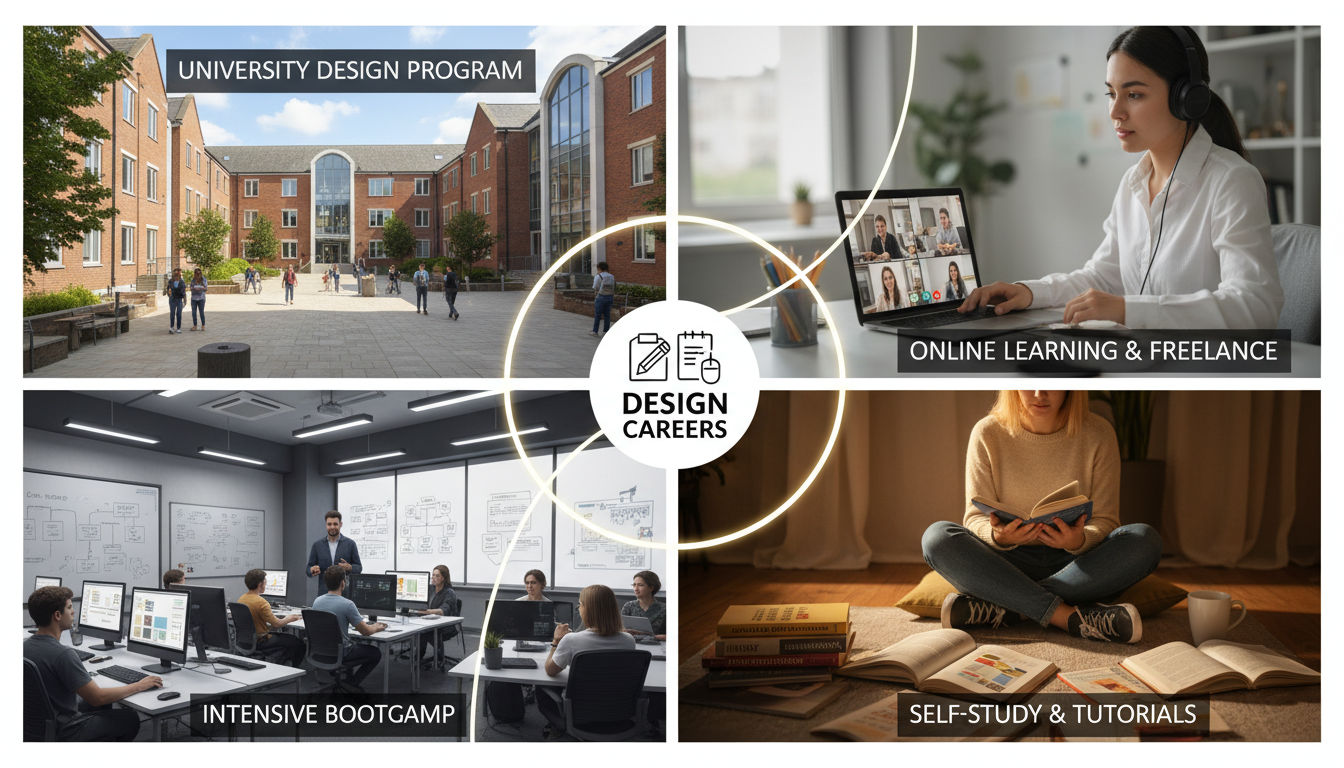
The educational landscape for design careers has diversified significantly. Traditional four-year degrees now compete with bootcamps, online courses, and self-taught paths, each offering different advantages.
Formal Education for Graphic Design
Many graphic designers hold bachelor's degrees in graphic design, visual communications, or fine arts. These programs typically span four years and cover design fundamentals, art history, typography, color theory, and software skills. Students build portfolios through class projects and often complete internships.
Universities and art schools offer these programs with varying focuses. Some emphasize traditional print design, while others concentrate on digital applications. The structured environment provides mentorship, peer feedback, and networking opportunities that benefit career development.
Associate degrees in graphic design offer a shorter path, usually requiring two years. These programs focus more intensively on practical skills and portfolio development, with less emphasis on liberal arts coursework. They can be cost-effective entry points into the field.
However, formal education isn't mandatory for graphic design careers. Many successful designers never attended design school. What matters most is portfolio quality and demonstrable skills, though degrees can help with initial job applications and provide foundational knowledge.
Formal Education for UI/UX Design
UI/UX design education is evolving rapidly. Some universities now offer dedicated UX design programs at both undergraduate and graduate levels. These programs incorporate psychology, human-computer interaction, research methodologies, and design thinking alongside traditional design skills.
Master's degrees in Human-Computer Interaction (HCI) or Interaction Design appeal to career changers and those seeking advanced positions. These programs often attract students from diverse backgrounds including psychology, computer science, and business, enriching the learning environment.
Many UI/UX designers enter the field through related degrees in graphic design, web design, or computer science. They supplement their education with specialized UX coursework or training. This interdisciplinary background can be advantageous, bringing diverse perspectives to design challenges.
The relatively new nature of UI/UX as a distinct discipline means many practicing professionals lack formal UX degrees. Industry experience and portfolio work often outweigh educational credentials, especially as the field values practical skills over theoretical knowledge.
Certifications and Bootcamps
Design bootcamps have emerged as popular alternatives to traditional education. These intensive programs typically last 12-24 weeks and focus exclusively on job-ready skills. UI/UX bootcamps especially have gained credibility, with many graduates successfully transitioning into the field.
Bootcamps offer several advantages: faster completion, lower costs than four-year degrees, and curricula designed around current industry needs. Many include career services, portfolio development support, and connections to hiring partners. The immersive format accelerates learning but requires significant commitment.
Professional certifications from organizations like Nielsen Norman Group or Google provide credibility and demonstrate specialized knowledge. While not required for employment, these certifications can differentiate candidates in competitive job markets and fill specific knowledge gaps.
For graphic designers, certifications in specific software like Adobe Certified Professional can validate technical skills. However, these matter less than portfolio quality and are most useful early in careers when experience is limited.
Self-Taught Routes and Online Learning
Self-directed learning has become increasingly viable for both graphic design and UI/UX careers. Platforms like Coursera, Udemy, Skillshare, and LinkedIn Learning offer comprehensive courses at affordable prices. Dedicated resources like Interaction Design Foundation provide structured UX education.
The self-taught path requires discipline and strategic planning. Successful self-learners create structured curricula, build projects for their portfolios, and seek feedback from online communities. They supplement tutorials with reading industry blogs, attending webinars, and participating in design challenges.
Free resources abound for motivated learners. YouTube tutorials, design blogs, and open-source tools enable skill development without financial investment. Many professional designers share knowledge freely, creating opportunities to learn from industry experts.
The main challenge of self-teaching is lack of structure and mentorship. Without instructors to provide feedback, learners may develop bad habits or miss important concepts. However, online communities and design meetups—including those in Montreal's active design scene—can provide peer support and guidance.
Skill Sets: Graphic Design vs UI/UX
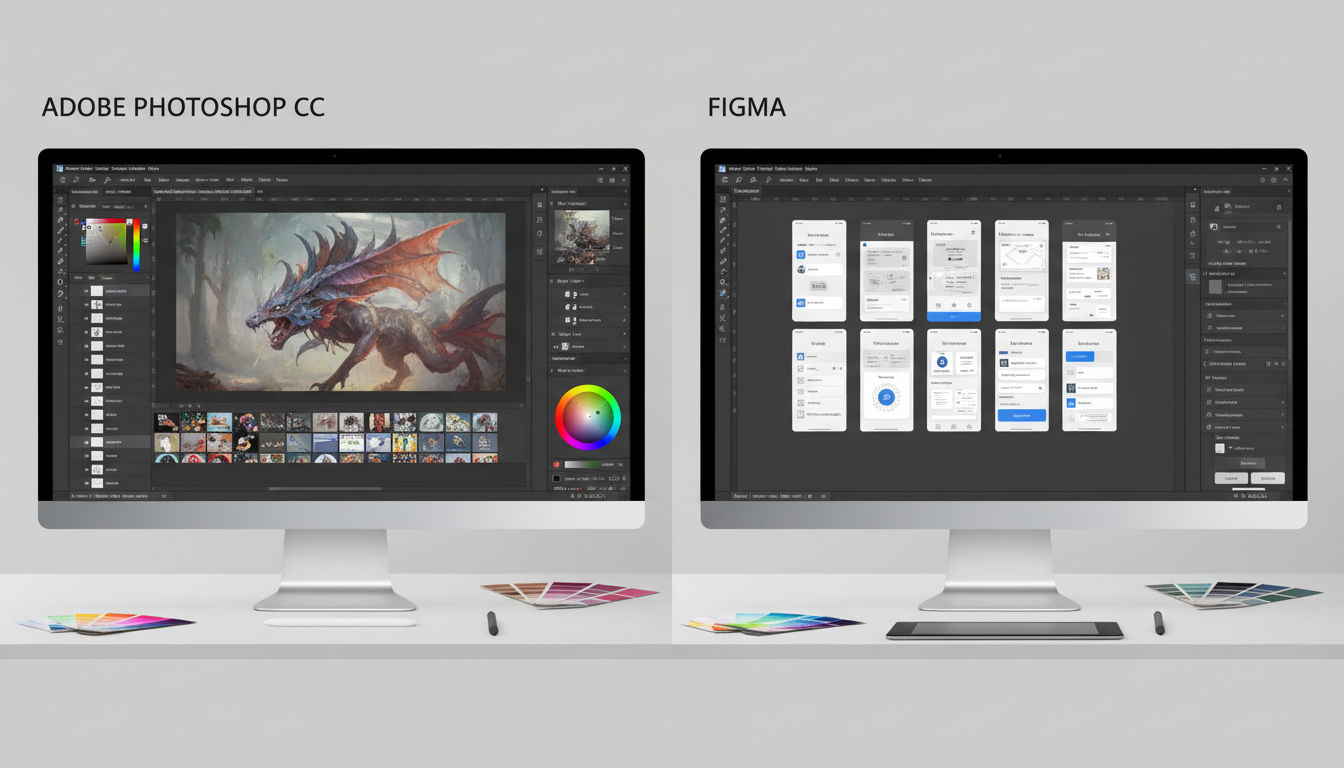
While graphic design and UI/UX design share some common ground, they require distinct skill sets that reflect their different objectives and deliverables.
Technical Skills Comparison
Graphic designers master visual design software as their primary tools. Adobe Photoshop for image editing, Illustrator for vector graphics, and InDesign for layout design form the core toolkit. Many also learn After Effects for motion graphics and Acrobat for PDF production.
Print production knowledge remains important for graphic designers. Understanding color modes (CMYK vs RGB), resolution requirements, bleed, and file preparation for various printing methods ensures designs translate correctly to physical materials. This technical knowledge prevents costly production errors.
UI/UX designers work with different tools focused on digital products. Figma has become the industry standard for collaborative interface design, though Sketch, Adobe XD, and Framer also see widespread use. These tools enable wireframing, prototyping, and design system management.
UI/UX designers benefit from understanding front-end development basics. While they don't necessarily code production websites, knowledge of HTML, CSS, and JavaScript helps them create realistic designs and communicate effectively with developers. This technical awareness improves collaboration and design feasibility.
Software and Tools Proficiency
Both disciplines require comfort learning new tools as technology evolves. Graphic designers might adopt new software for 3D design, augmented reality, or emerging media formats. Staying current with design software updates and new platforms maintains competitiveness.
UI/UX designers use research and analytics tools alongside design software. They work with survey platforms, user testing tools like UserTesting or Lookback, analytics platforms like Google Analytics, and collaboration tools like Miro or FigJam. This broader toolkit reflects the research-intensive nature of UX work.
Version control and collaboration features matter more in UI/UX design. Multiple designers often work on the same design system simultaneously, requiring tools that handle collaboration smoothly. Figma's real-time collaboration capabilities have made it particularly popular in UI/UX contexts.
Graphic designers increasingly need basic web design capabilities as digital work expands. Familiarity with website builders, basic HTML/CSS, or tools like Webflow allows them to execute digital projects independently or collaborate more effectively with web development teams.
Soft Skills and Creative Abilities
Both disciplines demand strong creative problem-solving abilities. Graphic designers solve communication challenges through visual means, while UI/UX designers solve usability challenges through interface design. Both require innovative thinking and the ability to generate multiple solutions to complex problems.
Empathy plays different roles in each field. Graphic designers empathize with audiences to create resonant visual messages. UI/UX designers empathize with users to understand their needs, frustrations, and behaviors. This user-centered empathy is more central to UI/UX methodology.
Attention to detail is critical in both fields but manifests differently. Graphic designers obsess over pixel-perfect alignment, color accuracy, and typographic refinement. UI/UX designers focus on interaction details, edge cases, and ensuring consistent experiences across user journeys.
Communication skills are essential for both paths. Graphic designers present creative concepts and justify design choices. UI/UX designers additionally communicate research findings, facilitate workshops, and build consensus among stakeholders with competing priorities. Both roles require translating design thinking into language non-designers understand.
Transferable Skills Between Both Fields
Visual design fundamentals transfer between disciplines. Understanding color, typography, hierarchy, and composition benefits both graphic designers and UI/UX designers. Many UI/UX professionals start with graphic design backgrounds, applying their visual skills to digital interfaces.
Project management abilities serve both careers well. Designers in either field must manage timelines, coordinate with team members, and balance multiple projects. These organizational skills become more important as careers advance toward leadership positions.
Client management and business acumen apply across design disciplines. Understanding client needs, managing expectations, and demonstrating design's business value are crucial whether designing marketing materials or digital products. These skills particularly matter for freelancers and agency designers.
The strategic thinking developed in UI/UX design can enhance graphic design work. Understanding user psychology and behavior helps graphic designers create more effective marketing materials. Conversely, graphic design's visual polish elevates UI/UX work, making interfaces not just functional but beautiful.
Salary Expectations and Job Market Outlook
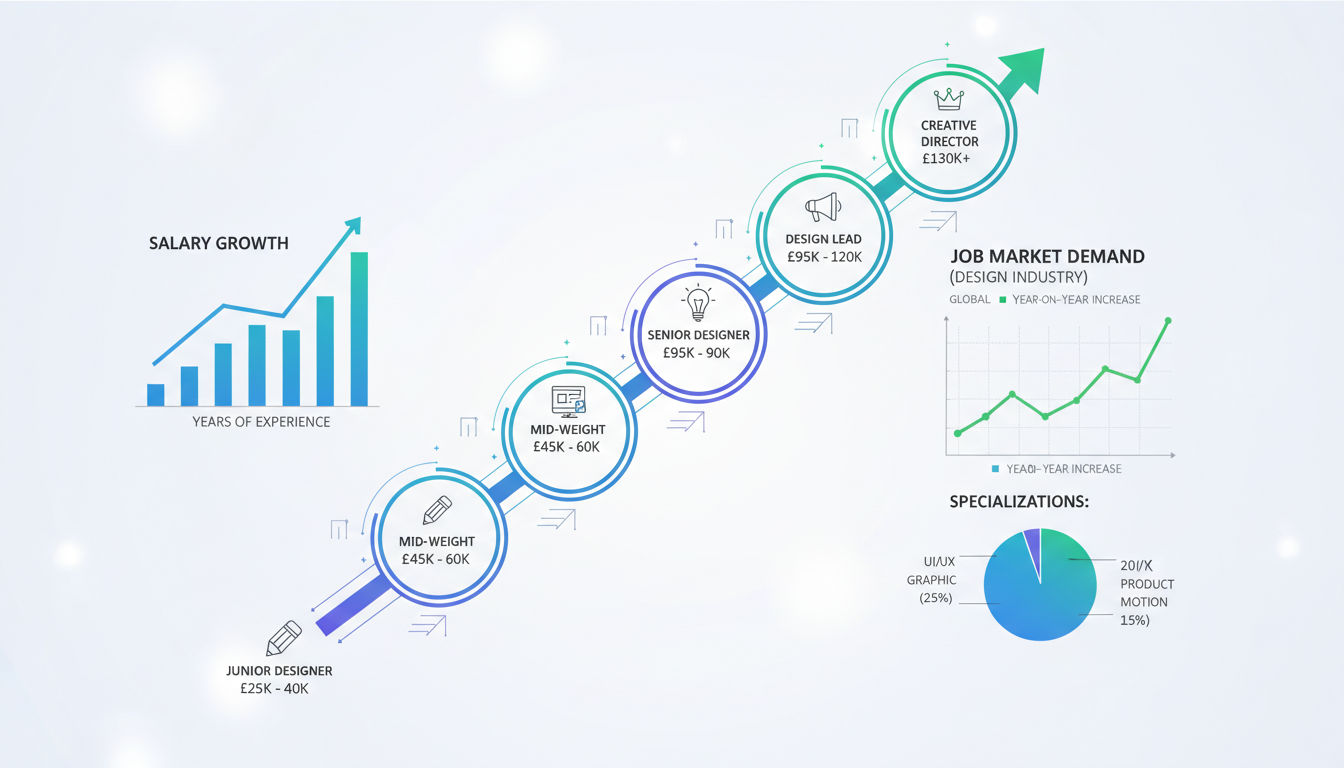
Compensation and job prospects differ between graphic design and UI/UX design, reflecting market demand and the specialized nature of each discipline.
Average Salary Ranges for Graphic Designers
Entry-level graphic designers in North America typically earn between $35,000 and $45,000 annually. These positions often require portfolio development and skill refinement, with compensation increasing as experience grows. Montreal's cost of living can make these salaries more comfortable than in expensive markets like Toronto or Vancouver.
Mid-level graphic designers with 3-5 years of experience generally earn $45,000 to $65,000. Designers who specialize in high-demand areas like motion graphics or brand identity often command higher rates. Those working in advertising agencies or corporate in-house positions typically earn more than those in nonprofit or education sectors.
Senior graphic designers and art directors can earn $65,000 to $90,000 or more, depending on location and industry. Leadership roles that involve managing teams and strategic decision-making reach six figures in major markets. Freelance graphic designers' income varies widely based on client base, specialization, and business development skills.
Geographic location significantly impacts graphic design salaries. Major metropolitan areas offer higher compensation but also higher living costs. Remote work has somewhat equalized opportunities, allowing designers in smaller markets to access clients and positions anywhere.
Average Salary Ranges for UI/UX Designers
UI/UX designers generally command higher salaries than graphic designers, reflecting strong demand and specialized skills. Entry-level UI/UX designers typically start between $50,000 and $65,000, notably higher than graphic design starting salaries. Tech companies and startups often offer the most competitive entry-level compensation.
Mid-level UI/UX designers with several years of experience earn between $70,000 and $95,000 on average. Those working for major tech companies, financial institutions, or successful startups often exceed this range. Specialization in areas like UX research or interaction design can command premium compensation.
Senior UI/UX designers and UX managers earn $95,000 to $130,000 or more. Principal designers and design directors at large tech companies can earn significantly more, sometimes exceeding $150,000 plus equity compensation. These roles combine design expertise with strategic leadership and business acumen.
The UI/UX field's relative newness and high demand create opportunities for rapid salary growth. Designers who continuously update skills, build strong portfolios, and demonstrate measurable impact on business metrics can accelerate their earning potential substantially.
Job Growth Projections
The U.S. Bureau of Labor Statistics projects graphic design employment to grow about 3% from 2022 to 2032, roughly average compared to all occupations. This modest growth reflects automation of some design tasks and increased competition, though demand for visual content continues rising.
UI/UX design shows stronger growth projections. While not tracked separately by all labor agencies, related categories like web developers and digital designers show 16% projected growth. The ongoing digital transformation across industries drives sustained demand for UI/UX expertise.
Businesses increasingly recognize design's impact on customer satisfaction and revenue. Companies investing in web development and digital marketing understand that poor user experience directly affects their bottom line. This awareness creates ongoing opportunities for skilled UI/UX designers.
Emerging technologies like AI, voice interfaces, and augmented reality create new opportunities for both design disciplines. Designers who adapt to these platforms and learn relevant skills will find expanding career options. The fundamental need for human-centered design persists despite technological changes.
Geographic Considerations and Remote Opportunities
Remote work has transformed design career geography. Many designers now work for companies located anywhere, accessing opportunities previously limited to major tech hubs. This shift particularly benefits designers in markets like Montreal, where local opportunities might be more limited than in Silicon Valley.
However, geographic salary differences persist even in remote roles. Companies often adjust compensation based on employee location, though usually not as drastically as traditional local salaries varied. Some organizations pay uniformly regardless of location, creating arbitrage opportunities for designers in lower-cost areas.
Certain markets still offer advantages for in-person work. Major cities host more design agencies, tech companies, and networking events. The collaborative nature of design work means some employers prefer on-site or hybrid arrangements, particularly for junior designers who benefit from mentorship.
Freelance and contract work provides location independence for both graphic designers and UI/UX designers. Building a strong portfolio and reputation enables designers to serve clients globally. This flexibility appeals to many designers, though it requires business development skills beyond pure design work.
Career Advancement Opportunities
Both graphic design and UI/UX design offer multiple paths for career growth, though the trajectories and opportunities differ in important ways.
Growth Trajectory for Graphic Designers
Graphic designers typically advance from junior designer to mid-level designer to senior designer roles. Each step brings increased responsibility, more complex projects, and greater autonomy. Senior designers often mentor junior staff and make strategic creative decisions.
Art director positions represent a common next step for experienced graphic designers. Art directors oversee creative teams, develop visual strategies, and ensure brand consistency across projects. These roles require strong leadership and communication skills alongside design expertise.
Creative director roles sit at the top of many agency and in-house hierarchies. Creative directors set overall creative vision, manage multiple teams, and interface with executive leadership. These positions emphasize strategy and management over hands-on design work.
Specialization offers an alternative advancement path. Graphic designers might become experts in brand identity, packaging design, motion graphics, or other niches. Specialized expertise can command premium rates and create unique market positions, particularly for freelancers.
Growth Trajectory for UI/UX Designers
UI/UX designers often progress from junior designer to product designer to senior product designer. Product designer titles reflect the strategic nature of UI/UX work and its integration with product development. These roles involve increasing ownership of product areas and user experiences.
UX research and UX writing represent specialized advancement paths. Some designers discover passion for research methodology or content strategy, developing deep expertise in these areas. These specializations are increasingly valued as companies recognize their importance to product success.
Lead designer and design manager positions combine hands-on design with team leadership. These roles involve mentoring designers, establishing design processes, and representing design in product planning. The balance between individual contribution and management varies by organization.
Director of design, VP of design, or Chief Design Officer positions represent executive-level advancement. These leaders shape company-wide design strategy, build design culture, and demonstrate design's business impact. Reaching these levels requires both exceptional design skills and strong business acumen.
Leadership and Specialization Paths
Both disciplines offer opportunities to lead without managing people. Principal designers or design fellows maintain individual contributor roles while influencing company-wide design decisions. These positions suit designers who prefer hands-on work to people management.
Next step
Ready for a quote and timeline?
Send a quick note with what you’re building, your deadline, and what success looks like — we’ll reply with clear next steps.
Teaching and education provide alternative career directions. Experienced designers teach at bootcamps, universities, or through online platforms. Some split time between practice and education, while others transition fully into teaching roles. This path allows designers to shape the next generation while staying connected to the field.
Consulting and independent practice attract designers seeking autonomy. Building a consultancy or freelance practice offers freedom and potentially higher earnings, though it requires business development and financial management skills. Successful independent designers often create productized services or develop signature methodologies.
Transitioning between disciplines remains possible throughout careers. Graphic designers can move into UI/UX by developing relevant skills and building appropriate portfolio pieces. UI/UX designers sometimes expand into product management, using their user understanding to guide product strategy. These transitions keep careers dynamic and responsive to changing interests.
Freelance vs In-House Opportunities
Freelance work offers flexibility and variety for both graphic designers and UI/UX designers. Freelancers choose their projects, set their schedules, and often earn more per hour than salaried positions. However, they handle their own business development, lack benefits, and face income variability.
In-house positions provide stability, benefits, and opportunities for deep expertise in one company's products. Designers develop comprehensive understanding of their organization's users and brand. However, the work can become repetitive, and salary growth may be slower than in agencies or freelancing.
Agency work splits the difference, offering project variety within a structured employment relationship. Designers gain exposure to different industries and challenges while receiving benefits and steady income. The fast pace and deadline pressure suit some personalities better than others.
Many designers combine approaches throughout their careers. Starting in-house builds skills and confidence, then transitioning to freelance work provides autonomy. Others freelance early, then join companies for stability. Portfolio projects and side work allow salaried designers to explore different creative directions.
Making the Right Choice for Your Future
Choosing between graphic design and UI/UX design requires honest self-assessment and understanding of each path's realities.
Assessing Your Interests and Strengths
Consider what energizes you creatively. If you're drawn to visual aesthetics, typography, and creating compelling imagery, graphic design may align better with your passions. If you're fascinated by how people interact with technology and solving usability problems, UI/UX design might be your calling.
Your natural strengths provide important clues. Strong visual artists with refined aesthetic sensibilities often thrive in graphic design. Analytical thinkers who enjoy research and problem-solving frequently excel in UI/UX design. Both fields benefit from diverse thinking styles, so neither path is exclusively suited to one personality type.
Think about your preferred working style. Graphic design projects often move quickly with clear creative briefs. UI/UX projects typically involve longer timelines, more ambiguity, and iterative refinement based on user feedback. Consider whether you prefer variety and quick turnarounds or deeper engagement with complex problems.
Your tolerance for technical learning matters too. UI/UX design requires ongoing engagement with new tools, platforms, and technologies. Graphic design's technical requirements, while substantial, change somewhat less rapidly. Both fields demand continuous learning, but the nature of that learning differs.
Market Demand Considerations
Current job market data favors UI/UX design in terms of both openings and compensation. The digital transformation affecting all industries creates sustained demand for UI/UX expertise. Companies increasingly recognize that user experience directly impacts customer satisfaction and revenue.
However, graphic design remains essential for businesses' marketing and branding needs. Every company needs visual materials, from social media graphics to presentation templates. While competition may be stronger, opportunities exist across diverse industries and organization sizes.
Consider your local market alongside remote opportunities. Research which design roles are most common in your area. Montreal's growing tech scene offers UI/UX opportunities, while its vibrant business community provides graphic design work. Remote positions expand options for both disciplines.
Think long-term about industry trends. Emerging technologies like AI will affect both fields, potentially automating routine tasks while creating demand for strategic design thinking. Designers who combine technical skills with strategic abilities will remain valuable regardless of discipline.
Can You Do Both? Hybrid Roles Explained
Many designers work across both graphic design and UI/UX, especially in smaller organizations or agencies. These hybrid roles require broader skill sets but offer variety and comprehensive understanding of design's business impact. Smaller companies often need designers who can handle diverse projects.
Starting with graphic design and expanding into UI/UX is a common progression. Visual design skills transfer well to UI work, and many UI/UX designers maintain graphic design capabilities for marketing materials. This versatility increases employability and project diversity.
Product designers in tech companies often blend both skill sets. They create visual designs for interfaces while also conducting user research and designing user flows. These roles require comfort with both aesthetic refinement and strategic problem-solving.
However, specialization often leads to higher compensation and clearer career advancement. As organizations mature, they typically hire specialists rather than generalists. Consider whether you prefer being a versatile generalist or a specialized expert when planning your career path.
Design Careers Comparison Summary
The graphic design vs UI/UX decision ultimately depends on your interests, strengths, and career goals. Graphic design offers creative expression through visual communication across diverse media. It suits visually-oriented thinkers who enjoy creating compelling aesthetics and working across varied projects.
UI/UX design focuses on digital product experiences, combining research, strategy, and interface design. It appeals to problem-solvers who want to improve how people interact with technology. The field currently offers stronger salary growth and job market prospects.
Neither path is inherently better—they serve different purposes and require different mindsets. Successful careers exist in both disciplines for designers who develop relevant skills, build strong portfolios, and continuously adapt to industry changes.
Consider starting with the path that most excites you, knowing you can evolve your focus over time. Many successful designers blend elements of both disciplines or transition between them as their interests develop. The design field rewards adaptability and continuous learning regardless of specialization.
Conclusion
The choice between graphic design and UI/UX design shapes your career trajectory, daily work experience, and professional opportunities. Both paths offer rewarding careers for creative problem-solvers, but they require different skill sets and lead to distinct outcomes.
Graphic design provides broad creative opportunities across print and digital media. It's ideal for visual thinkers who want to communicate messages through compelling aesthetics. While competition exists, graphic design skills remain essential for businesses' marketing and branding needs.
UI/UX design offers specialized focus on digital product experiences with strong market demand and compensation. It suits analytical creatives who enjoy research, user psychology, and solving interaction problems. The field's growth trajectory reflects businesses' increasing recognition of user experience's business impact.
Your decision should balance personal interests with practical considerations like salary expectations and job availability. Assess your strengths honestly, research your local market, and consider how each path aligns with your long-term goals. Remember that careers evolve—your initial choice doesn't permanently limit future directions.
Whichever path you choose, focus on building a strong portfolio that demonstrates your skills and thinking process. Continuous learning, staying current with industry trends, and developing both technical and soft skills will serve you well in either discipline.
If you're a business seeking design expertise, understanding these distinctions helps you hire the right talent for your needs. Marketing materials require graphic design skills, while web development projects benefit from UI/UX expertise. Many successful digital products require both disciplines working together.
Ready to explore how professional design can transform your digital presence? Whether you need compelling visual communications or user-centered digital experiences, reach out to discuss your project and discover how strategic design drives business results.