Introduction
The creative industry is experiencing a seismic shift. Artificial intelligence has moved from science fiction to everyday reality, fundamentally changing how businesses approach visual content creation. The debate around graphic design vs AI isn't just a technical discussion—it's reshaping how companies allocate budgets, build brands, and connect with customers.
For business owners and marketing teams, this transformation raises critical questions. Should you invest in traditional design services, adopt AI tools, or find a middle ground? The answer isn't straightforward, and making the wrong choice could mean wasted resources or missed opportunities in an increasingly competitive marketplace.
What makes this moment particularly significant is that we're not witnessing the replacement of human creativity—we're seeing its evolution. AI design tools have democratized access to basic design capabilities, allowing businesses with limited budgets to create professional-looking graphics. Simultaneously, professional designers are leveraging these same tools to work faster and tackle more complex challenges.
This article examines the practical realities of graphic design vs AI from a business perspective. We'll explore what traditional design brings to the table, how AI tools actually perform in real-world scenarios, and most importantly, how to make strategic decisions that align with your business goals. Whether you're a small business in Montreal trying to establish your brand or an enterprise looking to scale your visual content production, understanding this landscape is essential for staying competitive.
We'll cut through the hype and fear-mongering to provide evidence-based insights that help you navigate this new creative landscape. By the end, you'll have a clear framework for deciding when to use AI, when to hire professionals, and how to combine both approaches for maximum impact.
Understanding Traditional Graphic Design
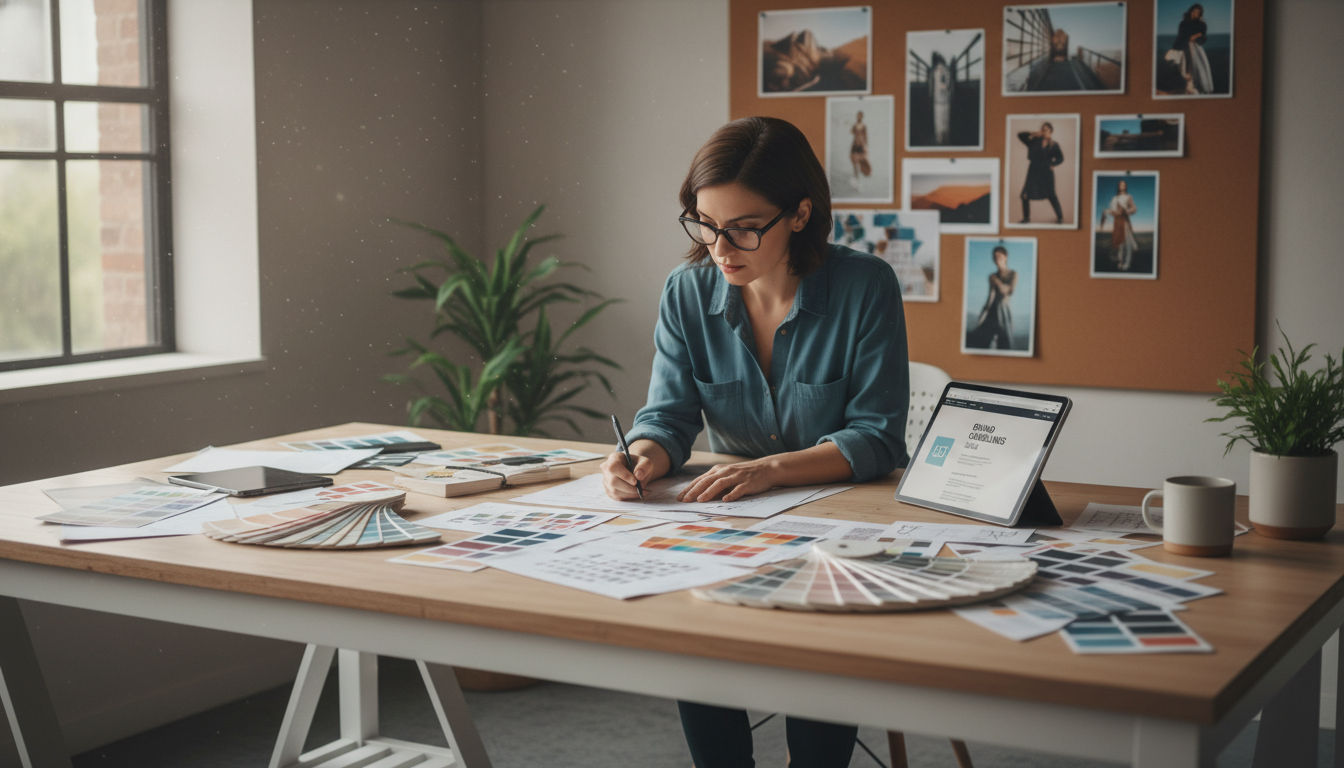
Traditional graphic design is built on foundational principles that have guided visual communication for decades. These principles—balance, contrast, hierarchy, alignment, and repetition—aren't just aesthetic choices. They're psychological tools that influence how people perceive and interact with your brand. Professional designers spend years mastering these fundamentals, learning not just what looks good, but why it works and how it affects human behavior.
The human element in graphic design extends far beyond technical skills. When you work with a professional designer, you're accessing their ability to interpret your brand's personality, understand your target audience's preferences, and translate abstract business goals into concrete visual solutions. This interpretive capacity involves asking the right questions, reading between the lines of client feedback, and making intuitive leaps that connect business objectives with creative execution.
Brand identity development showcases where human designers truly excel. Creating a cohesive brand identity requires understanding market positioning, competitive differentiation, and long-term business strategy. A designer doesn't just create a logo—they develop a visual language that can evolve across touchpoints, from business cards to billboards, from social media to packaging. This systematic thinking ensures consistency while allowing flexibility for growth.
Professional designers also bring strategic problem-solving capabilities that go beyond aesthetics. They consider technical constraints like print specifications, web accessibility standards, and cross-platform compatibility. They understand cultural nuances that might make a design effective in one market but offensive in another. They can anticipate how a design will age and whether it will remain relevant as trends shift.
The value proposition for businesses working with professional designers centers on return on investment. While the upfront cost might seem higher than DIY solutions, professional design typically delivers better conversion rates, stronger brand recognition, and longer-lasting assets. A well-designed website can increase conversion rates by 200% or more. A professional logo can serve a business for decades without needing replacement.
Moreover, experienced designers save businesses time and costly mistakes. They know how to avoid common pitfalls, work efficiently within project timelines, and deliver files in the correct formats for various applications. This expertise prevents expensive reprints, redesigns, and the reputational damage that comes from amateur-looking marketing materials.
For businesses building their presence—whether in Montreal's competitive local market or the broader digital landscape—professional design represents an investment in credibility. First impressions matter, and quality design signals professionalism, attention to detail, and business maturity. These perceptions directly influence whether potential customers trust you enough to make a purchase or inquiry.
The Rise of AI Design Tools
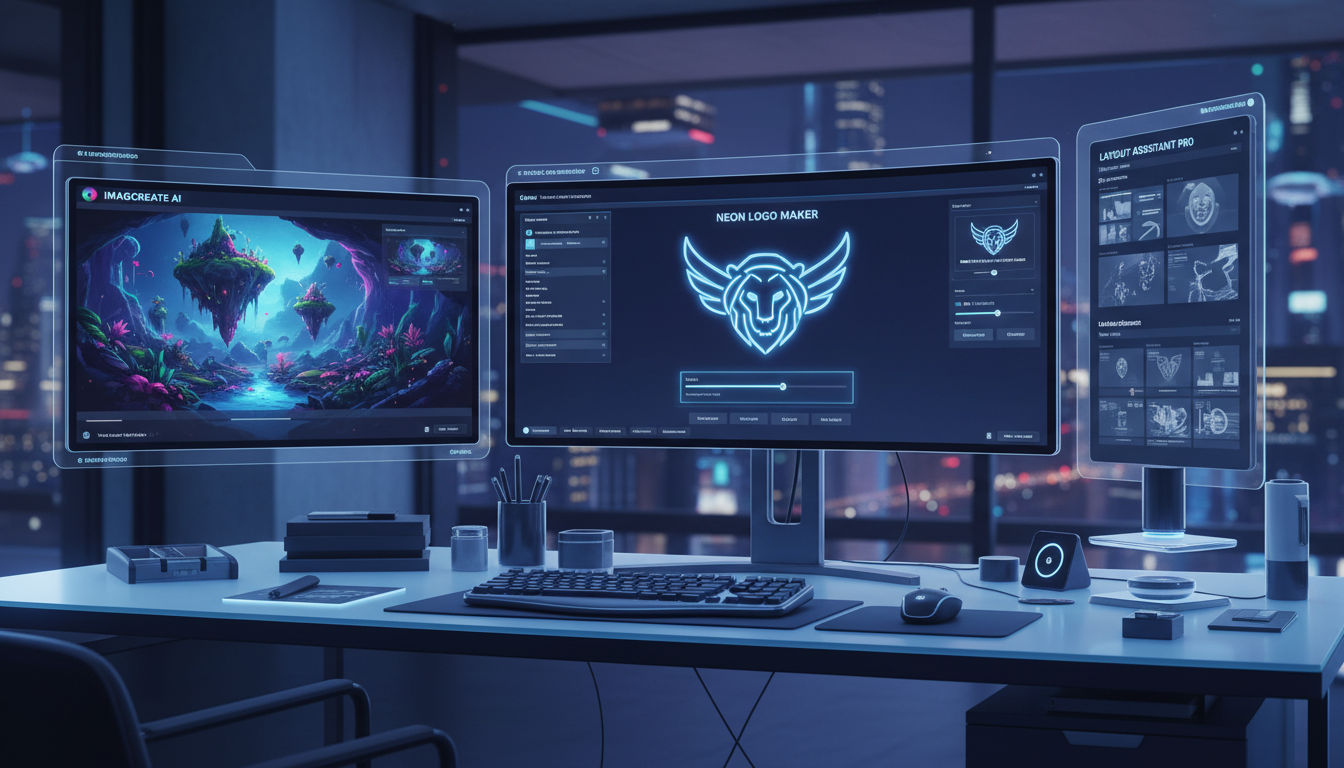
The AI design tool market has exploded in recent years, offering solutions that range from simple logo generators to sophisticated platforms capable of creating complex layouts. Tools like Canva's Magic Design, Adobe Firefly, Midjourney, DALL-E, and Looka have made design capabilities accessible to non-designers, fundamentally changing who can create visual content. These platforms use machine learning algorithms trained on millions of design examples to generate original graphics based on text prompts or templates.
Artificial intelligence is transforming creative workflows in several concrete ways. Tasks that once took hours—like removing backgrounds, resizing images for multiple platforms, or generating color palette variations—now happen in seconds. AI tools can analyze successful designs in your industry and suggest layouts that follow proven patterns. They can generate dozens of logo concepts in minutes, create social media graphics that match your brand colors, and even produce illustrations in specific artistic styles.
The automation capabilities extend to repetitive tasks that consume significant designer time. Batch processing images, creating multiple ad variations for A/B testing, or adapting a single design for different dimensions and formats are areas where AI excels. For businesses managing high-volume content needs—like e-commerce companies requiring hundreds of product images or social media managers posting daily—these efficiency gains are substantial.
However, current AI design tools have clear limitations that businesses need to understand. While they can generate visually appealing outputs, they struggle with nuanced brand alignment. An AI might create a beautiful logo, but it can't understand whether that logo truly reflects your company's values or differentiates you from competitors. The tools work from patterns in existing designs, which can lead to generic outputs that lack originality or strategic thinking.
Context understanding remains a significant challenge. AI tools don't grasp the subtle differences between designing for a luxury brand versus a budget option, or how cultural context might change a design's effectiveness. They can't participate in strategic discussions about target audience preferences or business positioning. When you ask an AI to create a design, it processes your request literally without understanding the broader business context.
Popular platforms businesses are adopting serve different needs and skill levels. Canva has become the go-to solution for small businesses and marketing teams needing quick, template-based designs. Its AI features help users create professional-looking graphics without design training, making it ideal for social media posts, presentations, and basic marketing materials. The platform's strength lies in accessibility and speed, though outputs can sometimes feel template-driven.
Adobe's AI integration through Firefly and Sensei brings artificial intelligence to professional-grade tools. These features assist rather than replace designer workflows, offering capabilities like generative fill, automatic subject selection, and intelligent font pairing. For businesses already invested in the Adobe ecosystem, these AI enhancements boost productivity without requiring new platforms.
Midjourney and DALL-E represent the cutting edge of generative AI for imagery. These tools excel at creating original illustrations, conceptual art, and unique visual elements that would be expensive to commission. However, they require skill in "prompt engineering"—knowing how to describe what you want in ways the AI understands—and outputs often need human refinement to be truly usable.
The adoption curve varies by business size and industry. Small businesses with limited budgets are embracing AI tools as cost-effective alternatives to hiring designers for every project. Medium-sized companies are using AI for routine tasks while reserving professional designers for strategic work. Enterprises are integrating AI into existing creative workflows to scale production without proportionally increasing headcount.
Quick question
Want to turn this into a real plan?
If you want expert help with strategy, design, development, marketing, or automation — we’ll recommend the fastest path forward for your goals.
Graphic Design vs AI: Key Differences
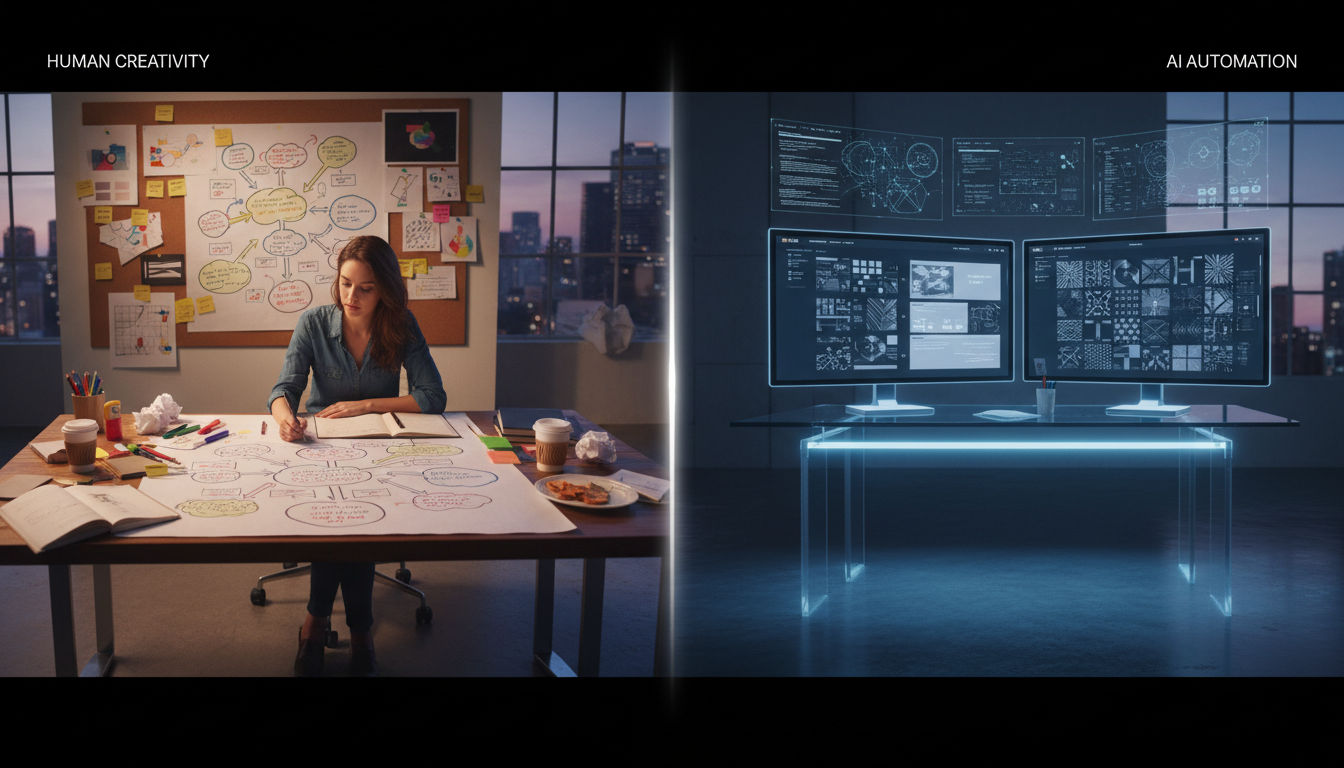
The fundamental distinction between graphic design vs AI centers on creative thinking and strategic problem-solving. Human designers approach projects with conceptual thinking—they understand the "why" behind design decisions. When tasked with creating a brand identity, a designer considers market positioning, competitive landscape, target audience psychology, and business goals. They ask questions that uncover deeper needs and translate abstract concepts into visual solutions. AI tools, conversely, excel at pattern recognition and replication but lack genuine creative reasoning. They can't question a brief, suggest alternative approaches based on strategic insights, or innovate beyond their training data.
This difference becomes particularly evident in complex projects requiring original thinking. Imagine a Montreal-based business wanting to rebrand to appeal to both local French-speaking customers and international English-speaking markets. A human designer would research cultural nuances, test concepts with both audiences, and create a visual identity that resonates across linguistic boundaries. An AI tool might generate attractive designs but wouldn't grasp the cultural complexity or strategic importance of this balance.
Brand consistency and emotional intelligence represent another critical differentiator. Professional designers develop comprehensive brand guidelines that ensure visual coherence across all touchpoints—from your website to business cards to social media. They understand how subtle variations in color, typography, or imagery affect brand perception. More importantly, they can maintain brand integrity while adapting to different contexts and audiences.
Emotional intelligence in design means understanding how visual elements evoke feelings and drive behavior. Designers know that certain color combinations create urgency while others build trust. They understand how whitespace affects perception of luxury versus value. They can design with empathy, considering how users with different abilities, cultural backgrounds, or emotional states will experience the design. AI tools can apply learned patterns about color psychology but don't truly understand the emotional nuances they're manipulating.
Speed and efficiency comparisons reveal interesting trade-offs. AI tools undeniably work faster for specific tasks. Generating a dozen logo variations takes AI minutes versus hours or days for a human designer. Creating social media graphics from templates happens almost instantaneously. For businesses needing high volumes of relatively simple, template-based content, AI's speed advantage is substantial.
However, this speed comes with caveats. AI-generated outputs often require human review and refinement. The time saved in initial creation might be partially offset by revision cycles. Additionally, speed without strategy can lead to wasted effort—quickly producing the wrong solution doesn't serve business goals. Human designers might take longer initially but often reach the right solution faster because they invest time in understanding the problem before designing solutions.
Cost considerations vary significantly between small to medium businesses and enterprises. AI tools typically operate on subscription models ranging from free to a few hundred dollars monthly, making them accessible for businesses with limited budgets. This democratization of design capability allows startups and small businesses to create professional-looking materials without major capital investment.
Professional design services represent a higher upfront cost but deliver different value. A comprehensive brand identity from a professional designer or agency might cost several thousand to tens of thousands of dollars, depending on scope. For small businesses, this can seem prohibitive. However, the investment often pays dividends through stronger brand recognition, higher conversion rates, and assets that remain effective for years without replacement.
Enterprises face different calculations. At scale, the cost of professional designers for every piece of content becomes substantial. Many larger organizations are adopting hybrid models—using AI for routine production work while employing designers for strategic projects, brand development, and creative direction. This approach optimizes cost efficiency while maintaining quality where it matters most.
Quality and customization factors reveal perhaps the most significant differences. AI-generated designs can look polished and professional, especially when using well-designed templates. However, they often lack the refinement and attention to detail that characterize professional work. Spacing might be slightly off, hierarchy unclear, or visual elements not perfectly balanced. These subtle imperfections might not be obvious to untrained eyes but can undermine professional credibility.
Customization represents AI's biggest limitation. While you can modify AI outputs, the tools work best within established patterns. Creating something truly unique—a visual identity that stands apart from competitors—requires the original thinking that human designers provide. AI tools are excellent at producing variations on familiar themes but struggle with genuine innovation.
The quality difference also appears in technical execution. Professional designers understand print specifications, color modes, resolution requirements, and file formats. They deliver assets ready for any application. AI tools might generate beautiful screen graphics that can't be printed properly or logos that don't scale well. These technical considerations significantly impact real-world usability.
How AI is Enhancing (Not Replacing) Graphic Design
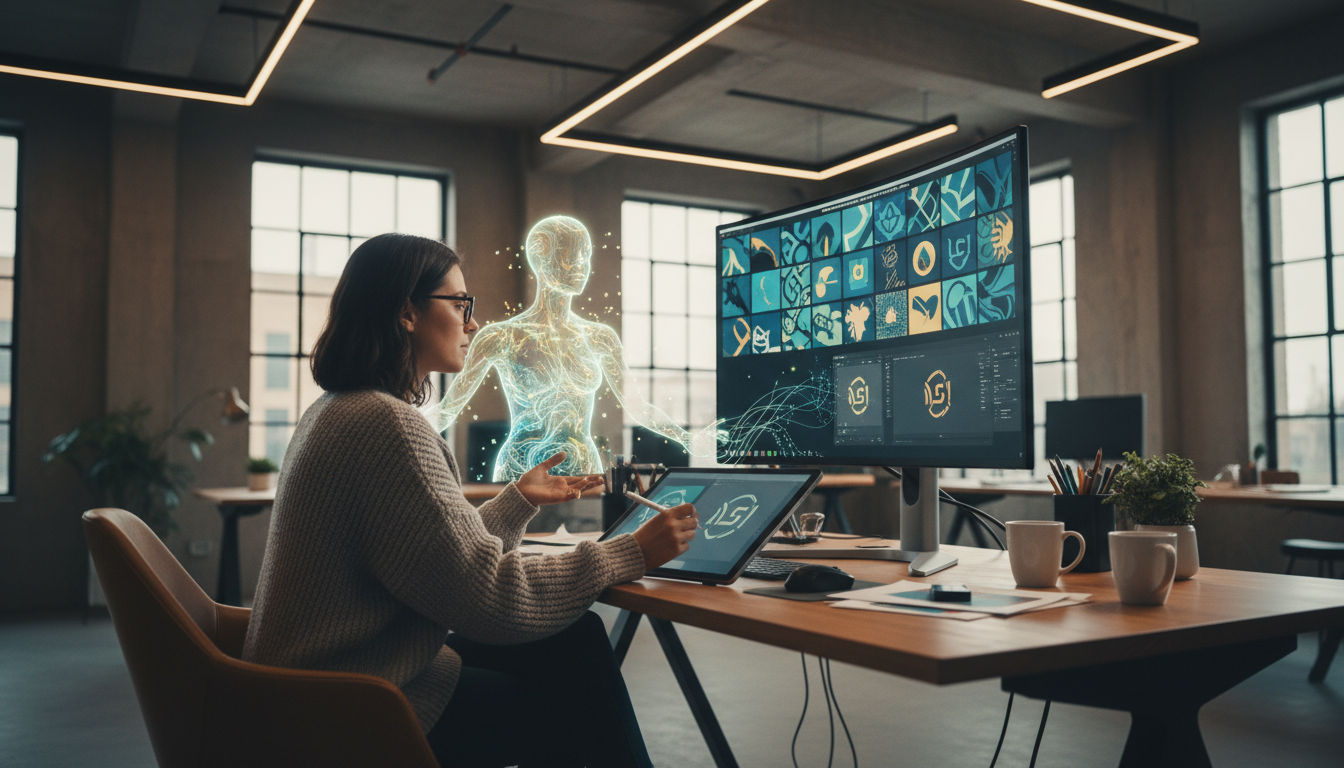
The most promising development in the graphic design vs AI landscape is collaborative workflows where designers and artificial intelligence work together. Forward-thinking designers are integrating AI tools into their processes to handle time-consuming tasks while focusing their creative energy on strategic and conceptual work. This partnership allows designers to explore more concepts, iterate faster, and deliver higher value to clients.
In practice, this collaboration might look like a designer using AI to generate multiple layout variations quickly, then applying their expertise to refine the most promising options. Or using AI to remove backgrounds from hundreds of product photos while personally crafting the overall visual composition. The AI handles the mechanical, repetitive aspects while the designer manages creative direction, strategic alignment, and quality control.
AI as a productivity tool is transforming how efficiently designers work. Tasks that previously consumed hours of manual effort—like creating multiple size variations of an ad, generating color palette alternatives, or sourcing similar visual references—now happen in minutes. This efficiency gain doesn't eliminate the need for designers; it elevates their role. Instead of spending time on mechanical tasks, designers can focus on client consultation, strategic thinking, and creative problem-solving.
For businesses, this productivity enhancement translates to better value. Designers can take on more complex projects, deliver faster turnarounds, or reduce costs without sacrificing quality. A web development and digital marketing agency might use AI tools to rapidly prototype design concepts during client meetings, then have designers refine the chosen direction—combining speed with strategic expertise.
Use cases where AI design tools excel include high-volume, template-based content creation. Social media graphics following established brand guidelines are perfect for AI generation. If you've already defined your brand colors, fonts, and visual style, AI tools can quickly produce on-brand social posts, blog headers, or email graphics. This application is particularly valuable for businesses maintaining active social media presence across multiple platforms.
Product photography enhancement represents another AI strength. Tools can remove backgrounds, adjust lighting, create consistent product shots, and even generate lifestyle images showing products in use. For e-commerce businesses managing hundreds or thousands of products, AI dramatically reduces the time and cost of creating professional product imagery.
Data visualization and infographic creation benefit from AI assistance. Tools can transform spreadsheet data into visually appealing charts and graphs, suggest effective visualization types for different data sets, and create infographics from content outlines. While designers still add creative polish and ensure the visualizations effectively communicate insights, AI handles much of the initial formatting work.
When human designers remain essential becomes clear in several scenarios. Strategic brand development requires human insight. Creating a brand identity that differentiates your business, resonates with your target audience, and supports long-term business goals demands the strategic thinking only humans provide. AI can't conduct competitor analysis, identify market gaps, or translate business strategy into visual language.
Complex problem-solving projects need human creativity. When facing unique challenges—like designing a user interface for a novel product, creating packaging that stands out in a crowded market, or developing a visual campaign that addresses sensitive social issues—human designers bring the creative reasoning and cultural awareness that AI lacks.
Emotional storytelling and brand personality development require human empathy. Designs that need to evoke specific emotions, connect with audiences on a personal level, or express nuanced brand values benefit from human understanding of psychology and culture. A designer can craft visual narratives that build emotional connections with your audience in ways that AI-generated templates cannot.
Quality control and refinement always benefit from human oversight. Even when using AI for initial creation, having a designer review outputs ensures professional standards, brand alignment, and technical correctness. This oversight catches issues like cultural insensitivity, unintended visual associations, or technical problems that might not be obvious to non-designers but could damage your brand reputation.
The integration of AI into design workflows is creating a new professional category—designers who excel at leveraging AI tools while providing strategic creative direction. These professionals deliver the efficiency of AI with the strategic value of human expertise. For businesses, partnering with designers who embrace AI means getting the best of both worlds: speed and cost-efficiency combined with strategic thinking and creative excellence.
Current Graphic Design Trends Influenced by AI
Generative design patterns represent one of the most visible AI influences on contemporary aesthetics. These patterns—created through algorithms that generate countless variations based on defined parameters—produce organic, complex visuals that would be nearly impossible to create manually. You'll see these in everything from abstract backgrounds to intricate logo marks. The aesthetic is distinctly modern, often featuring flowing forms, unexpected color combinations, and mathematical precision blended with organic randomness.
This trend extends beyond pure aesthetics to functional design. AI-generated patterns are being used for textile design, architectural elements, and user interface backgrounds. The ability to generate infinite unique variations while maintaining cohesive style makes generative design particularly appealing for brands wanting distinctive visuals without the cost of custom illustration for every application.
However, the proliferation of AI-generated patterns has created a new challenge: avoiding the "AI look" that's becoming recognizable and sometimes generic. Skilled designers are learning to use AI-generated elements as starting points, then adding human touches that prevent designs from feeling algorithmic. This balance between AI efficiency and human refinement defines cutting-edge design work in 2024-2025.
Personalization at scale has become achievable through AI, fundamentally changing how businesses approach visual content. Previously, creating personalized designs for different audience segments was prohibitively expensive and time-consuming. AI tools now enable mass customization—generating variations of designs tailored to different demographics, locations, or user preferences while maintaining brand consistency.
E-commerce businesses are using AI to create personalized product recommendations with custom graphics. Email marketing platforms employ AI to adjust visual elements based on recipient data. Websites dynamically adjust layouts and imagery based on user behavior. This level of personalization was once available only to enterprises with massive budgets; AI has made it accessible to businesses of all sizes.
For businesses in competitive markets like Montreal's diverse commercial landscape, personalization helps cut through noise. AI-enabled design tools can create French and English versions of marketing materials that go beyond simple translation, adjusting visual elements to resonate with each linguistic community's aesthetic preferences.
Data-driven design decisions are replacing intuition-based approaches in many contexts. AI tools analyze performance metrics from thousands of designs to identify patterns in what works. They can predict which color schemes drive more conversions, which layouts hold attention longer, or which imagery resonates with specific demographics. This empirical approach takes guesswork out of design decisions.
A/B testing has become more sophisticated with AI assistance. Instead of testing two manually created variations, businesses can now test dozens of AI-generated alternatives simultaneously, rapidly identifying the most effective designs. The AI learns from results, continuously improving its suggestions based on actual performance data rather than design theory alone.
However, data-driven design has limitations. It optimizes for measurable outcomes but might miss intangible brand-building benefits. A design that maximizes immediate clicks might not build long-term brand equity. Human designers balance data insights with strategic brand considerations, ensuring short-term optimization doesn't compromise long-term positioning.
Emerging visual styles in 2024-2025 reflect the graphic design vs AI synthesis. We're seeing a rise in "human-touched AI" aesthetics—designs that obviously incorporate AI-generated elements but feature clear evidence of human refinement. This style celebrates the collaboration between human and machine rather than hiding AI's involvement.
Maximalism is returning, partly enabled by AI's ability to manage visual complexity. Designs featuring rich layering, abundant detail, and dense information presentation are becoming more common as AI tools make creating and managing complex compositions more feasible. This contrasts with the minimalism that dominated recent years, offering brands new ways to stand out.
Experimental typography is flourishing as AI tools make custom typeface creation and manipulation more accessible. Designers are creating unique letterforms, kinetic typography, and three-dimensional text treatments that would have required specialized skills or significant time investment. This democratization of advanced typography is giving more brands access to distinctive text-based identities.
Authenticity markers are emerging as a counter-trend to AI proliferation. Some brands are deliberately emphasizing hand-drawn elements, imperfect textures, and obviously human-created visuals to differentiate themselves in an increasingly AI-saturated visual landscape. This trend reflects consumer awareness of AI-generated content and desire for genuine human connection.
Sustainable and ethical design considerations are being supported by AI tools that calculate environmental impact, suggest eco-friendly materials, or optimize designs for minimal waste. As businesses face increasing pressure to demonstrate environmental responsibility, AI is helping designers make sustainable choices without sacrificing aesthetics or functionality.
Practical Applications for Businesses
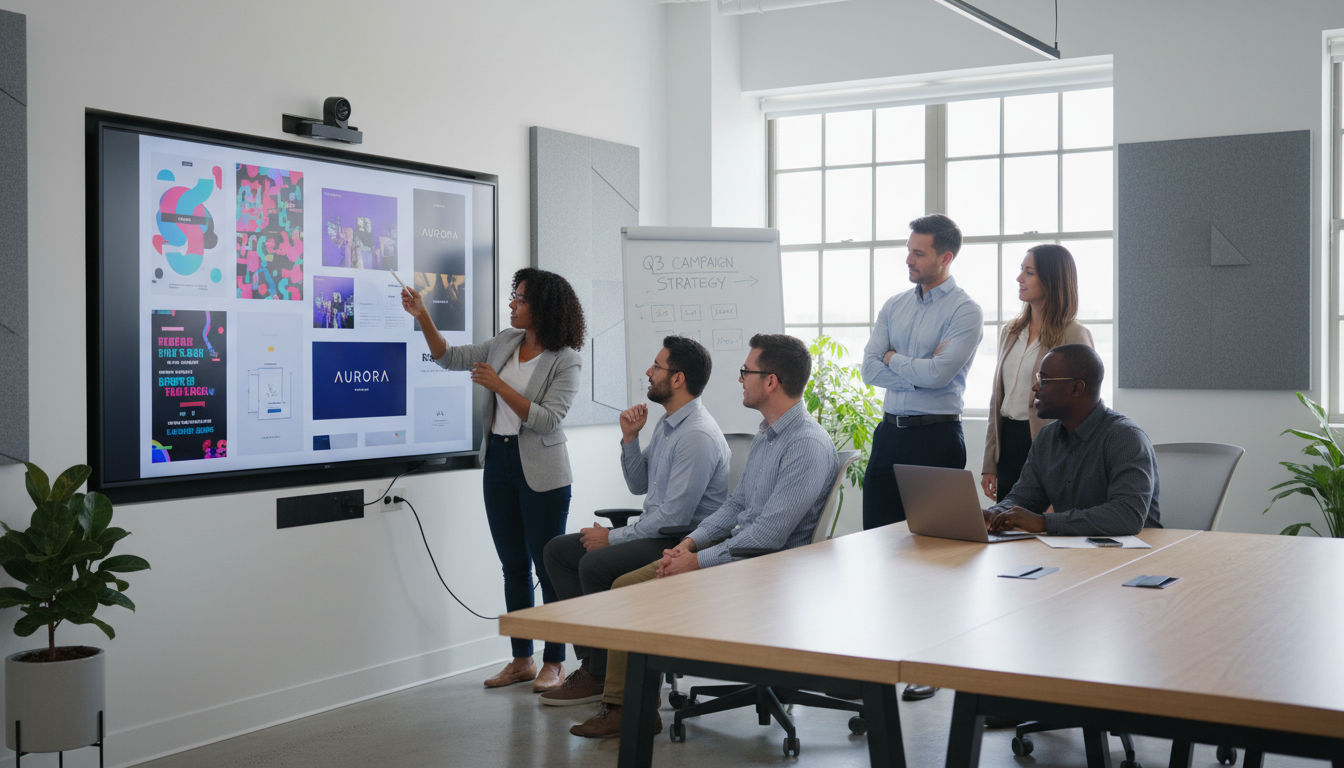
When to use AI design tools becomes clear when you understand their strengths. High-volume, repetitive content creation is AI's sweet spot. If you're posting daily to social media, creating multiple ad variations for testing, or generating product imagery for a large catalog, AI tools deliver significant time and cost savings. The content follows established templates and brand guidelines, requiring consistency more than creative innovation.
Internal communications and preliminary materials benefit from AI generation. Creating presentation slides, internal reports, or draft concepts for team review doesn't require the polish of customer-facing materials. AI tools let non-designers create professional-looking internal content without consuming design resources, freeing professional designers for strategic work.
Rapid prototyping and concept exploration work well with AI assistance. When you need to visualize multiple directions quickly—perhaps exploring different brand identity concepts or testing layout variations—AI can generate numerous options faster than manual design. These AI-generated concepts become starting points for discussion and refinement rather than final deliverables.
Template-based materials with established brand guidelines are ideal for AI. Once you have defined brand colors, fonts, and visual style, AI tools can reliably produce on-brand materials like social media posts, email headers, or simple promotional graphics. This application maintains brand consistency while reducing production time and cost.
When to hire professional designers becomes essential for strategic, high-impact projects. Brand identity development should always involve professional designers. Your logo, color palette, typography, and overall visual identity form the foundation of how customers perceive your business. This foundational work requires the strategic thinking, market understanding, and creative expertise that only human designers provide.
Next step
Ready for a quote and timeline?
Send a quick note with what you’re building, your deadline, and what success looks like — we’ll reply with clear next steps.
Customer-facing materials that directly impact conversion deserve professional attention. Your website design, landing pages, product packaging, and key marketing campaigns significantly influence whether prospects become customers. The difference between professional design and AI-generated alternatives can directly affect your bottom line. A professionally designed website might cost more upfront but can deliver substantially higher conversion rates, quickly recovering the investment.
Complex problem-solving projects need human creativity. If you're facing unique challenges—entering a new market, repositioning your brand, or creating something innovative—professional designers bring creative problem-solving capabilities that AI cannot match. They'll ask questions that uncover deeper needs, suggest approaches you hadn't considered, and create solutions tailored to your specific situation.
Long-term brand assets justify professional investment. Materials you'll use for years—like brand guidelines, core website design, or packaging—should be professionally created. The extended lifespan of these assets means the cost per use becomes minimal, while the quality impact remains consistently high. Cutting corners on foundational assets often leads to expensive redesigns within a year or two.
Hybrid approaches for maximum ROI combine AI efficiency with human expertise strategically. Many successful businesses are adopting a tiered approach: using AI for routine production work while engaging professional designers for strategic projects and creative direction. This model optimizes resource allocation, putting budget where it delivers the most value.
A practical hybrid workflow might involve professional designers creating comprehensive brand guidelines and templates, then using AI tools to generate variations and apply those guidelines to routine content. The designers establish the creative strategy and quality standards; AI handles high-volume execution. This approach maintains brand consistency and professional quality while achieving the efficiency of automation.
Another effective hybrid model uses AI for initial concept generation and professional designers for refinement. AI quickly produces multiple rough concepts, stakeholders select promising directions, and designers transform the chosen concepts into polished, strategic solutions. This process combines AI's speed in generating alternatives with human judgment in selecting and perfecting the best options.
Integration with web design and digital marketing strategies requires coordinated thinking about visual content across channels. Your website, social media, email campaigns, and advertising should present a cohesive visual identity. Professional designers can create this comprehensive visual strategy, while AI tools help execute it consistently across numerous touchpoints.
For businesses managing both web presence and marketing campaigns, consider having professionals design your core web presence and key campaign templates, then using AI to create variations and ongoing content. This ensures your foundational digital presence meets professional standards while allowing efficient production of the high-volume content digital marketing requires.
Local businesses in markets like Montreal benefit from hybrid approaches that balance budget constraints with competitive pressure. Investing in professional design for your core brand identity and website establishes credibility, while using AI for social media content and routine marketing materials keeps ongoing costs manageable. This strategy lets smaller businesses compete visually with larger competitors without unsustainable marketing budgets.
The key to successful hybrid approaches is knowing where quality matters most. Identify the 20% of visual content that drives 80% of business results—typically your website, core brand identity, and primary marketing materials—and invest in professional design for these high-impact elements. Use AI for the remaining 80% of content that supports but doesn't define your brand.
Businesses should also consider their internal capabilities when deciding between AI tools and professional designers. If you have team members with basic design sense who can effectively use AI tools and maintain brand consistency, AI becomes more viable for routine content. If not, the risk of off-brand or unprofessional content might outweigh cost savings, making professional design services the better choice even for routine materials.
Conclusion
The future of graphic design vs AI isn't a winner-take-all competition—it's an evolving partnership that's redefining creative work. AI tools will continue advancing, becoming more sophisticated in their capabilities and more intuitive in their interfaces. We'll see AI handling increasingly complex design tasks, from adaptive layouts that automatically optimize for any device to designs that personalize in real-time based on viewer characteristics.
However, this technological progress won't eliminate the need for human designers. Instead, it will elevate their role. As AI handles mechanical and repetitive tasks, designers will focus increasingly on strategy, creative direction, and the uniquely human aspects of visual communication that machines cannot replicate. The most successful designers will be those who master AI tools while providing the strategic thinking and creative vision that businesses truly need.
For businesses navigating this landscape, making informed decisions requires understanding your specific needs, resources, and goals. There's no universal answer to whether you should use AI tools or hire professional designers—the right choice depends on what you're creating, who will see it, and how it supports your business objectives. The businesses that thrive will be those that strategically deploy both approaches, using each where it delivers the most value.
Small businesses with limited budgets can leverage AI tools to create professional-looking content that would have been unaffordable previously, while investing selectively in professional design for high-impact elements. Medium and large businesses can use AI to scale content production while maintaining professional oversight and strategic direction. In all cases, the goal is maximizing return on investment by matching the right tool to each task.
The graphic design trends we're seeing—from generative patterns to personalization at scale—will continue evolving as AI capabilities expand. Staying current with these trends helps businesses remain visually competitive, but chasing every trend isn't necessary or wise. Focus on creating visual content that authentically represents your brand and effectively communicates with your audience, whether that involves cutting-edge AI or traditional design approaches.
Making the right choices about graphic design vs AI starts with honest assessment of your needs. What are you trying to achieve? Who is your audience? What's your budget? How important is visual differentiation in your market? Answering these questions guides you toward the approach that serves your business best. If you're uncertain, consulting with professionals who understand both AI capabilities and traditional design can provide clarity.
For businesses ready to elevate their visual presence—whether through professional design services, strategic AI implementation, or optimized hybrid approaches—partnering with experienced teams who understand this evolving landscape makes the difference between wasted resources and strategic investment. The right web development and digital marketing partner can help you navigate these decisions, implementing solutions that align with your goals and budget.
The creative industry's transformation isn't something to fear—it's an opportunity to work smarter, reach audiences more effectively, and build stronger brands. By understanding the strengths and limitations of both AI tools and human designers, you can make strategic decisions that position your business for success in this new creative landscape. The future belongs to businesses that embrace both technological innovation and timeless creative excellence, using each where it delivers the most value.
Whether you're just starting to build your brand or looking to refresh your visual identity, now is an excellent time to evaluate your approach to design. Explore the projects and solutions that demonstrate effective integration of technology and creativity, and consider how similar strategies might benefit your business. The graphic design vs AI debate will continue evolving, but the fundamental goal remains constant: creating visual content that connects with audiences and drives business results.