Introduction
Marketing has changed dramatically over the past decade. What once required entire teams working around the clock can now be handled by smart software that never sleeps. This shift isn't just about doing things faster—it's about doing them smarter.
An AI marketing agent is essentially a digital assistant powered by artificial intelligence that handles your marketing tasks automatically. Think of it as having a marketing expert working 24/7, analyzing data, creating content, and engaging with customers without needing breaks or supervision. These tools use machine learning to understand patterns, predict customer behavior, and make decisions that traditionally required human judgment.
Businesses across Montreal and worldwide are adopting AI marketing tools at an unprecedented rate. The reason is simple: they work. Small businesses that once couldn't afford large marketing departments now compete with enterprise companies. Medium-sized businesses scale their operations without proportionally increasing their costs. Enterprise organizations optimize campaigns across dozens of channels simultaneously.
The adoption isn't just about following trends. Companies are seeing real results—higher conversion rates, better customer engagement, and significant cost savings. A recent study found that businesses using AI marketing tools reported a 50% increase in leads and appointments. Another showed that 80% of business leaders believe AI improves productivity and creates jobs rather than replacing them.
But here's what matters most: AI marketing agents don't replace human creativity and strategy. They amplify it. They handle the repetitive, time-consuming tasks that drain your team's energy, freeing everyone to focus on creative strategy, relationship building, and growth initiatives that truly move the needle.
Whether you're a small business owner in Montreal looking to compete more effectively, or an enterprise seeking to optimize complex marketing operations, understanding AI marketing agents is no longer optional. It's essential for staying competitive in today's digital landscape.
What Is an AI Marketing Agent?
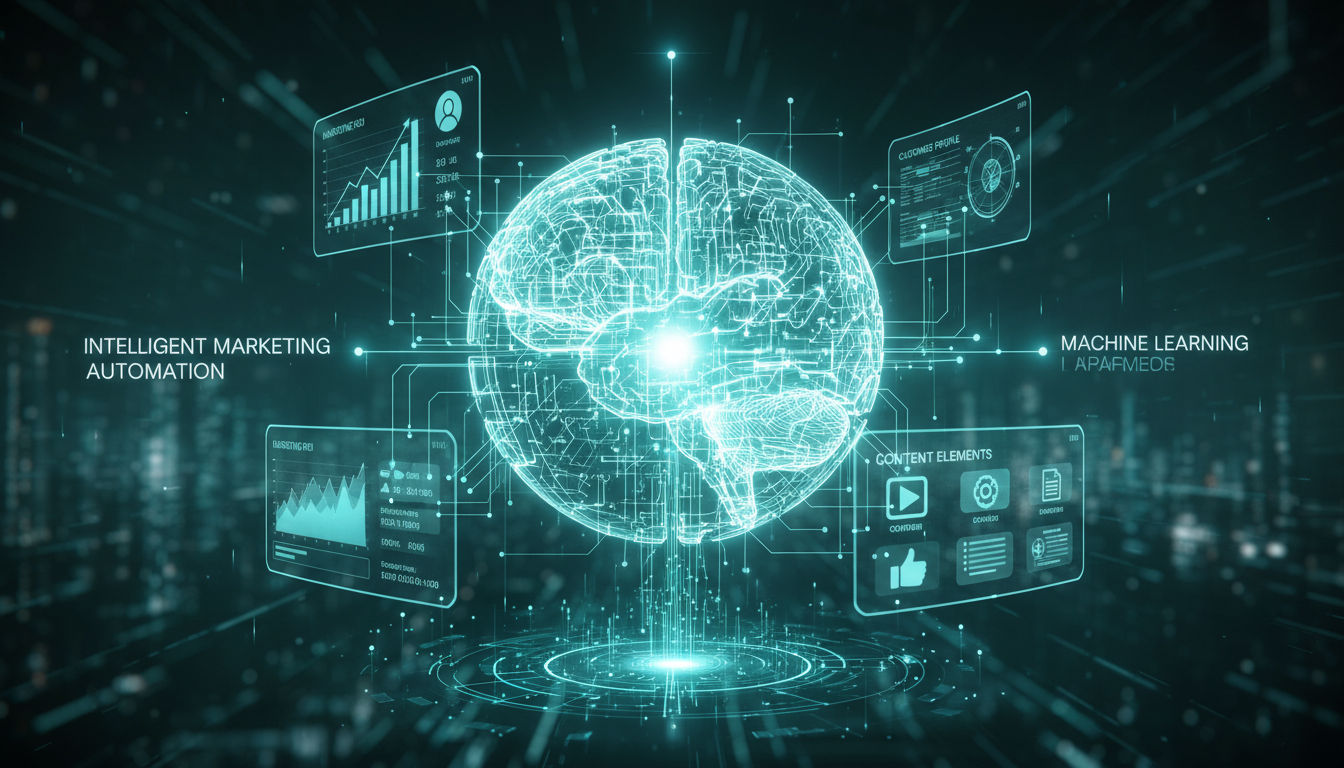
An AI marketing agent is software that uses artificial intelligence to perform marketing tasks with minimal human intervention. Unlike traditional tools that simply execute commands you program, these agents learn from data, adapt to changing conditions, and make intelligent decisions based on patterns they recognize.
At its core, an AI marketing agent combines several technologies. Machine learning algorithms analyze vast amounts of data to identify trends and predict outcomes. Natural language processing enables the agent to understand and generate human-like text for content creation and customer interactions. Computer vision allows it to analyze images and videos for social media optimization. These technologies work together to create a system that can handle complex marketing workflows autonomously.
The key capabilities of AI marketing agents are impressive and constantly expanding. They can generate personalized content for thousands of customers simultaneously, each message tailored to individual preferences and behaviors. They analyze customer data to predict who's most likely to make a purchase and when. They manage entire email campaigns, adjusting send times and content based on engagement patterns. They monitor social media conversations, respond to comments, and identify trending topics relevant to your brand.
Traditional marketing automation follows rigid, pre-programmed rules. If a customer does X, send email Y. These systems are powerful but limited. They can't adapt when circumstances change or learn from new information. AI marketing agents, however, continuously improve their performance. They test different approaches, measure results, and adjust their strategies without human intervention.
Consider email marketing as an example. Traditional automation sends scheduled emails to segmented lists. An AI marketing agent analyzes each recipient's past behavior, predicts the optimal send time, personalizes the subject line and content, determines which call-to-action will resonate most, and learns from the results to improve future campaigns.
Machine learning is the engine that powers these capabilities. It's a type of AI that enables systems to learn and improve from experience without being explicitly programmed for every scenario. In marketing, machine learning algorithms process data from customer interactions, campaign performance, market trends, and countless other sources. They identify patterns humans might miss and make predictions about future behavior.
For instance, a machine learning model might discover that customers who view your pricing page three times within a week are 70% more likely to purchase if they receive a case study within 24 hours. The AI marketing agent can then automatically trigger that action for similar customers in the future.
The sophistication of these systems varies widely. Some AI marketing tools focus on specific tasks like content generation or ad optimization. Comprehensive AI marketing agents integrate multiple functions into a unified platform that manages entire marketing operations. The best solutions combine automation with human oversight, allowing marketers to review and approve critical decisions while the AI handles routine execution.
Core Benefits of AI Marketing Agents for Business Growth

The primary advantage of implementing an AI marketing agent is the dramatic increase in efficiency and productivity. Tasks that once consumed hours of manual work now happen automatically and instantly. Your team no longer spends time on repetitive activities like data entry, list segmentation, or basic reporting. Instead, they focus on strategic initiatives that require human creativity and judgment.
Consider content creation. A marketing team might spend days researching, writing, and editing blog posts, social media updates, and email campaigns. An AI marketing agent can generate initial drafts in minutes, allowing your team to spend their time refining strategy and adding unique insights that only humans can provide. This doesn't mean AI replaces writers—it means writers become more productive and focus on higher-value work.
One of the most powerful benefits is 24/7 customer engagement and support. Your AI marketing agent never sleeps, takes vacations, or calls in sick. It responds to customer inquiries instantly, any time of day or night. For businesses serving multiple time zones or international markets, this capability is transformative.
A customer visiting your website at 2 AM can receive immediate assistance, personalized product recommendations, and answers to common questions. The AI agent can qualify leads, schedule appointments, and even close simple sales without human intervention. When complex issues arise requiring human expertise, the agent collects relevant information and routes the inquiry to the appropriate team member during business hours.
Data-driven decision making becomes accessible to businesses of all sizes. Large enterprises have always had analytics teams analyzing performance metrics and market trends. AI marketing agents democratize this capability. They continuously analyze data from all your marketing channels, identify what's working and what isn't, and provide actionable insights.
Instead of guessing which marketing strategies might work, you make decisions based on evidence. The AI agent might reveal that video content generates 3x more engagement than images on your social channels, or that customers who engage with your chatbot convert at twice the rate of those who don't. These insights inform your strategy and budget allocation.
Quick question
Want to turn this into a real plan?
If you want expert help with strategy, design, development, marketing, or automation — we’ll recommend the fastest path forward for your goals.
Personalization at scale was once impossible for most businesses. Creating truly personalized experiences for each customer required resources only major corporations could afford. AI marketing agents change this equation entirely. They analyze individual customer behavior, preferences, purchase history, and engagement patterns to deliver personalized experiences to thousands or millions of customers simultaneously.
Each customer sees content, offers, and recommendations tailored specifically to their interests and stage in the buying journey. A first-time visitor receives educational content about your services. A returning customer who's viewed specific products sees targeted offers related to those items. A loyal customer receives exclusive benefits and complementary product suggestions. All of this happens automatically, creating experiences that feel personal and relevant.
The financial impact of AI marketing agents extends beyond revenue growth to significant cost reduction. Automating routine tasks reduces the need for large teams performing manual work. Campaign optimization happens continuously without expensive consultants. Customer service costs decrease as AI agents handle common inquiries. Marketing spend becomes more efficient as AI identifies and eliminates underperforming campaigns while scaling successful ones.
Return on investment improves across multiple dimensions. Customer acquisition costs typically decrease as targeting becomes more precise and conversion rates improve. Customer lifetime value increases through better retention and personalized upselling. Marketing teams accomplish more with existing resources, improving productivity ratios. For many businesses, the ROI of implementing AI marketing tools becomes positive within months, with benefits compounding over time.
Small businesses particularly benefit from these cost efficiencies. A Montreal-based company with limited marketing budget can compete effectively against much larger competitors by leveraging AI tools that level the playing field. The AI agent provides capabilities that would otherwise require hiring multiple specialists or engaging expensive agencies.
Essential AI Marketing Tools and Features
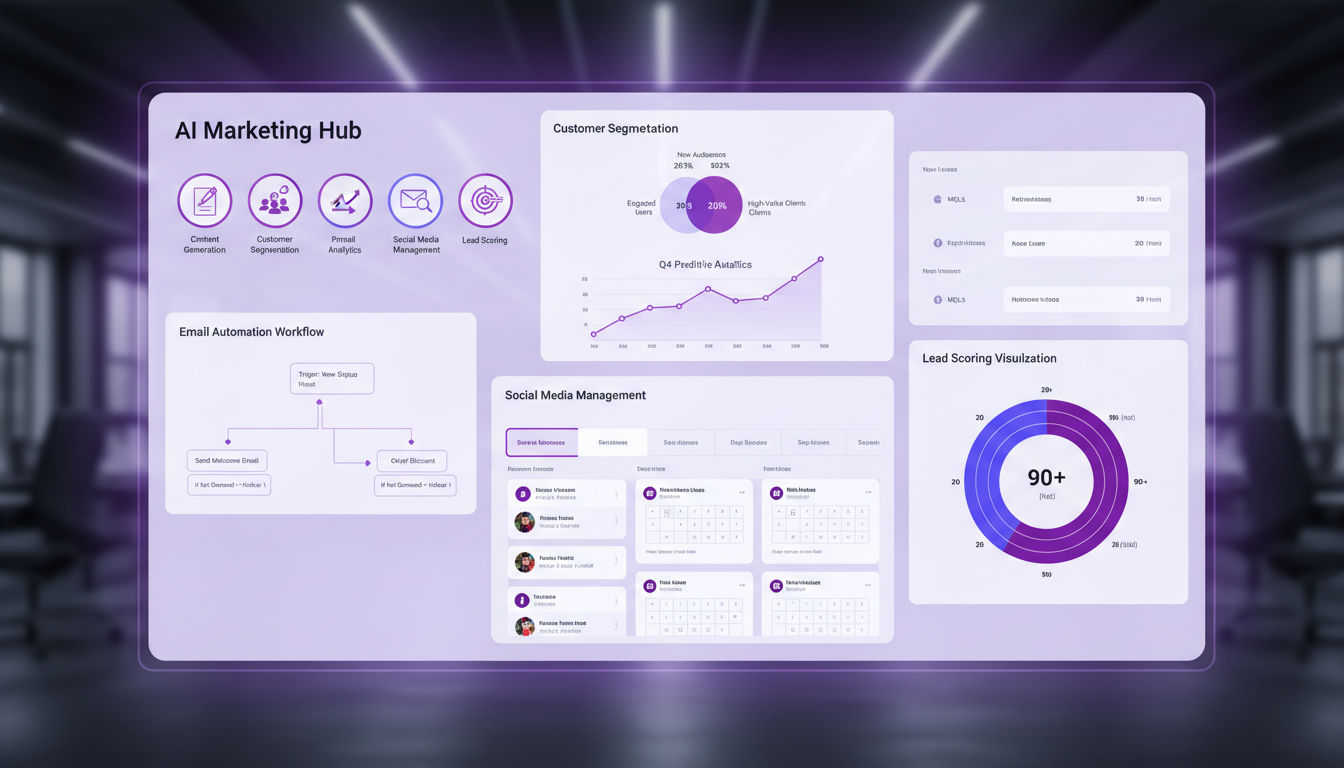
Content generation and optimization represent some of the most immediately useful AI marketing capabilities. Modern AI agents can create blog posts, social media updates, email copy, product descriptions, and advertising text. The quality has improved dramatically—AI-generated content often requires only minor editing to match your brand voice and add unique insights.
Beyond creation, AI tools optimize content for search engines and audience engagement. They analyze which headlines generate more clicks, which sentence structures improve readability, and which calls-to-action drive conversions. The AI continuously tests variations and refines content to improve performance. This optimization happens at a scale impossible for human teams, testing dozens of variations simultaneously across different audience segments.
Customer segmentation and targeting become far more sophisticated with AI marketing agents. Traditional segmentation divides customers into broad categories based on demographics or purchase history. AI segmentation creates micro-segments based on hundreds of behavioral signals, identifying patterns that predict future behavior with remarkable accuracy.
An AI agent might identify that customers who engage with your content on mobile devices during evening hours and have previously purchased certain product categories respond best to specific messaging styles. It creates and manages these complex segments automatically, ensuring each customer receives the most relevant communication. As customer behavior changes, segments update dynamically without manual intervention.
Predictive analytics and forecasting transform how businesses plan and allocate resources. AI marketing agents analyze historical data, current trends, and external factors to predict future outcomes. They forecast which leads are most likely to convert, which customers are at risk of churning, which products will see increased demand, and which marketing channels will deliver the best ROI.
These predictions enable proactive rather than reactive marketing. Instead of responding to problems after they occur, you prevent them. The AI agent might identify customers showing early signs of disengagement and automatically trigger retention campaigns before they leave. It might predict seasonal demand fluctuations and adjust inventory and marketing spend accordingly.
Email marketing automation powered by AI goes far beyond scheduled sends. AI agents determine optimal send times for each individual recipient based on when they typically engage with emails. They personalize subject lines, content, and offers based on recipient behavior and preferences. They automatically segment lists, remove inactive subscribers, and re-engage dormant contacts with targeted campaigns.
The AI continuously monitors campaign performance and adjusts strategies in real-time. If a particular email isn't performing well, the agent might modify the subject line, adjust the send schedule, or change the target audience. This dynamic optimization ensures consistently improving results without constant manual oversight.
Social media management becomes manageable even for businesses with limited resources. AI marketing agents schedule posts across multiple platforms, analyze engagement patterns to determine optimal posting times, monitor brand mentions and relevant conversations, respond to comments and messages, and identify trending topics relevant to your industry.
The agent can generate social media content based on your brand guidelines, curate relevant third-party content to share, and even create simple graphics and videos. It tracks performance across platforms and adjusts your social strategy based on what resonates with your audience. For businesses managing multiple social accounts, this automation saves countless hours while maintaining consistent, engaging presence.
Lead scoring and nurturing systems powered by AI dramatically improve sales efficiency. Traditional lead scoring assigns points based on predetermined criteria—job title, company size, website visits. AI lead scoring analyzes hundreds of signals to predict conversion likelihood with much greater accuracy. It identifies which leads are sales-ready and which need further nurturing.
The nurturing process becomes highly personalized. Each lead receives content and communication tailored to their specific interests, concerns, and stage in the buying journey. The AI agent tracks engagement, adjusts the nurturing sequence based on behavior, and alerts sales teams when leads reach optimal conversion readiness. This ensures sales teams focus their time on the most promising opportunities while the AI agent cultivates relationships with early-stage prospects.
How AI Marketing Agents Drive Marketing Automation

Automating repetitive tasks is where AI marketing agents deliver immediate, tangible value. Every marketing operation involves countless routine activities that consume time without requiring creative thinking. Data entry, list updates, performance reporting, basic customer inquiries, social media posting, and email sends all fall into this category.
AI agents handle these tasks with perfect consistency and accuracy. They don't get tired, make typos, or forget steps in complex processes. A task that might take a human team member 30 minutes happens in seconds. Multiply this across dozens of daily tasks, and the time savings become substantial. Your team reclaims hours each week to focus on strategy, creative development, and relationship building.
Campaign management and optimization become continuous rather than periodic. Traditional marketing requires launching campaigns, waiting for results, analyzing performance, and making adjustments for the next campaign. This cycle takes weeks or months. AI marketing agents optimize campaigns in real-time, constantly testing and refining every element.
The agent monitors performance metrics continuously. When it detects underperformance, it automatically adjusts targeting, messaging, or budget allocation. When it identifies successful elements, it scales them immediately. This continuous optimization means campaigns improve throughout their lifecycle rather than only between iterations. The result is consistently better performance and more efficient use of marketing budgets.
Multi-channel coordination becomes seamless with AI agents managing the complexity. Modern customers interact with brands across numerous touchpoints—website, email, social media, advertising, mobile apps, and physical locations. Coordinating consistent, coherent messaging across these channels manually is extremely challenging.
AI marketing agents maintain a unified view of each customer across all channels. They ensure messaging remains consistent while adapting to each platform's unique characteristics. A customer who clicks an Instagram ad sees related content when they visit your website. An email campaign aligns with social media messaging and website promotions. The AI orchestrates these touchpoints to create cohesive customer journeys rather than disconnected interactions.
Real-time performance monitoring provides unprecedented visibility into marketing effectiveness. Rather than waiting for monthly reports, you see exactly how campaigns are performing at any moment. AI agents track hundreds of metrics across all channels, identifying trends and anomalies as they emerge.
This real-time insight enables rapid response to opportunities and problems. If a social media post unexpectedly goes viral, the AI agent can immediately allocate additional resources to capitalize on the attention. If a campaign suddenly underperforms, you can investigate and adjust before significant budget waste occurs. The agent can also generate custom reports on demand, answering specific questions about campaign performance without waiting for scheduled reporting cycles.
Automated A/B testing and optimization take experimentation to new levels. Traditional A/B testing compares two variations of a single element—subject line A versus subject line B. AI agents conduct multivariate testing across dozens of elements simultaneously. They test different headlines, images, calls-to-action, layouts, and messaging combinations to identify optimal configurations.
The testing happens continuously and automatically. The AI agent doesn't wait for statistical significance before making adjustments—it uses Bayesian methods to make probabilistic decisions and continuously refine based on incoming data. It also learns which types of variations work best for different audience segments, applying these insights across campaigns. This sophisticated testing approach discovers optimization opportunities human marketers would never find through manual testing.
Implementing AI Business Tools: A Strategic Approach
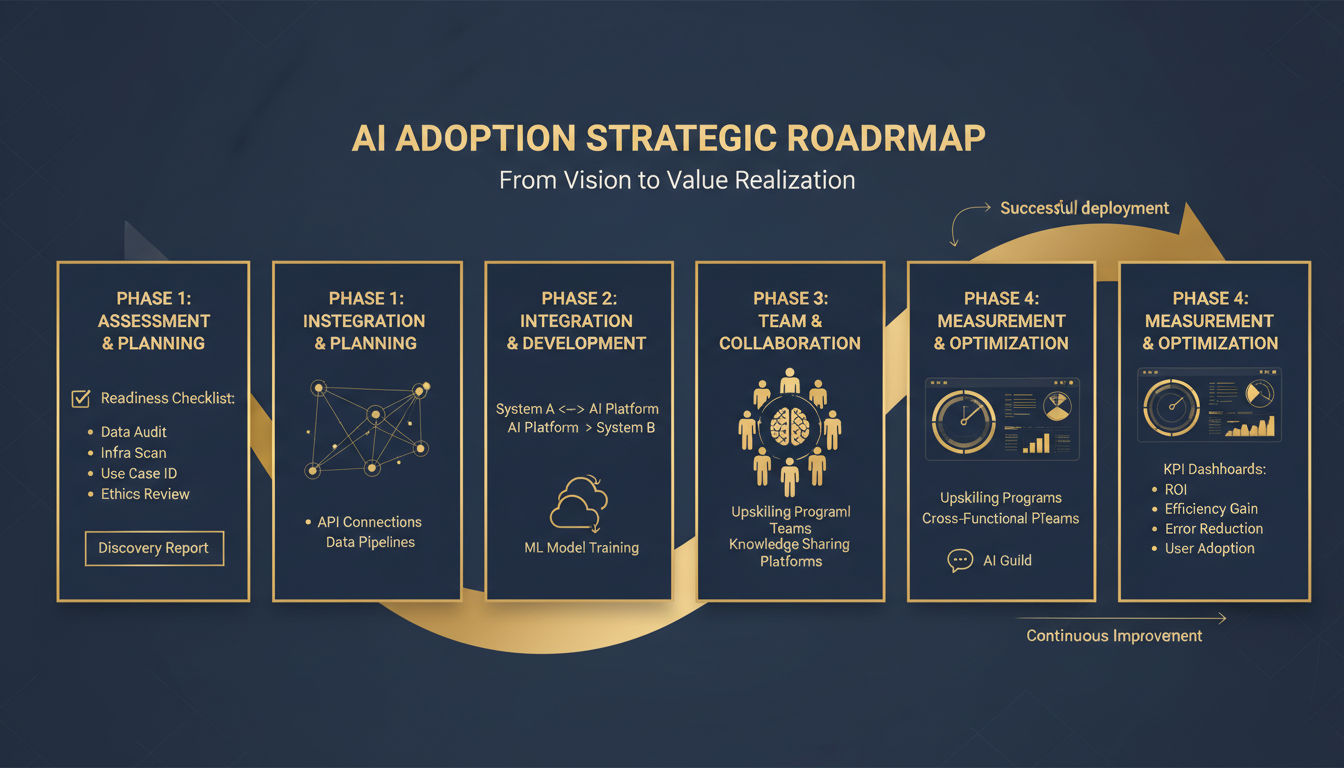
Assessing your business needs is the critical first step before adopting any AI marketing agent. Not every business needs every AI capability, and implementing tools you don't actually need wastes resources and creates unnecessary complexity. Start by identifying your biggest marketing challenges and opportunities.
Where does your team spend the most time on repetitive tasks? Which marketing channels underperform despite significant investment? Where do you lack visibility into campaign effectiveness? Which customer segments receive insufficient attention due to resource constraints? These questions reveal where AI tools can deliver the most immediate value.
Document your current marketing processes in detail. Map out how leads flow through your system, how campaigns get created and launched, how customer data gets collected and used, and where bottlenecks occur. This assessment provides a clear baseline for measuring improvement after implementation. It also helps you communicate requirements to AI tool vendors and ensures you select solutions that address your specific needs.
Choosing the right AI marketing agent requires evaluating multiple factors beyond features and pricing. The best tool for your business depends on your industry, business model, existing technology stack, team capabilities, and growth plans. Start by researching options specifically designed for businesses similar to yours.
Evaluate the user interface and learning curve. Even the most powerful AI tool delivers no value if your team can't use it effectively. Request demos and trial periods to assess usability firsthand. Consider integration capabilities—the AI agent should connect seamlessly with your existing CRM, website, email platform, and other marketing tools. Poor integration creates data silos and limits the AI's effectiveness.
Assess the vendor's track record and support offerings. Implementing AI marketing tools often requires guidance and troubleshooting. Choose vendors with strong customer support, comprehensive documentation, and active user communities. Read reviews from businesses similar to yours and ask vendors for references you can contact directly.
Integration with existing systems determines whether your AI marketing agent becomes a valuable asset or an isolated tool that creates more work. The agent needs access to customer data from your CRM, website analytics, email platform, e-commerce system, and other sources. This data integration enables the AI to build comprehensive customer profiles and deliver truly personalized experiences.
Work with technical experts who understand both your business systems and the AI platform. At Vohrtech, we help businesses navigate these integration challenges, ensuring AI tools connect properly with existing infrastructure. Poor integration is one of the most common reasons AI implementations fail to deliver expected results.
Plan the integration in phases rather than attempting to connect everything simultaneously. Start with your most critical data sources and expand gradually. This phased approach reduces complexity, allows your team to learn the system progressively, and delivers value faster than waiting for complete integration before launch.
Team training and adoption often determine whether AI implementations succeed or fail. Even the best AI marketing agent requires human oversight, strategic direction, and occasional intervention. Your team needs to understand what the AI can do, how to configure it properly, how to interpret its insights, and when to override its recommendations.
Invest in comprehensive training that goes beyond basic platform tutorials. Team members should understand the underlying principles of how AI makes decisions, not just which buttons to click. This deeper understanding builds confidence and enables them to use the tools more creatively and effectively.
Address concerns and resistance directly. Some team members may fear AI will replace their jobs or diminish their value. Emphasize how AI handles routine tasks so they can focus on more interesting, strategic work that showcases their unique human capabilities. Share success stories from other organizations where AI adoption increased job satisfaction and career opportunities.
Setting measurable goals and KPIs provides the framework for evaluating success and guiding optimization. Before implementation, define specific, quantitative objectives for your AI marketing agent. These might include reducing customer acquisition costs by 25%, increasing email engagement rates by 40%, generating 50% more qualified leads, or improving customer retention by 15%.
Establish baseline metrics before implementation so you can accurately measure improvement. Track both efficiency metrics (time saved, cost reduction) and effectiveness metrics (conversion rates, revenue growth, customer satisfaction). Monitor these KPIs consistently and share results with your team to maintain momentum and identify areas needing adjustment.
Be realistic about timelines. AI marketing agents deliver some benefits immediately—automated tasks save time from day one. Other benefits, particularly those requiring machine learning optimization, take weeks or months to fully materialize. The AI needs time to collect data, identify patterns, and refine its strategies. Set expectations accordingly and commit to the implementation for at least six months before making final judgments about effectiveness.
Next step
Ready for a quote and timeline?
Send a quick note with what you’re building, your deadline, and what success looks like — we’ll reply with clear next steps.
Real-World Applications and Use Cases
Small business success stories demonstrate how AI marketing agents level the playing field against larger competitors. A Montreal-based consulting firm with three employees implemented an AI marketing agent to handle lead qualification and nurturing. Previously, the owner spent 15 hours weekly on these activities, limiting time for actual client work.
After implementation, the AI agent automatically engaged website visitors, qualified leads based on specific criteria, scheduled discovery calls with qualified prospects, and nurtured early-stage leads with personalized content. Within three months, the firm saw a 60% increase in qualified leads while the owner reclaimed those 15 weekly hours for revenue-generating client work. The AI agent essentially functioned as a full-time marketing coordinator at a fraction of the cost.
A local e-commerce business selling artisanal products struggled with abandoned cart rates above 70%. They implemented an AI marketing agent focused on cart abandonment recovery. The agent analyzed customer behavior to identify why customers abandoned purchases, sent personalized recovery emails at optimal times with tailored incentives, and adjusted the website checkout process based on friction points it identified.
The results were remarkable. Cart abandonment dropped to 45% within two months. The AI-generated recovery emails converted at 25%, significantly higher than the industry average of 8%. The business recovered thousands in revenue that would have been lost, with the AI agent paying for itself within the first month.
Medium-sized business implementations showcase AI's ability to scale operations without proportionally increasing costs. A marketing agency serving 50 clients used an AI marketing agent to manage social media for all clients simultaneously. The agent created content calendars, generated posts, scheduled publishing, monitored engagement, and provided performance reports.
What previously required three full-time social media managers was handled by the AI agent with oversight from one strategist. The agency maintained quality while significantly improving margins. They reinvested the savings into expanding service offerings and acquiring new clients, growing revenue by 40% in one year without increasing headcount proportionally.
A B2B software company with 200 employees implemented an AI marketing agent to improve lead scoring and sales-marketing alignment. Their sales team previously wasted time on unqualified leads while missing opportunities with high-potential prospects. The AI agent analyzed thousands of data points to predict lead quality with 85% accuracy.
Sales productivity increased by 35% as representatives focused on genuinely interested prospects. Marketing gained credibility with sales by delivering better quality leads. The improved efficiency accelerated the sales cycle by an average of three weeks, directly impacting revenue growth.
Enterprise-level deployments demonstrate AI's capability to manage marketing complexity at scale. A multinational retailer with operations in 15 countries implemented an AI marketing agent to coordinate campaigns across regions while respecting local preferences and regulations. The agent managed localized content creation, optimized media spending across markets, coordinated global promotions with local execution, and provided unified reporting across all regions.
The implementation reduced campaign launch times from weeks to days. Marketing efficiency improved by 30% while customer engagement increased across all markets. The AI agent identified successful tactics in one region and adapted them for others, accelerating the spread of best practices throughout the organization.
Industry-specific applications show how AI marketing agents adapt to unique sector requirements. Healthcare organizations use AI agents to manage patient communication while maintaining HIPAA compliance, sending appointment reminders, sharing educational content, and following up on treatment plans automatically.
Real estate agencies deploy AI agents to qualify property inquiries, schedule showings, and nurture leads through long buying cycles. The agents provide immediate responses to property questions and maintain engagement with prospects over months or years until they're ready to purchase.
Professional service firms use AI marketing agents to demonstrate expertise through automated content marketing, positioning partners as thought leaders while they focus on client work. The agents identify trending topics, generate content drafts, and distribute them across appropriate channels.
Conclusion
The future of AI in marketing is not about replacing human marketers—it's about augmenting human capabilities and freeing professionals to focus on strategy, creativity, and relationship building. As AI technology continues advancing, marketing agents will become more sophisticated, intuitive, and integral to business operations.
We're moving toward AI agents that understand context and nuance at human levels, create truly original content rather than recombining existing patterns, predict market shifts before they become obvious, and collaborate with human marketers as true partners rather than tools. These advances will make marketing more effective, efficient, and personalized than ever before.
Taking the first steps toward AI adoption doesn't require massive investment or complete transformation of your marketing operations. Start small with one specific challenge where AI can deliver clear value. Perhaps it's automating email campaigns, improving lead qualification, or managing social media more consistently. Choose one area, implement an AI solution, measure results, and learn from the experience.
Success with AI marketing agents comes from combining technological capability with human judgment. The AI handles data analysis, pattern recognition, and execution at scale. Humans provide strategic direction, creative vision, ethical oversight, and the empathy that builds genuine customer relationships. This partnership delivers results neither could achieve alone.
For businesses in Montreal and beyond, AI marketing agents represent not just an opportunity but increasingly a necessity for remaining competitive. Your competitors are adopting these tools. Your customers are experiencing personalized, responsive marketing from other brands and expecting the same from you. The question isn't whether to adopt AI marketing tools but when and how.
The long-term growth potential with AI marketing agents extends beyond improved marketing metrics. These tools fundamentally change what's possible for businesses of all sizes. Small companies compete effectively against enterprise organizations. Growing businesses scale operations without proportionally increasing costs. Established enterprises optimize complex operations and enter new markets more efficiently.
If you're ready to explore how AI marketing agents can transform your business growth, contact our team to discuss your specific needs and opportunities. We help businesses implement AI marketing tools strategically, ensuring successful adoption that delivers measurable results. View our previous projects to see how we've helped other businesses leverage technology for growth.
The marketing landscape is evolving rapidly. AI marketing agents are no longer experimental technology—they're proven tools delivering real results for businesses across industries. The businesses that adopt these capabilities now will have significant advantages over those that delay. Your journey toward smarter, more effective marketing can begin today with a single step in the right direction.